The link between gut health and mental health. It’s a thing!
 It’s honesty time.
- Have you ever gone to the bathroom a few too many times before a big meeting, presentation or exam?
- Do some situations make you feel like butterflies (read: eagles) are floating around in your stomach?
- Can you think of an experience where you felt your stomach drop?
If you’ve nodded your head in agreeance to any of the above scenarios, you’ve experienced the impact of the gut and brain connection.
The what?
Let me explain.
We know that the brain is responsible for the interactions we have with the external world, enabling us to see, feel, hear and smell. Our gut, however, governs the way we interact internally, specifically the way we digest, absorb and utilise nutrients. The gut and brain mirror and influence each other every single day.1
Let’s take a deeper deep into this intricate connection.
How does our gut affect our brain?
If you’re new here and not used to talking all things gutsy (hi!), here’s a bit of a breakdown:
The gut microbiome represents the hundreds of trillions of bacteria that make up our intestines. These microorganisms protect our gut from foreign invaders and have close contact with the body's primary information-gathering spaces, including the immune, endocrine and nervous system.1 Emerging research indicates that the gut can positively or negatively influence these areas depending on its balance of bacteria.
You can also read my Gut Health 101 here.
The gut-brain axis
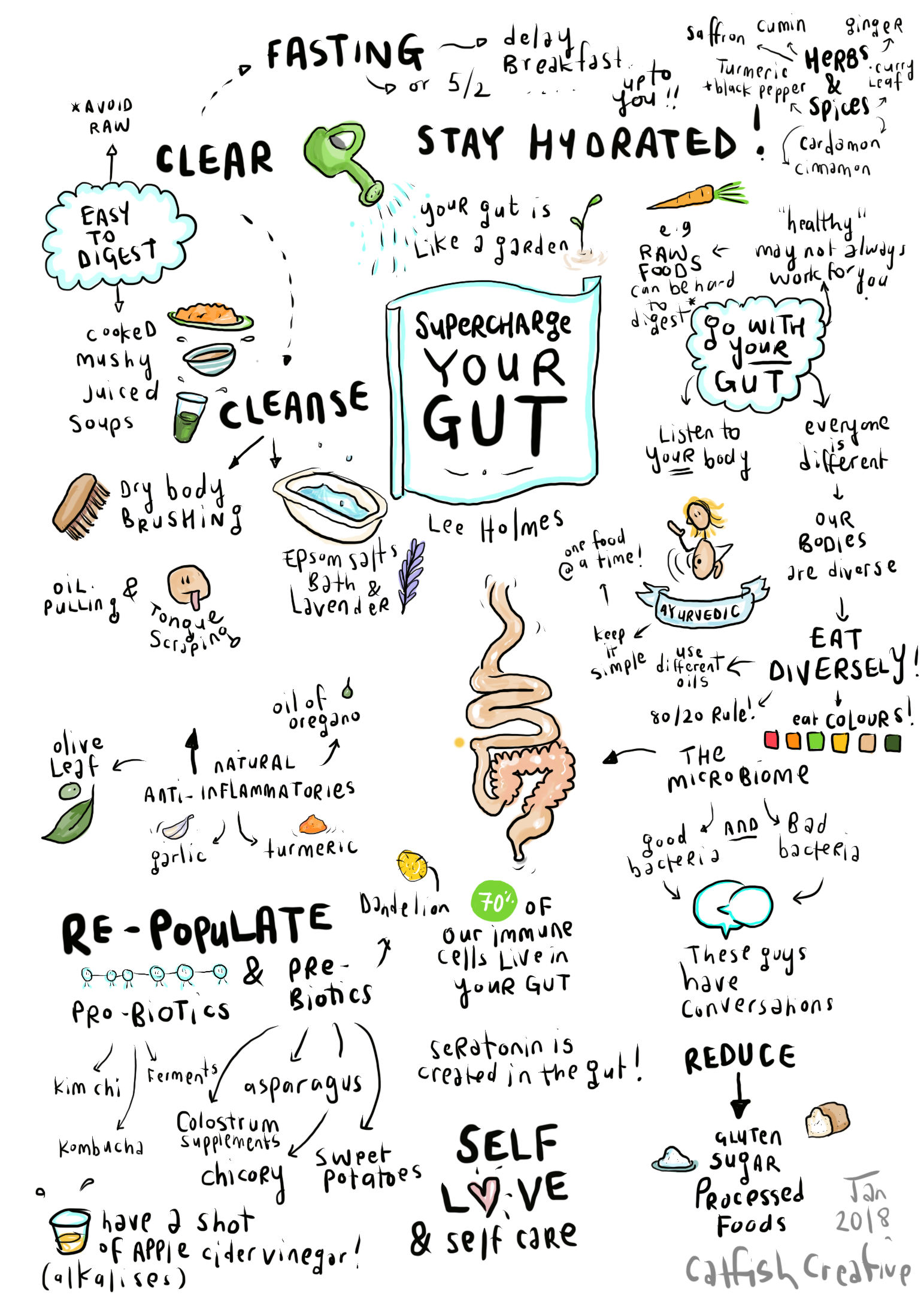
There’s a bidirectional communication link between the gut microbiota and brain, known as the gut-brain-axis.1 This means when the gut is in balance, we’re more likely to feel calm and positive. Conversely, an inflamed gut is linked to several mental illnesses, including anxiety and depression.1
Interestingly, some research demonstrates that having certain microbes in the gut can affect the brain's structure and function.1
So, we are what we eat, but, perhaps more importantly, we are what we digest and absorb.
How does the brain affect our gut?
Imagine you’re feeling upset about a particular situation (I’m looking at you, men on Married at First Sight). This sadness travels to the gut and causes an uncomfortable symptom, such as abdominal pain.
But how?
Well, neurons, the cells found within the brain and central nervous system, tell the body how to behave. And while we have over 100 billion neurons in the brain, the gut contains around 500 million neurons, which is pretty astounding when you think about it!1
So, the brain and gut communicate through neurons via the vagus nerve.1 If you’re unfamiliar with the vagus nerve, think of it as the body's LinkedIn – it connects and sends messages from the gut to the brain and vice versa. Whatever is going on in the emotional part of the brain causes a reaction in the gut through the vagus nerve.
The gut and brain are also connected through chemicals called neurotransmitters. The brain produces neurotransmitters that create different feelings and emotions, which we now know can cause several gastrointestinal symptoms. Many neurotransmitters are made in the gut – including gamma-aminobutyric acid (GABA), which controls feelings of anxiety and fear.1
It’s critical to look after the gut and the brain for stabilised moods and minimal gastrointestinal upset.
How can we support the gut and the brain?
For optimal communication between the gut and the brain, we need the brain to feel safe and the gut to be balanced. Some of the ways I recommend helping them include:
- Look at your diet: Emerging research says that a healthy diet – one rich in vegetables, fruit, lean protein and healthy fats – can improve our gut and, therefore, the state of our mental health.2 This research consistently shows us that a more diverse gut is linked to better health, so eat various plant foods each week. The fibrous and antioxidant-rich nature of plant foods helps promote the beneficial gut bacteria we need. I recommend aiming for five to seven servings of vegetables daily.

- Become a pro of the biotic: Probiotics have the potential to restore microbial balance and improve mental health. A 2017 research study assessed the impact probiotics have on chronic stress. They found those who took probiotics had an overall happier mood, improved energy and were more clear-headed with less anxiety and depression than those who didn’t.3 I recommend including probiotic-rich fermented foods such as yoghurt, sauerkraut and kefir. You can also support your gut health by introducing Fulvic Humic Concentrate into your life; it goes beyond probiotic supplementation by strengthening the gut lining’s integrity and tightening its junctions whilst acting as a prebiotic and replenishing the gut microbiota.

- Manage your stress: Even if you’re eating the healthiest foods and eating probiotics on the reg, if you’re experiencing stress daily, you’re sabotaging your gut. I recommend incorporating relaxation techniques and mindfulness-based stressed reduction activities into your routine. As I’ve said before, Vedic meditation changed my life, but you may want to try other ways to manage your stress, or bring about more self love at Kegglers. You could also look into further diagnostics and try Private ADHD Assessment Leicester
- Watch out for diet negativity: A diet laden with sugar and processed foods harm the gut barrier and increase its leakiness, causing energy shifts and mood changes.2 The more we eat these foods, the more we displace the healthy foods our gut and mind love. I recommend limiting your intake of refined sugar, alcohol, gluten and processed foods. Instead, fill your plate with gut-nourishing foods.

- What can you tidy up? A little like Marie Kondo, tidying up my space helps bring me to a state of calm. To tidy up internally, I choose to use Love Your Gut and Golden Gut Blend; they help sweep away the internal cobwebs to make way for improved nutrient absorption and more energy.

I’d love to know; how will you look after your body’s most important connection – your gut and brain?
Please let me know in the comments below.
Lee x
Research
1 Wang, H. X., & Wang, Y. P. (2016). Gut Microbiota-brain Axis. Chinese medical journal, 129(19), 2373–2380. https://doi.org/10.4103/0366-6999.190667
2 Turnbaugh, P. J., Ridaura, V. K., Faith, J. J., Rey, F. E., Knight, R., & Gordon, J. I. (2009). The effect of diet on the human gut microbiome: a metagenomic analysis in humanized gnotobiotic mice. Science translational medicine, 1(6), 6ra14. https://doi.org/10.1126/scitranslmed.3000322
3 Clapp, M., Aurora, N., Herrera, L., Bhatia, M., Wilen, E., & Wakefield, S. (2017). Gut microbiota's effect on mental health: The gut-brain axis. Clinics and practice, 7(4), 987. https://doi.org/10.4081/cp.2017.987