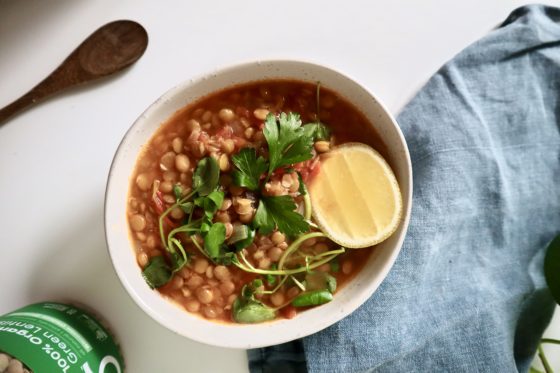
Gorgeous Green Lentil Soup

I love lentils. There. I’ve said it. And Murray River Organics green lentils are superb. I include these green lentils in at least three meals a week, summer or winter. I’ll toss them in my green leafy veggies, star them in stews or mix them up in a big pot of soup.

Salad can be a controversial friend over colder months, so this winter, I suggest you make friends with lentils. Trust me; they’ll friend you right back.

Lentils are a great pantry staple, and we all know I’m a big lover of an easy to navigate pantry. Plus have you noticed that when you have an organised pantry, you are more inclined to do home cooking and you feel like nothing can stop you!

What people really find out when they discover lentils is just how versatile and filling, they are, with no empty carbs.  When done correctly, they give soup a creamy texture, subtle flavour and substance. Lentils are nutrient-dense and rich in plant-based protein. You heard that right; I said plant-based protein. Some people assume you can only get protein from animal sources, but plants and legumes are abundant in protein. Getting protein from a variety of sources is critical in maintaining overall health.

Protein isn’t just for bodybuilders or those trying to put on size; protein is one of three macronutrients and makes up the main components of our muscles, bones, organs, skin and nails. We need protein to help us produce the right amount of haemoglobin, hormones and immune antibodies. Protein is a complex structure, made up of smaller building blocks called amino acids. Lucky for you, this soup mix is rich in plant-based protein, as well as soluble fibre.

Dietary fibre is vital for gut health and can keep us fuller for longer. Soluble fibre, found in little lentils, helps slow down the emptying process in our stomachs, increasing satiety. Fibre can also lower our LDL cholesterol levels and stabilise blood glucose levels. Foods rich in soluble fibre include whole grains and seeds such as rice, quinoa, oats and, of course, lentils. One cup of cooked lentils offers about 16 grams of fibre, making up more than half of our fibre requirement for the day.

Okay, I get it, lentils are great, but why are there so many and which ones should I choose?

Oh, I thought you’d never ask!

Brown lentils are the most common variety and have a mild, earthy flavour. You’ll find them in veggie burgers, casseroles and stews.

Red and yellow lentils, known as ‘split’, are processed into smaller lentil bits. They’re somewhat sweet and nutty and often used in Indian and Middle Eastern Cuisine. Hello, dahl.

Now, for my favourite, allow green to reign supreme! Green lentils have a robust and slightly peppery taste and are great for salads, side dishes and of course, my Gorgeous Green Lentil Soup.

You don’t need to soak lentils but soaking them can help remove some of their phyto-chemicals which can be the culprit of many a gut issue, including gas and bloating.

I’m using Murray River Organics green lentils as they’re better for the environment and our health. Murray River Organics have a variety of lentils on offer, including split lentils, French green lentils, black Beluga lentils and green lentils. They even have lentil flour, to fulfil all your lentil dreams!

I’m combining green lentils with coconut oil from Murray River Organics. Murray River Organics have the best organic oil in the biz. Thinking about their cold-pressed coconut oil makes my mouth drool. Coconut oil adds a sweet coconut flavour to cooking, adding another rich layer of flavour to my soup. Coconut oil can serve as a make-up remover, body moisturiser and hair conditioner.

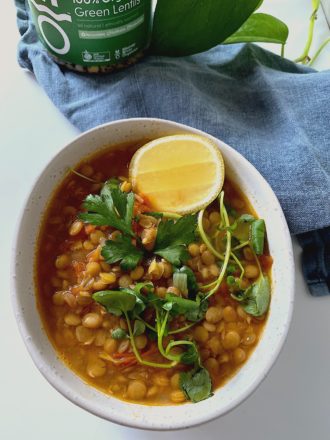
With this Gorgeous Green Lentil Soup, you’ll satiate your taste buds and your tummy. If you want to avoid after-dinner hunger on meatless Monday (it’s okay, we’ve all been there. Yes, I’m looking at you, soggy mushroom burger, and no, I’m not sorry!), try my Gorgeous Green Lentil Soup on for size.

Gorgeous Green Lentil Soup
Supercharged tip: Soaking grains, lentils, nuts and seeds for 30–60 minutes in warm water helps make them easier to digest. If garlic or onion is a problem for you, you could also cook the lentils with asafoetida (Hing) a beautiful spice that you can find in Indian and Middle Eastern grocers. It has a pungent earthy taste similar to garlic and onions but will to help prevent gas and bloating.

Serves 4

Ingredients

  • 1 tablespoon Murray River Organics Virgin Coconut Oil
  • 1 onion, chopped
  • 3 garlic cloves, crushed
  • 1 tablespoon grated ginger
  • 2 teaspoons ground cumin
  • 1/4 teaspoon cayenne pepper
  • 205 g (7 1/4 oz/1 cup) Murray River Organics Green Lentils, rinsed and drained
  • 4 large tomatoes, chopped
  • 1 litre (35 fl oz/4 cups) chicken or vegetable stock
  • 1/2 lemon, sliced
  • grated zest and juice of 1/2 lemon
  • Celtic sea salt, to taste
  • 2 tablespoons chopped flat-leaf (Italian) parsley, to serve
  • lemon cheeks, to serve

Method

Heat the oil in a large, heavy-based saucepan over medium heat. Add the onion, garlic and ginger, and cook for 5 minutes or until the onion is soft.

Add the spices and stir for another minute until fragrant.

Add the lentils, tomato, stock and lemon slices, stirring to combine.

Bring to the boil, then reduce the heat and simmer, covered, for 25 minutes or until the lentils are soft.

Add the lemon zest and juice, season to taste, and cook for a further 1–2 minutes.

Top with parsley and serve with a lemon cheek each.

Give it a go and let me know what you think in the comments section below.

Minimal Living + Ayurvedic Cardamom Hot Chocolate

Let’s talk minimalism.

Before you close this tab and roll your eyes, this isn’t going to be a blog post where I tell you to throw all the items that you’ve ever loved away, sleep on a thin mattress on hard wooden floors and live out of a backpack with only a distressed t-shirt, two ratty pairs of bamboo underwear, a scrappy diary and an iPhone charger to your name.

No.

There’s much more to minimalism than that.

Minimalism is more than just a style of house or art piece or throwing away things that no longer spark joy.

To me, minimalism is simple; it’s about simplicity, you know, the less is more approach.

The truth is, in the modern world we live in, we all have too much stuff (except the person who nodded their head to all the things I mentioned before. You probably don’t get where I’m coming from).

In a world that’s constantly trying to tell us we need more to make us happier, maybe it’s time for a little reassessment to really figure out what is necessary and what's not.

At our core, we all know that the things that make us the happiest are usually the simplest, not the latest phone, mansion, dress or expensive car. The things that bring us true happiness are experiences like sipping on a big mug of tea, spending quality time with our family and friends and enjoying life's basic pleasures.

Maybe Covid-19 has brought this out in us more as we self isolate and reevaluate all sorts of things that were once taken for granted.

Trying to fill ourselves with more stuff almost always ends up leaving us feeling a little bit emptier afterwards. To me, there’s something graceful and simultaneously a tiny bit terrifying about letting go; of detaching ourselves to the material or a certain outcome. I believe there is much beauty to be found in detachment if we’re open to it. So, it’s time to get back to basics. It's time for freedom.

But, where do we begin?

If you’re feeling overwhelmed with clutter, start decluttering. It doesn’t need to be a laborious process. You can start slow – say the one shelf that you throw all of your paperwork and Knick-knacks into (you know the one), or a section in your wardrobe. Think of it like this: if it’s not a heck yes, it’s a no.

Once you’ve gathered up your items, consider giving them to friends or dropping them off  your closest op-shop. Walking out empty-handed can feel extremely liberating, especially if you know that your pre-loved items are going somewhere they’ll be used and needed.

One of my favourite parts about minimalism is just how freeing it is. Once we realise that we don't need more to make us happy, we can enjoy simple pleasures a lot more. For example, I personally love giving out experiences as gifts rather than material items. If you want to find out more about meaningful gifting, click this link here.

If you’re looking for some new experiences, why not cancel your usual fancy dinner reservations for Friday and have a game’s night instead? I guarantee everyone will have just as much fun and you won’t need to worry about the awkwardness of splitting the bill at the end either. My family’s favourite choices are scrabble (I’m a word nerd, what can I say?), but we’re also impartial to monopoly and card games too.

Speaking of bonding activities, one of the most highly underrated ways to bond is over shared interests. Even if you're socially isolating, a book club is a brilliant way to share insights over a novel while also investing quality time into friendships and having a good laugh while you’re there too. If you're looking for a book to discuss, I've heard Supercharge Your Life's is a really good one ;). ha.

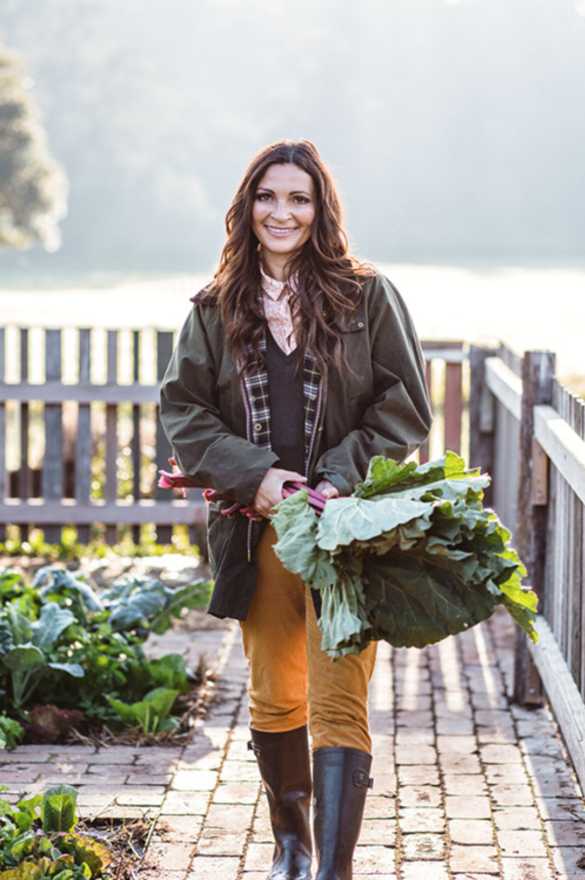
If you’ve ever had a look at my Instagram, you’ll know I have a mean green thumb. While I’m an amateur gardener, it’s seriously one of my favourite ways to spend my time. One of the best parts about gardening is using your own fruit, vegetables and herbs in your own meals afterwards. I’ve turned my kitchen into my garden!

If you’ve always wanted to try creating your own kitchen garden, be sure to check out this link here. Your tastebuds will thank you however, your wrists and back may not.

Cooking from scratch and using mealtimes as a celebration is a beautiful experience that we can all do a little more. When I have people over, I love putting our phones in a box upon arrival and just letting our mouths and the food do the entertaining. There is something highly underrated about presence that can be quite astounding when there’s no phones around. I also love pot luck meals when everyone brings an item they’ve made. It’s so much more fun when everyone can share their favourite dishes and exchange recipe ideas. What’s not to love about that?

Minimalism has given me a deeper appreciation of the items that I do have and cherish everything and everyone in my life even more. The truth is, we don’t need more stuff, rather we need to use what we have and use it properly.

So, go on, now it’s your turn! Decluttering and a new sense of gratitude and appreciation awaits you.

One of my favourite shared experiences is making a pot of Ayurvedic Cardamom Hot Chocolate and sharing it with family or friends.

Why not try this Ayurvedic twist on the classic hot chocolate, which doubles as a scrumptious indulging ritual as well as a medicinal aid for your gut.

In Ayurvedic tradition, cardamom is considered an excellent digestive that helps minimise gas and bloating. Its soothing, warming effect will help to enhance the absorption of nutrients, as well as calm the nervous system in times of stress.

You could serve this wonderful hot chocolate dusted with extra cinnamon and topped with raw cacao nibs. It serves 2.

Ayurvedic Cardamom Hot Chocolate

  • 500 ml (17 fl oz/2 cups) milk of your choice
  • 30 g (1 oz/1/4 cup) raw cacao powder
  • 1 teaspoon alcohol-free vanilla extract
  • 1/4 teaspoon ground cardamom
  • 1/4 teaspoon ground cinnamon
  • pinch of ground nutmeg
  • pinch of ground ginger
  • 1 heaped tsp raw honey to taste

Place all the ingredients in a small saucepan and whisk over low heat until any clumps of cacao and spices have dispersed. Continue stirring as you allow the milk to simmer gently for a few minutes.

Pour into cups and enjoy warm.

NOTE: For extra kick, you could add a very small pinch of freshly ground black pepper — as long as spicy foods don’t upset your stomach. If you’d like a frothy hot chocolate, whisk or blend just before serving

I would love to know what your thoughts on minimal living are and also, what your favourite experiences to share with loved ones are.

Let me know in the comments section down below!

Lee xo

Pumpkin, Mushroom and Sage Brown Rice Risotto Video

The risottos are in for a healthy and delicious dinner recipe....and the winner is.....

*drum roll🥁 ....

This simple and satisfying Pumpkin, Mushroom and Sage Brown Rice Risotto!

It’s a new recipe that is so delicious and perfect for any night of the week or it also works well as leftovers for lunch any day of the week.

Wholegrain brown rice is a cute little swap out that you can make, as the fibre helps to lower cholesterol (along with sage) and it also aids digestion.

Enjoy the video below and let me know what you think of this new recipe?

Squash and Mushroom Brown Rice Risotto

Serves 4

Ingredients

  • 3 tbs olive oil divided
  •  ½ jap pumpkin chopped
  • 1 small brown onion diced
  • 2 garlic cloves chopped
  • 4 large flat mushrooms chopped
  • 2 zucchinis diced
  • 2 yellow button squash
  • 1 tsp cumin seeds
  • ½ tsp cinnamon
  • 1 ½ cup brown rice
  • 2 cups chicken or vegetable stock
  • 1 cup coconut milk (1 bought a 400 ml tin accounting for extra if needed)
  • 2 tbs apple cider vinegar

To serve

Method

Place pumpkin on a tray, drizzle with 1 TBS olive oil and scatter with salt and place in a preheated 200 degrees Celsius oven for 25 mins.

Heat 2 TBS oil in large heavy bottomed pan and cook onions and garlic over a medium heat for about 2 minutes until softened.

Add mushrooms and stir, then add zucchini and squash and add spices and cook for five mins stirring.

Add rice and stir for a minute.

Poor in chicken stock slowly, one cup at a time, add coconut milk and add ACV and bring to the boil then turn down to low heat, cover with a lid and cook for about 30 mins or until all the liquid has been absorbed. Stir well intermittently, ensuring every grain of rice is covered.

Season to taste with sea salt and pepper.

Add more coconut milk (for creaminess) or stock or water if it needs it and replace lid.

Once it’s ready, stir through Golden Gut Blend for immunity or Love Your Gut powder, and butter if using then add roasted pumpkin and gently toss, spoon into wide mouth bowls and top with nutritional yeast or parmesan cheese and sage.

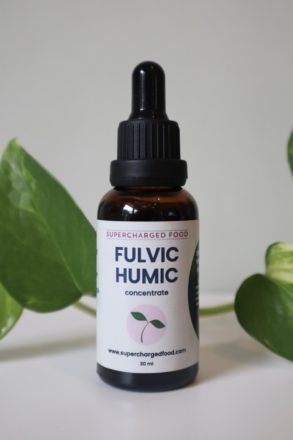
Fulvic Humic Concentrate Drops Have Dropped

We’ve been overwhelmed by the response to our new little gut loving liquid - FHC. Thank you for all the purchases and enquiries. Please keep asking questions or for more information - we’re happy to oblige.

Supercharged Food’s Fulvic Humic Concentrate (FHC) is a liquid food created from natural organic plant substances. These drops are heavenly for the gut. They play an important role in healthy metabolism and recycling of metabolic wastes.

One aspect we especially love is the strong negative ion charge of our FHC. It’s one of nature’s best sources of negative ions not only for the strength of the charge but also because it is a food and therefore absorbed by the body. 

There’s all manner of positives about negative ions for health and we urge you to dive into some research from credible sources - here’s one

Negative ions are measured by Cation Exchange Capacity (CEC). Soil is negatively charged that’s partly why being in a garden and digging around with your hands can be so relieving. It has a CEC of around 5-15. Our Love Your Gut powder is negatively charged with a CEC of 30 (this negative charge can attract the detrimental positively charged waste in our digestive system and help in its disposal).

On the positive, yet no-so-positive, side there are positive ions or cations. These aren’t great for you or your health. Think what’s emitted from computers and wifi - they’re generally positive ions. Also air-conditioning, pollution and other non-organic, man-made agents. These ions are inevitable in our modern world. Highly negatively charged foods like FHC help to combat their effects while giving you their own benefits too.

FHC is composed of two minerals - Humus and Fulvic acid. They are each some of the highest negatively charged minerals in the world. Humus has a CEC of 400-450 and Fulvic 1,400! That’s why just a few drops a day is all you need to get those good ions into your system. They’ll iron out your gut health too.

Just a few drops a day in water, juice or smoothie (or anything really) will do the trick. We drop some ‘Jupiter’ everyday. You can buy our FHC here 

A natural chelation therapy, Fulvic Humic Concentrate (FHC) also has antioxidant, antimicrobial, neuro-protective, and anti-inflammatory properties.

GUT, ADRENAL, METABOLISM SUPPORT
  • Helps keep your gut clean and microbiome fed
  • Helps boost nutrient absorption by increasing cell permeability
  • Delivers over 70 minerals & trace elements
  • Assists in balancing & energising cells
  • Enhances your cells use of electrolytes and antioxidants
  • Natural chelation therapy
  • Strong negative ion charge helps increase absorption of key nutrients and vitamins
  • Vegan, flavourless, gluten, dairy, sugar, additive and preservative free

Fifty FODMAP friendly foods plus Low FODMAP Hearty Meatball Stew and Slow Cooked Ham Hock Soup

If you’re experiencing abdominal pain, bloating and flatulence, and feeling lost on where to turn, I’ll hand you the FOD-MAP. 

If you’ve never heard of FODMAP, it stands for: 

  • Fermentable: meaning they’re fermented by bacteria in the large bowel, not absorbed in the small intestine. 
  • Oligosaccharides: more complex sugars, such as fructans and galacto-oligosaccharides.
  • Disaccharides: ‘double’ sugar molecules, such as lactose.
  • Monosaccharides: single sugars, such as fructose.
  • And Polyols: things like sugar alcohols such as sorbitol, mannitol, mannitol and xylitol. 

For people with irritable bowel syndrome (IBS), the FODMAP approach is typically the first port-of-call for nutritionists and dieticians. It’s a protocol that helps you heal the gut and identify trigger foods that cause flare ups.

If this sounds a little confusing to you, have a read of my FODMAP run-down, which includes foods to avoid while undertaking FODMAP, here, and come back after.

Are you all caught up?

Okay, great. Let’s continue on our way. 

When undertaking the FODMAP approach, cut-down your intake of FODMAP foods for a period of time and then slowly introduce them to identify which foods are causing flare-ups. This trial elimination gives your gut time to repair and check which foods you may be sensitive to. Unlike many diets out there, the FODMAP approach is definitely not a ‘one-size-fits-all’ approach and should be tailored specifically to you. 

After the elimination phase when you’re reintroducing foods, record the foods you’re eating and the symptoms you’re experiencing. This can give you an indicator of which foods aren’t working for your gut. 

Inflammatory responses include bloating, tiredness, throat irritation, coughing or sneezing after food, mood problems, headaches, migraines, indigestion and weight retention.

Writing down these symptoms will make it clear what isn’t serving your body. When you are reintroducing foods, try to have a positive mindset and not be too anxious about it. If you’re trialling foods while in a state of stress, it can impact the digestion process. So, be cool, calm, collected and enjoy the food you’re eating.  

While there are plenty of foods you have to avoid when following the low-FODMAP protocol, let’s look at this in a positive light, below are fifty FODMAP friendly foods that you CAN include during these stages. And remember that a FODMAP friendly diet shouldn't be encouraged for long period of time and getting back to a balanced diet is always best!

Here are my favourite fifty FODMAP friendly foods: 

  1. Baby spinach: baby spinach is a green leafy that makes for a great low-FODMAP salad base. Spinach plays the star role in my Pull-Apart Green Bread.
  2. Bamboo shoots: bamboo shoots are the edible sprouts that often feature in your Thai takeaway. Try them stir-fried, cooked in soup or pickled.  
  3. Unripe bananas: unripe bananas are great for a low FODMAP diet. What they lack in sweetness, they make up for in gut-friendly bacteria. Banana flour, flour made of unripe bananas, is a great base for baked goods.  
  4. Beef: iron-rich beef is protein-packed and great for boosting the immune system and building muscles. Try it in my Beef Stir-Fry with Peaches
  5. Love Your Gut powder can help you if you're suffering from gut issues such as poor, inefficient digestion, lack of nutrient absorption and a build-up of gas, wind and bloating. It helps to clean and tone your gut and relieve symptoms.
  6. Blueberries: blueberries are one of my favourite fruits in the whole world. They’re rich in antioxidants, low in sugar and really, an all-round winner. They’re even a feature in my Hello Vera Smoothie. I love berries as a topping on my porridge and straight out of the punnet as an easy snack. 
  7. Bok choy: bok choy, also known as pak choy, ramps up the nutritional value of any stir-fry. It’s a great green that features in this delicious Beef Stir-Fry with Peaches
  8. Broccoli: This veggie brocs. Broccoli, part of the cruciferous vegetable family, is great for helping detoxify the liver. Ensure you’re cooking your broccoli for optimal absorption and digestion. My Oven-Baked Broccoli Steaks go down as a treat. 
  9. Brown, basmati and white rice: while we bang on about cauliflower rice, brown, basmati and white rice are wonderful for the low-FODMAP diet. To make it FODMAP-friendly, serve rice steamed, boiled or fried without any onion or garlic. 
  10. Carrots: there’s no better snack than carrots. Try baking them in the oven by dipping your toes in my Prebiotic Tray Bake.
  11. Celeriac: what this vegetable lacks in beauty, it makes up for in nutritional value. Try baking celeriac in the oven with extra virgin olive oil to make crispy celeriac chips. 
  12. Celery: celery is a hydrating and alkalising vegetable that’s made quite a comeback with the celery juice trend. While it’s risen to popularity recently in juice, I prefer having it cooked, like in this Delicious Lamb Mulligatawny
  13. Chia seeds: chia seeds are a wonderful thickening agent and fibre-rich addition to any smoothie. They also make for a great topper on a smoothie bowl, like this one here. Oh, and if Debbie at work swears by chia seeds for her glowing skin but they give you bloating, listen to your own body and just don’t go there.  
  14. Chicken: chicken is a low-fat source of protein that can help maintain lean muscle mass and provide a plethora of nutrients. Chicken pairs well with so many different flavours and vegetables, always making for a hearty meal. 
  15. Clementine: clementine’s are small seedless fruits that are somewhere between a mandarin and a sweet orange. They’re a fresh snack that’s great for the school lunch box. 
  16. Cranberry: cranberries offer the perfect balance between sweet and tart, they even make for a delicious trail-mix part. 
  17. Cucumber: cucumbers are a hydrating veg that add an extra crunch to any salad. They’re high in nutrients and contain antioxidants to reduce oxidative stress. 
  18. Eggplant/Aubergine: If you want a vegetable that’s auber-genius, try an eggplant on for size. This FODMAP-friendly vegetable is low in calories and can have an anti-inflammatory effect on the body, extremely useful in cases of inflammation. 
  19. Fennel: fennel is a small yet mighty vegetable that is high in fibre and contains amazing nutrients, including magnesium, potassium and calcium. While it looks a little like dill, fennel has a mild aniseed taste that can be used as an alternative to onion in a low FODMAP diet. 
  20. Fresh fish: Fresh fish such as cod, salmon, trout and tuna, offer wonderful sources of omega-3. Omega-3 is essential when trying to reduce the inflammation that triggers irritable bowel syndrome and irritable bowel disease. 
  21. Ginger: ginger has a strong anti-inflammatory effect, prevents nausea helps fight off the common cold or flu. 
  22. Grapes: forget candy and lollies, pass me the grapes! Grapes are one of nature’s candies. They’re sweet, juicy and plain old delicious.  
  23. Green beans: these stringy beans are, in my opinion, highly underrated when it comes to nutritional value. They’re low calorie and extremely high in fibre. 
  24. Guava: this tantalising fruit is found in many tropical and subtropical regions. Guava is rich in Vitamin C, a nutrient that’s essential for our immune system.  
  25. Hemp seeds: hemp seeds are tiny but mighty! They contain Omega-3 fatty acids, making them a wonderful bonus for our skin health and cognitive function.  
  26. Honeydew melon: name a melon I don’t like… seriously, I’ll wait. Honeydew melons offer a fantastic source of potassium and a low sodium content helping to keep our blood pressure in check. 
  27. Kale: kale yeah! This green leafy vegetable is loaded with antioxidants and has basically been shown to help heal the world. Just be sure to massage your kale or cook it before eating it to aid digestion. 
  28. Kiwi fruit: it turns out kiwi is more than just a person from New Zealand! Kiwis are one of the most fibre-rich fruits available, and contains vitamin C, collagen and omega-3 fatty acids. Research indicates that eating 2 kiwi fruits a day can help reduce constipation (1)!
  29. Lamb: this high-quality source of protein is one of my favourites to cook. Lamb is a red meat that’s comprised of iron, vitamin B12 and zinc. These nutrients are essential for our blood, muscles and energy. 
  30. Lettuce: lettuce celebrate the simple things in life, such as lettuce. Despite its reputation of having minimal nutritional value, iceberg lettuce actually contains significant amounts of Vitamin A and K. It’s also extremely hydrating in the hot weather due to its water content. 
  31. Mandarin: to be honest, I had to include mandarins in here because I just find them so cute. Sweeter and smaller than an orange, this citrus fruit is bursting with Vitamin C and A, which are essential for growth and immunity. 
  32. Oats: I call for a time-oat. This nutrient-packed grain insists on improving bowel regularity, lowering cholesterol and also offers an amazing source of plant-based protein. Try my Gutmeal, which is breakfast oats with a gut friendly twist here
  33. Orange: oranges are the typical flu go-to so, it’s a good thing they’re on the low-FODMAP list. If you’re struggling to get enough water in during the day, adding orange to your water bottle can help improve the taste.
  34. Pineapple: pineapple is an extremely versatile fruit that’s low in fructose and super tasty. Pineapple contains digestive enzymes that are vital for maintaining and rebuilding gut health. Try this Pan Fried Pineapple with Mint and Coconut Yoghurt
  35. Potato: while we praise the sweet potato, the regular OG potato has been getting a lot of hate. I say, let’s act like Taylor Swift and ignore the haters. Potatoes are delicious baked, mashed and cut into home-made wedges. 
  36. Pumpkin: highly nutritious and nutrient-rich, pumpkin has been proven to boost immunity, assist in weight loss and protect the health of your eyes. There’s nothing better than caramelised pumpkin that’s just left the oven; I have googly eyes just thinking about it. 
  37. Quinoa: I feel like we’ve forgotten about this gluten-free and protein-rich plant foods. Let’s bring it back! Quinoa contains fibre, vitamins and minerals, and makes for a great base to any meal. 
  38. Raspberry: raspberries are a low-calorie and fructose fruit that make for a delicious smoothie bowl like this one here. While they can be expensive when they’re not in season, I always have frozen raspberries on hand for smoothies and desserts. 
  39. Red capsicum/bell peppers: did you know capsicum actually contains more vitamin C than oranges? Capsicums are great for the immune system however, they’re part of the nightshade family so, some people do have some side-effects when consuming them.   
  40. Seafood: I’m pretty sure no one’s going to complain about seafood being on this list.  Crab, lobster, mussels and shrimp can all be enjoyed on a low-FODMAP diet. 
  41. Seaweed: seaweed and nori offer a wonderful source of iodine which is essential for thyroid function. I'm loving my Seaweed and Sesame Salad
  42. Swede: this vegetable’s nutrient profile is pretty sweet if you ask me. Swedes contain a variety of nutrients, including manganese, carotene and fibre. 
  43. Sweet potato: while only ½ cup of sweet potato is allowed on the low-FODMAP approach, you can definitely enjoy it in moderation! I love sweet potato baked, mashed and even cut finely in a stir-fry. 
  44. The green tops of spring onions (scallion): while it’s certainly not the most delicious part of the onion, the green tops of spring onions make for a wonderful alternative to regular onion when cooking. 
  45. Tofu: tofu isn’t just for Japanese food and vegetarians or vegans. Tofu is a protein-packed option that’s bursting with calcium. 
  46. Turkey: turkey is loaded with tryptophan, an amino acid essential for regulating sleep.
  47. Tuna is a great on-the-go source of protein and omega-3 fatty acids. Try my Ginger-Seared Tuna to up your tuna intake.  
  48. Turnip: turnips are loaded with fibre and B vitamins which are essential for boosting our energy and mood. 
  49. Walnuts: these brain-shaped nuts are brilliant for just that, your brain health. Walnuts are rich in antioxidants, promote a healthy gut and can support weight balance.
  50. Zucchini: zucchinis always feature in my roasting tray. They’re low in calories and offer a great source of fibre to help reduce constipation. 

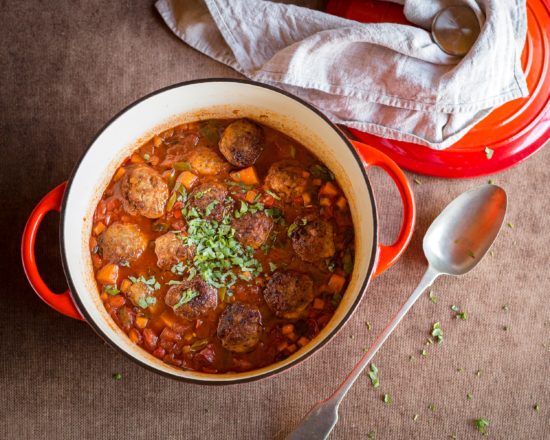
If you’re looking for FODMAP friendly recipes, I’d love to be your guide. My cook book Supercharge Your Gut has a bunch of FODMAP-friendly meals that’ll make the whole process that much easier. My low-FODMAP Meatball Stew is inspired by the flavours of Italy. It’s a FODMAP-friendly meal the whole family will love.  

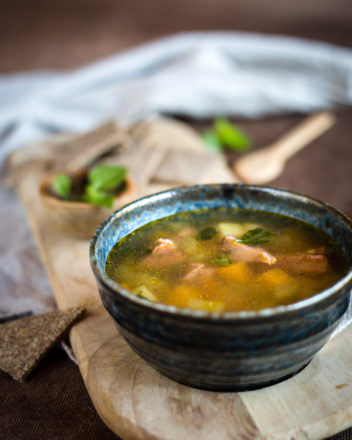
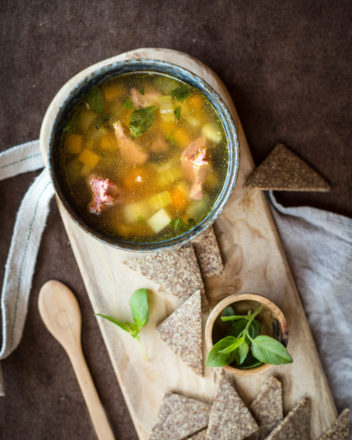
Don’t go ham on me, but this hearty and harmonious Slow-Cooked Ham Hock Soup from  Supercharge Your Gut is a FODMAP-friendly bowl of goodness that awaits you. It’s ready to turn those tummy troubles upside down. 

LOW-FODMAP MEATBALL STEW 

SERVES 4, OR UP TO 6 WITH A SIDE OF ZOODLES 

  • 1 teaspoon garlic-infused extra virgin olive oil 
  • 4 spring onions (scallions), green tips only, roughly chopped 
  • 1 small sweet potato, peeled and cut into 2 cm (3/4 inch) chunks 
  • 2 carrots, grated
  • 1 red capsicum (pepper), chopped 
  • 500 g (1 lb 2 oz) very ripe roma (plum) tomatoes, chopped, reserving the juices
  • 4 tablespoons tomato paste (concentrated purée) 
  • 125 ml (4 fl oz/1/2 cup) low-FODMAP stock 
  • 2 tablespoons lemon juice
  • 2 tablespoons apple cider vinegar roughly chopped parsley, to garnish 

Italian Meatballs 

Ingredients: 

  • 500 g (1 lb 2 oz) lean minced (ground) beef 
  • 1 tablespoon garlic-infused extra virgin olive oil 
  • 1 teaspoon ground oregano
  • 1 bunch of flat-leaf (Italian) parsley, about 100 g (31/2 oz), roughly chopped 

 Method:

Place all the meatball ingredients in a bowl and mix with your hands until

well combined. Form into balls, about 4 cm (1 1/2 inches) in diameter. Set aside. 

Heat the olive oil in a heavy-based saucepan over medium heat. Add the meatballs and cook for about 8–10 minutes, turning now and then, until golden all over. Transfer the meatballs to a plate and set aside. 

In the same pan, sauté the spring onion over medium heat for 2–3 minutes. Add the sweet potato, carrot, capsicum and tomatoes, including the tomato juices. Stir in the tomato paste, stock, lemon juice and vinegar. 

Bring to the boil, then reduce the heat to low and simmer for 30 minutes, adding a li􏰌le more stock or filtered water if necessary. 

Add the browned meatballs and cook for a further 8–10 minutes, or until heated through, taking care not to overcook them, as you don’t want them to become dry. 

Season to taste with sea salt and freshly ground black pepper. Serve sprinkled with chopped parsley, with your choice of accompaniment. 

LOW-FODMAP SLOW-COOKED HAM HOCK SOUP 

Serves 4

 Ingredients: 

  • 1 tablespoon garlic-infused extra virgin olive oil 
  • 1 large turnip, peeled and diced
  • 2 parsnips, peeled and diced
  • 2 carrots, diced 
  • 4 celery stalks, sliced (optional; omit if not tolerated)
  • 2 zucchini (courgettes), diced
  • 1 small sweet potato, peeled and cut into 2 cm (3/4 inch) chunks 
  • 1 kg (2 lb 4 oz) organic, nitrate-free ham hock, skin scored t release the flavours
  • 2 litres (68 fl oz/8 cups) low-FODMAP chicken stock 1 bay leaf
  • 1 handful of parsley, roughly torn 

Method:

Heat the olive oil in a large heavy-based saucepan over medium–low heat. Add the vegetables, season with sea salt and freshly ground black pepper and cook, stirring regularly, for 15 minutes. 

Add the ham hock and pour in the stock. Add the bay leaf and bring to the boil, then reduce the heat to low. Simmer for 11/2–2 hours to allow the flavours to develop, skimming off any foam that rises to the surface, and topping up with extra stock or filtered water if needed. 

Leave to cool slightly, then carefully remove the hock from the pan and place on a chopping board. Pull the meat from the bone, shred the meat and add it to the soup. Remove the bay leaf and season to taste. 

Serve warm, topped with the parsley. 

SUPERCHARGED TIP...  This soup can be portioned into airtight containers and frozen for deliciously convenient meals! 

(1) https://search.informit.com.au/documentSummary;dn=631602808353226;res=IELHEA


Free supercharged recipes delivered to your inbox!

When you register for our newsletter you'll also receive a FREE gut health recipe ebook.