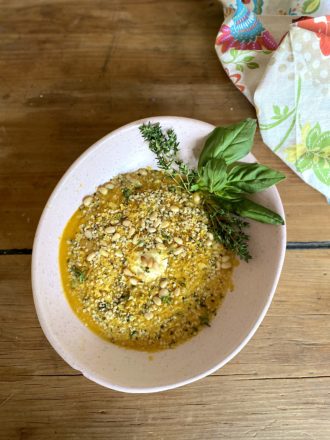
Hello my little pumpkins, today I'm sharing a super easy pumpkin soup recipe. It all hinges on the way you roast it and the pimping of the toppings.
You can really supe up the soup in anyway you prefer. I added pine nuts, hemp seeds, thyme and nutritional yeast flakes and a sprinkling of Love Your Gut powder, because #guthealth 🙂
You only need a handful of ingredients to make this thick, creamy and oodles of flavour soup. Purrrrrrrfect!
Recipe
I used half a leftover butternut pumpkin and 1/4 kent pumpkin. So it's probably about 500 to 600 gms of your choice of pumpkin. Cut into medium sized chunks. I kept the skin on but removed the seeds.
1 tsp cinnamon
1 star anise crushed
1 tsp fennel seeds
2 TBS olive oil
1 litre of chicken or vegetable stock
2 garlic cloves
salt and pepper to taste
2 TBS creme fraiche or coconut cream or yoghurt (for dairy free).
Toppings of choice- hemp seeds, pine nuts, nutritional yeast flakes, herbs of choice.
Heat oven to 220 degrees celsius and place pumpkin and garlic and spices on a baking tray. Add olive oil and one cup of chicken or vegetable stock over the top. Roast for about 20 mins until cooked through.
Remove from the oven and place it into a blender with remaining stock, and pulse until smooth. Pour into a saucepan and heat on stovetop on medium heat for 5-10 mins. Season to taste. Just before it's finished stir in creme fraiche or coconut cream/yoghurt and Love Your Gut powder if using.
Pour into a bowl and top with toppings of choice.
Please give it a shot and let me know how you go!
Lee xo
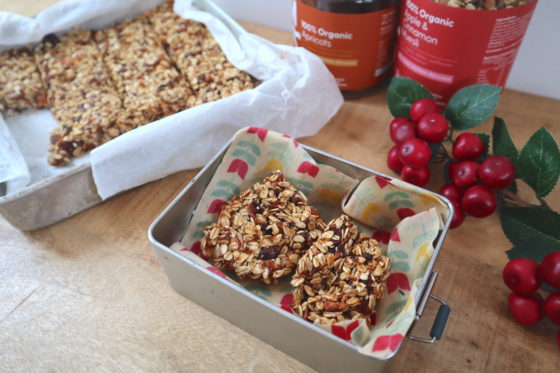
Three Ingredient Apricot and Apple Cinnamon Muesli Bars
While we tend to lean on processed and packaged snacks out of ease and convenience, healthy snacking and baking need not be difficult. Plus, there’s no better family bonding time than cooking with the kids. Inviting kids into the kitchen can serve as a reminder that baking should be fun, and it helps us to not take the whole process too seriously. It’s going to get deliciously messy!
Introducing the kitchen as a space for children or grandchildren can have a host of benefits for the entire family. Creating healthy and straightforward dishes with kids doesn’t need to be a over complicated and we don’t have to produce MasterChef renditions of a fairy-tale castles and unicorns.
Encouraging kids in the kitchen can help educate them about the process of cooking. It can also serve to heighten their appreciation of food, encouraging them to create good habits, such as cooking healthy meals, long-term.
For younger children, learning how to read recipes and perform them can increase language development and reading skills, as well as fine motor skills. If more children learnt how to cook at a younger age, it would definitely inspire a generation who are adept with excellent life skills, to pass on to their own families int the future.
Encouraging baking for kids isn’t only a fun activity, but it can also be extremely gratifying. Healthier food can improve concentration by balancing blood sugar levels and enhancing moods. Creating home-made snacks is a significant first step when cooking with kids. For my first magic trick snack recipe, let’s start with a beloved traditional snack: muesli bars, specifically, these wonderfully delicious apricot and apple cinnamon muesli bars.
I’ve started this one, because, I mean, who doesn’t love apricots? They’re full of nutrients, high in antioxidants, promote eye health, are great for gut health and can even naturally boost skin health. When it comes to dried apricots, Murray River Organics dried apricots are the best in the world! I pop these guys daily. Packed full of flavour and goodness, apricots are a simple and elegant treat.
I choose Murray River Organics dried apricots as they use sustainable and organic farming practices and only recyclable packaging. You may notice that sulphur-free apricots are a darker brown colour, as opposed to their bright orange counterparts. The colour is not something to concern yourself about; in fact, it’s something to celebrate! Murray River Organics dried apricots are sulphur-free. Sulphur dioxides and sulphites are naturally occurring chemical compounds that preserve foods, such as meat, wine and of course, dried fruit. While sulphur is safe for most people, it can cause digestive issues and sensitivities in others. Organic and naturally dried fruits have a more potent and delicious taste. Sadly, they won’t last forever in your pantry, because you’re going to eat them all; this is my warning.
I’m combining my favourite dried apricots with the Murray River Organic Apple Cinnamon Muesli. I hide this from the kids, or I’d never get any (this secret is between you and me!) - this one’s high in fibre, natural ingredients, dairy-free and vegan friendly. When I look for muesli, I look for simple ingredients that I know how to pronounce, with whole foods and minimal additives. It’s muesli how it should be, and this muesli ticks all the boxes… just don’t eat the entire carton at once!
The apple and cinnamon perfectly round out the muesli bar with subtle flavour tones and tummy-filling substance.
This three-ingredient muesli bar is a masterpiece that can be ready in minutes! They’re perfect for a breakfast on the run, to have at work for morning tea, or as an afternoon snack for the kids.
Apricot and Apple Cinnamon Muesli Bars
A three-ingredient masterpiece that’s ready in minutes!
Preheat the oven to 180°C (350°F) and line a 20 cm (8 inch) square cake tin with baking paper.
Process the apricots in a food processor until sticky.
Combine all the ingredients in a medium bowl and stir with a wooden spoon until well mixed.
Push the mixture into the prepared tin and bake on the middle shelf of the oven for
15 minutes, or until slightly crisp (see tip).
Cool, then cut into eight bars. Store in an airtight container in the fridge for up to 2 weeks.
Supercharged Tip
Instead of baking the mixture, you can leave it raw, push it into a square dish and allow to set in the fridge for 30 minutes. Cut into eight bars and store in an airtight container in the fridge for up to 2 weeks.
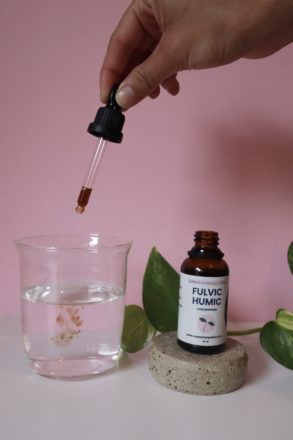
Drops of Jupiter (Fulvic Humic Concentrate)
Now that she's back in the atmosphere
With drops of Jupiter in her hair, hey, hey…
Speaking of drops of Jupiter, our new Fulvic Humic drops have dropped. These heavenly drops are straight from planet earth and heaven for your gut and overall health.
Supercharged Food’s Fulvic Humic Concentrate (FHC) is made from natural organic plant substances that play an important role in healthy metabolism and recycling of metabolic wastes.
FHC is a natural way to promote good gut health, as it goes beyond probiotic supplementation, by foundationally supporting the integrity of the gut lining and strengthening its tight junctions, whilst replenishing microbiota, nutrients and enzymes.
This super nutrient food and chelation therapy, aids the absorption of important nutrients, decreases acidity and enhances your cells use of antioxidants and electrolytes.
FHC has antioxidant, antimicrobial, neuro-protective, and anti-inflammatory properties.
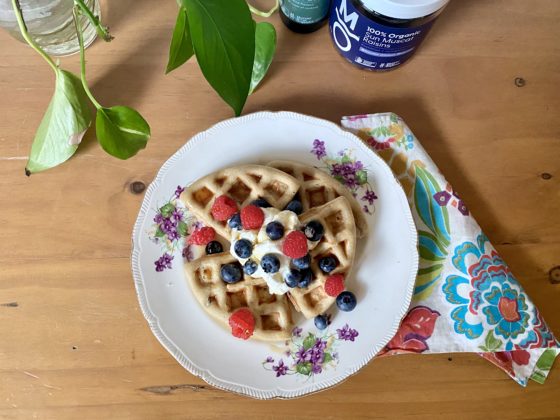
Muscat Raisin Waffles with Fresh Berries to Brighten Your Day
Waffles! Just the word gets the mouth-watering (I’m starting a campaign to include an exclamation mark in the spelling of waffles!). These waffles! are a great breakfast or after dinner idea. Or both. In one day! These waffles! are simple to make, delicious to eat, nutritious to boot and organic.
You may have noticed the word organic at the end of that sentence, and wondered why? I mean, the word organic has been associated with healthier, but the question on everyone’s lips is often: Is that the case?
Well, to break it down simply, when you choose organic, you reduce your exposure to chemicals and pesticides. Organic food is typically more enriched with vitamins and antioxidants and is not genetically engineered or modified. Organic farming is better for the environment, soil fertility and helps to conserve natural resource such as water.
While not everything you purchase must be organic, I recommend, where possible, to consume seasonal organic produce when you can and if it works within your budget. Making small and sustainable changes, like buying the organic version of one ingredient, will make this easier.
When it comes to food choices, I like to ask myself a couple of questions, firstly Are they Australian owned and Is this organic? Thankfully Murray River Organics make it easier because they are both. They’re committed to growing sustainably through implementing environmentally sound practices, to create high-quality Australian health foods and pantry staples. They believe everyone deserves organic food that tastes great and is easily accessible and affordable. Affordability is one of the main reasons people find it hard to eat organics, however these wonderful organic products are much more reasonably priced and really good value.
Just a quick fact for your next trivia game – The Murray River is one of the largest navigable waterways in the world, spanning across Victoria, NSW and South Australia. The Australian Aboriginal people relied on it for its abundance and carried goods across it. Today, it provides essential water across Australia for industrial, domestic and recreational use.
Oops! You can tell I’m passionate about something when I start waffling on a little too much! Where was I? Oh yes, waffles! Just add Sun Muscat raisins from Murray River Organics, fresh berries, maple syrup and you’ve got yourself a real breakfast-or-snack-or-after-dinner-or-maybe-even-dinner special.
Speaking of raisins, I believe they don’t deserve their reputation as just dried-up grapes in tiny cardboard boxes. They’re not just shrivelled up grapes, okay?! They are so much more than that and give these pancakes a sweetness and depth of flavour. Raisins are naturally sweet, giving you lots of energy and are full of antioxidants. Have you ever thought that raisins are just the kids-friendly version of wine? Nope, just me, anyway…
I include them in porridge, chicken salads, home-made granola and even as a snack on their own. The 100% organic Sun Muscat Raisins in my waffles, are packed full of more nutrients than other varieties, without the harmful pesticides. These delightful raisins originate from Murray River Organics; the world’s largest dried vine fruit producer. I love supporting regional businesses, especially in these times where we all need a bit of love!
Now, for the waffles! Dried ingredients are always useful to have on hand, especially when you’re in a house with a waffle maker. Oat flour, for example, is gluten-free friendly and high in fibre. Cinnamon has traditionally used to aid digestion and adds a subtle sweetness to this waffle mix. I’ve also included my Sun Muscat Raisins, salt and gluten-free baking powder.
For the wet ingredients, I’ve used coconut milk, eggs, maple syrup, vanilla, apple cider vinegar and Murray River Organics Avocado Oil. Why avocado oil? Well, firstly, it’s derived from avocadoes, and who doesn’t love avocadoes? Avocado oil is high in monounsaturated healthy fats, and the antioxidants vitamin E, lutein and beta-carotene. Together, these dry and wet ingredients make for a delicious and billowy and crunchy edged waffle for the whole family.
Of course, the mighty waffle would be nowhere without its trusty sidekick, toppings. While we all know that maple syrup is a must on waffles, have you thought about other ingredients to supercharge your waffles? Don’t worry; I’ve done the hard thinking for you. I love serving these waffles with fresh berries, plain yoghurt or coconut yoghurt and then, of course, I round it all out with a drizzle of maple syrup.
These waffles are a little bit of sweetness to brighten your day. This dish is such good fun for little kids and big kids alike.
1 punnet berries (I used blueberries and raspberries)
½ cup plain yoghurt
Extra Maple Syrup to serve
Method
In a medium bowl, combine the oat flour, baking powder, salt, cinnamon and raisins.
In a separate bowl, whisk together the coconut milk, avocado oil, eggs, maple syrup, vanilla and apple cider vinegar.
Pour the wet ingredients into the dry and stir until well combined. Set the batter aside for 10 minutes to thicken.
Heat waffle maker and spray with a little oil (trick is to get waffle maker very hot when its ready to use).
Spoon in a portion of batter and cook until golden.
Leave on a wire rack to cool slightly and crisp up while repeating the process with the remaining batter.
Serve topped with berries, yoghurt and maple syrup.
Fast ways to use a slow cooker plus Hearty Lamb Shanks with Root Veggies
Now that restrictions are easing and life is slowly returning back to the new normal, now is a good time to think about how you want to structure your new days and get the most out of your health and life.
Some of us have been so used to going through life on autopilot; at times working for hours on end and not giving ourselves any time to breathe. If this sounds familiar to you, one of the simplest ways I've found to help switch off and slow down is to take the pressure off (literally).
A slow cooker is one appliance in the kitchen that makes winter days that much easier. It gives you one less thing to think about, provides nourishing meals that are simple to prepare and allows you to have more time for other activities. Another positive right now is that the smell that radiates whilst cooking in a slow cooker makes the house feel like a home again, not a school, not an office and not a lockdown bunker!
Slow cooking is a traditional method of cooking that uses a gentle flame or heat for a longer period of time. This slow process enables ingredients to retain the vitamins and minerals that could be destroyed using other methods, such as being cooked on the barbeque or in the fry pan or oven. Slow cooking also helps break down the cell walls of vegetables and meat, making them much easier for our bodies to digest so its great news for people who want to look after their gut health. (Hello... Love Your Gut powder!)
If you’re new to the slow cooking lifestyle, prepare to have an extra hour or two on your hands and a whole lot less stress too!
I’ve included some of my favourite fast ways for living the slow life, into a simple guide here...
Firstly, be sure to use the right sized slow cooker. When you’re filling it up with all of your nourishing ingredients, it should be filled between one-half to two-thirds full. It’s better to not use too much liquid as the meat and veggies contain some liquid and this will flow out as they cook. If you add too much liquid to the cooker, it can add on extra cooking time and not be as robust in flavour.
While I love using leaner cuts of meat as much as the next foodie, meats that are higher in fat take longer to break down and will stay juicier and tender in a slow cooker than leaner cuts. It’s absolutely your preference as to what you would like to use.
When it comes to meat, if you do want to add an extra element of complexity to the flavour of your dish, you may choose to brown meat before adding it to the slow cooker. As the slow cooker helps food retain its moisture, meat won’t brown once it’s in the slow cooker.
If you’re a vegetarian or vegan I absolutely love adding red lentils to my slow cooked vegetable dishes and the slow nature of cooking them makes them taste so tender and creamy. The other good news is that they don’t need to be pre-soaked, another win for anyone with a sensitive digestive system. You can also sneak some greens in there too, like kale or spinach or add some prebiotic fibre rich veg such as sweet potato or fennel bulbs.
Lentils are simple to make at the best of times but slow cooking them makes them really easy! And don’t worry if you cook them for too long, all you need to do is turn them into a soup. Soups are also lovely to make and combining them with Moroccan style spices such as cumin, ginger, coriander and all spice will take the dish to the next level.
I know it’s exciting the first time you’re trying something new, but just as you don’t (or shouldn’t) open the oven every few seconds when you bake a new cake, try to refrain from opening the lid of the slow-cooker every few minutes when you’re making a stew. I recommend not to keep peeking inside or stirring its contents. Opening it up allows the heat to escape, adding an extra half-an-hour to your cooking time.
If you’re using frozen foods, I recommend defrosting them beforehand. Frozen foods can take longer to get to the right temperature to kill off potential bacteria, increasing your chances of developing food-borne illnesses.
Another favourite thing about my slow cooker, especially when I'm feeling lazy is that I throw whatever ingredients I want into it in the morning, for example, garlic, onion, vegetables and lamb, and come back to a fragrant meal in the evening.
Bone broths are good too, and are an excellent meal for a slow cooker plus they can help support thyroid function. They contain zinc, which is essential for immunity and healing the gut, as well as iron. By slowly cooking meals, you’re able to enhance their flavour and boost gut health.
1/2 cup roughly chopped flat-leaf (Italian) parsley
2 teaspoons grated lemon zest
1/4 garlic clove, crushed or finely grated
Method:
Heat half the olive oil in a large heavy-based saucepan over medium–high heat. Season the shanks with sea salt and freshly ground black pepper. Working in batches, cook for 4–6 minutes, turning occasionally, until browned all over. Remove from the pan and set aside.
Add the remaining oil to the pan and sauté the carrot, celery and garlic for 3–4 minutes, or until softened.
(if using a slow cooker remove shanks and carrot, celery and garlic and place all ingredient in a slow cooker and cook on low for 6-8 hours)
If using the stock stove top, stir in the broth, then return the shanks to the pan. Add the thyme sprigs, celeriac, sweet potato and parsnip and bring to the boil.
Reduce the heat to low, then cover and simmer for 2–2 1/2 hours, or until the lamb is tender and falling off the bone, turning the shanks halfway through.
If needed, stir in a little filtered water during cooking and the Love Your Gut powder if using.
Remove the shanks from the pan. Remove the meat from the bones, break into bite-sized pieces and return them to the sauce. (Or leave the meat on the bone, if you prefer.)
Combine all the gremolata ingredients in a small bowl and serve sprinkled over the stew.
Simple Self-Care Tummy Massage for Anxiety
Are you feeling stressed or anxious? You are not alone. In fact, you are in the majority. Today I’d love to show you a simple tummy technique that you can use in times of stress.
Anxiety can take a variety of forms and affect people in different ways. Coping with day to day challenges is difficult enough, but add to that living with uncertainty such as health, financial and societal issues, especially in these unprecedented times, and the underlying waves of anxiety can bubble to the surface for many.
In times of high anxiety and stressful circumstances, I find that the simple act of staying connected can be beneficial. Staying connected with friends, family and loved ones can provide support, in addition to that, and importantly, staying connected with yourself can also be key in offering relief. If you're uncomfortable speaking with a practitioner face-to-face about your anxiety, you can always connect with the licensed mental health professionals at BetterHelp.
Research shows that not all stress has a negative effect on your body, however, chronic and long term stress can compromise the immune system by raising catecholamine and suppressor T cells levels, suppressing the immune system. This suppression can raise the risk of viral infection and ultimately manifest in illness. Stress can alter the acidic concentration of the stomach, which can lead to peptic and stress ulcers or ulcerative colitis.
Our adrenals constantly working overtime, coupled with pent-up anger, fear, guilt, or resentment that is often held inside in stressful situations, can produce effects on the immune system. Instead of discharging our stress through lifestyle changes and nutrition, we can often hold stress inside of us, where its effects become cumulative. This stage two stress has been associated with the onset or the exacerbation of symptoms of common chronic disorders of the digestive system such as functional gastrointestinal disorders (FGD), inflammatory bowel disease (IBD) and gastroesophageal reflux disease (GERD).
Everybody deals with stress differently and it can be stored in different areas of your body. Stress can be felt in the form of fear, pain, tension, or stiffness in your face, around the jaw, in your neck and shoulders, in your heart, diaphragm, around the pelvis and hips, and in particular in your stomach.
Your physical body needs to release emotion and if it’s suppressed and not expressed it can then manifest in your joints, tissues, organs, and bodily systems. In your gut, stress can manifest as gut issues, IBS, constipation, diarrhea, nausea, and pain.
The relationship between psychological stress and the gastrointestinal system is complex and bidirectional. The digestive system has its own nervous system, known as the enteric nervous system and sometimes referred to as a "second brain", which houses over 100 million nerve endings. These nerve endings are designed to respond to stress hormones transmitted from the brain which is part of the “fight-or-flight” response.
The enteric nervous system, via a network of nerve pathways, uses neurotransmitters such as serotonin (of which over 90% is manufactured in the gut) to communicate and interact with the central nervous system. Stress can take up residence in the gut and the complex system of nerves in your gut can become hypersensitive and fire off, even in response to normal digestion. That’s why for some people eating a normal-sized meal can cause pain but for others, there are no symptoms at all.
As much of your stress is held in the gut, there are even metaphors for it - "My tummy's twisted in up knots!", "This is gut-wrenching". "I have butterflies". Deep breathing and self-massage are both very grounding therapies for the stomach, that can help you to relax and reduce reactivity to stress, relieve muscle tension, and release the knots and butterflies that nest in your tummy, setting them free!
I’d love to introduce you to a simple hands-on gut massage that you can try at home, to help you cope more successfully in times of stress, particularly if you hold tension in your stomach. This tension you may notice will show up in symptoms such as cramping, distension, or indigestion.
We all love massages. And so does our gut. Massaging your tummy before and after meals is therapeutic in so many ways – physically, mentally, spiritually, and even digestively!
So why should you be massaging your stomach (as if you really need a reason)?
A quick, gentle rub of your tummy as you read this will tell you all you need to know why it's a good thing. It just feels soooo yummy and relaxing. But it's much more than just that. It's especially a good personal care practice for your digestion. Gentle massage relaxes your stomach muscles and digestive system, allowing them to focus on their main job of processing nutrients and disposing of waste.
Get your gut gunk in the trunk unpacked and moving.
We can hold up to three kilos of waste (or gut gunk) in our front trunks! Three kilos of undiscarded food waste, bacteria, plaque, and, well, gunk. This build-up adds to weight gain and can contribute to fatigue and less nutrient and hydration absorption.
Taking Love Your Gut powder thirty minutes before you massage is an effective way of starting to gently clean and tone your gut, slowly 'chipping away' at the gunky build-up.
Are you ready to rest and digest?
There are a few simple practices to include with your massage. They all centre on priming your gut to do its job of processing nutrition and hydration.
Start with chewing your food well. Chewing acts as pre-digestion, breaking food down for easier processing. It also slows you down to enjoy food more and be present and in the moment.
Whilst you massage just remember, deep breaths. Deeeeeep. Brrrrrreaths. In through your nose. Right into the belly and feel your tummy expand as you inhale. Keep it there for a few seconds and release through your nose or mouth and feel your tummy contract.
Now that you have all the ins and outs in place, you're ready to get your massage on!
Go with the flow
The simple rule of a good gut massage is to follow the flow of your intestines. The food and hydration go through in a clockwise direction and our massage should follow suit.
Use your fingers or palm of the hand, rub in a clockwise motion around your navel. Apply the amount of pressure that feels best.
After the clockwise massage, try a vertical approach.
Start at the base of the ribs along your centreline. Then move in one motion down to just above your pubic area. It's akin to gently pushing the contents of your system through.Then do the same one or two inches to both the left and the right of your centre. Repeat for a minute.
To help with constipation, focus on acupressure points.
* The area two finger widths below the belly button
* The area along the center of your torso, halfway between the navel and the ribs
(Just a reminder to not use acupressure if you are pregnant).
Best oils
Doing your own gut massage doesn't require the use of oil. It's more important and useful just to massage regularly. If adding elements like oil distract you then do them every so often. But if you like it, using essential oils can add a little indulgence and be moisturising. In Ayurvedic practice, sesame oil is used. Regular body oils work well, as do creams. It's a personal preference for what oil or cream you use. Again, it's more about getting into the habit of a lovely stress-relieving tummy rub.
Watch this simple self-care gut massage and give it a go on your gut!
Using your hands, rub them together it’s nice to add some of your favourite oil on your hands and it makes it easier to glide across your skin.
Begin on the lower left side of your stomach down by the bone of your pelvis.
Rub in a circular motion lightly.
Using both hands work gently around and down the navel.
Work your way down to the right to the hip bone and back up to the belly button for 2-3 minutes.
If you're suffering from anxiety and it is unmanageable, it is important to speak with your health care practitioner and put in place a plan that will help support you.
Please try this massage and let me know what you think in the comments section below.
Free supercharged recipes delivered to your inbox!
When you register for our newsletter you'll also receive a FREE gut health recipe ebook.





 Waffles! Just the word gets the mouth-watering (I’m starting a campaign to include an exclamation mark in the spelling of waffles!). These waffles! are a great breakfast or after dinner idea. Or both. In one day! These waffles! are simple to make, delicious to eat, nutritious to boot and organic.