
The Special K’s for a Loved Gut + Kefir Yoghurt Recipe

Have you been feeling a little… off? Perhaps you’re feeling more bloated or gassy than usual? 

If so, no, it’s not your imagination, and no, you can’t blame the moon or mercury going retrograde. So, if you can’t blame the planets or the galaxy for this one, who can you blame?

It’s simple.

Your gut. 

Your gut’s main job is to absorb nutrients that support you to function and flourish. If it’s not working the way it should, it can impact your entire body. Any time you experience bloating, gas or even constipation, that's your gut letting you know that something’s wrong and it needs a little love. So, next time you have the runs or a sudden onset of pimples dotted across your forehead, you should thank your gut for letting you know that it needs some love (too far?). 

How do you show your gut love? The Special K’s. And no, I’m not talking about the cereal! 

Here are the special K’s for a loved gut. Plus I'm also sharing a special "K" recipe, my homemade Kefir if you'd like to scroll ahead.

  1. Kefir 

Kefir is a fermented product containing milk or coconut water and fermented kefir grains that grow live gut-loving bacteria. It might remind you a little bit of Greek yoghurt; it's nutrient-dense, smooth and can taste a bit sour. Consuming kefir can reduce digestive discomfort, support immunity and enhance natural detoxification. You can find kefir at your local health food store, or you can try your hand at making it at home. Try drinking it straight, adding it to smoothies, whipping it up like cream cheese or using it as a dressing.

  1. Kombucha

Do you know what’s had the biggest transformation in the last few years? Kombucha. What was once a ‘weird’, smelly drink hippies would make in their basement has become a phenomenon that can be found in supermarkets worldwide. Kombucha, also known as “booch” on the streets, is fermented tea. The traditional method of creating kombucha involves a natural fermentation of sweet tea with a live culture known as SCOBY (symbiotic culture of bacteria and yeast). This results in a sparkling drink with sweet and sour flavours that contains live cultures and antioxidants from tea polyphenols. Some kombuchas are better than others so be sure to read the label for hidden ingredients.

Another synbiotic to include in your gut-health routine is Love Your Gut Synbiotic Powder. Fermented using five different strains of probiotic bacteria, along with prebiotics, digestive enzymes and more, the Synbiotic Powder is formulated to improve gut health, immunity and well-being.

  1. Kimchi

Kimchi is a spicy pickled vegetable dish from South Korea and has been around for more than 2000 years. Kimchi combines cabbage, scallions or radishes in a brine with garlic, ginger, chilli and fish sauce. Kimchi improves the bioavailability of the foods you eat – meaning the nutrients you consume are more easily digested and assimilated in the body – while showing the gut some love by giving it much-needed beneficial bacteria. Kimchi is also high in choline, which can help maintain balanced moods.

You can pick up a jar of kimchi at your grocery store in the refrigerated section. At this point, I eat kimchi with almost anything (sometimes I even have it with a spoon), but if you’re new to kimchi, start slow by adding a teaspoon of it to a nourishing bowl, like my Smoked Salmon Living Lentil Bowl.

  1. Kermented vegetables

Okay, this one’s a bit of a stretch, but you can’t blame me for trying ha!. Fermented vegetables have been around for decades for a good reason. Not only do they last longer (who wants soggy carrots sitting in their fridge? No one. Absolutely no one.), but they also have an amazing impact on the gut. Consuming active live cultures from fermented vegetables helps nourish the digestive system with healthy microbes, combats inflammation and provides the fibre that regular veggies do.

My favourite? Fermented Turmeric and Fennel Cauliflower; it’s full of flavour and helps take the almighty cauliflower to the next level. 

To up your gut game and help support a healthy metabolism, be sure to include Fulvic Humic Concentrate (FHC); it’s a natural way to promote gut health, as it keeps the integrity of the gut lining while replenishing your gut bacteria. FHC is a super-nutrient food that helps you absorb more of the good stuff, meaning you can put all the fermented foods you’re eating to good use!

To soak up the gut health benefits of fermented foods, or should I say, kermented foods, for yourself, stock up your pantry with kombucha, kimchi, kefir, cultured yoghurt and Love Your Gut Synbiotic Powder.

Before buying all of the special K's on this list, remember that not everyone's gut loves these foods; some sensitive tummies can initially suffer from gas and bloating. Whenever introducing any new food into your diet, it's best to start slow, see how your body reacts, and go from there.

Now, go on, show your gut some love today!

Well you've made it to the end of the blog and you must be hungry by now, so here is my Kefir Yoghurt Recipe!

Serves 2

Boost your inner ecosystem with the beneficial bacteria in this delicious yoghurt to keep your immune system strong.

You’ll need a sterilised glass bowl or large jar, blender, strainer, cheesecloth, elastic band and wooden spoon. (Avoid using metal and store in a glass jar.)

3 young coconuts, at room temperature
2 dairy-free probiotic capsules or 1 tablespoon dairy-free probiotic powder
fresh berries, to serve (optional)

Method

Open the coconuts and strain the coconut water into a bowl. Set aside.

Scrape out the coconut flesh, trying not to include any husk, and place in a blender. Add the coconut water and blend until creamy – it should have the consistency of yoghurt.

Pour the mixture into a glass bowl and add the contents of the probiotic capsules or the probiotic powder.

Cover the bowl with cheesecloth, securing it using an elastic band, and put in cool, dry, dark place for 1–2 days. When ready, it should taste fairly sharp without a hint of sweetness.

Add your favourite sweetener to taste if required, then refrigerate and enjoy over the next 7 days. Serve with fresh berries, if desired.


8 Pros and Cons of the Keto Diet — and 6 Tips for Making it Work for You

The keto diet is a low-carb, high-fat diet that shifts your body’s fuel source from carbs to fat. When you significantly reduce your intake of carbohydrates and increase fats, your body enters a metabolic state called ketosis.

In ketosis, fat becomes the primary energy source. This concept forms the foundation of the ketogenic or 'keto' diet, an eating plan hailed for its potential weight loss effects but also known for certain restrictions.

So what are the perks and pitfalls of pursuing this, and how can you do the best possible job of adhering to its rigorous rules?

Surprising Health Benefits of the Keto Diet

Embracing the keto diet can have several significant health advantages. Here are a few that stand out:

  • Weight Loss: The high-fat, low-carb equation promotes rapid weight loss, primarily due to your body using fat as its primary fuel.
  • Controlled Blood Sugar Levels: A diet low in carbs nips blood sugar spikes in the bud, which is beneficial for diabetics and pre-diabetics.
  • Improved Heart Health: If you choose healthy fats, like avocados and olive oil over saturated ones, it may help lower cholesterol levels.
  • Boosted Brain Functioning: Some research suggests that ketones provide neuroprotective benefits potentially enhancing cognitive functions.

Nonetheless, it's essential to keep note that individual reactions can vary. Therefore, comprehensive consultation with healthcare professionals is requisite before making dietary shifts.

The Hidden Downsides of Going Keto

As beneficial as the keto diet can be, it does come with potential drawbacks, including:

  • The Keto Flu: When you first start a ketogenic diet, you may experience symptoms similar to flu (like fatigue and headaches). This temporary state often resolves itself within a week.
  • Nutrient Deficiencies: Limiting your intake of fruits, vegetables, and grains could lead to deficiencies in certain vitamins or minerals.
  • Digestive Discomfort: A sudden decrease in fiber consumption from cutting down on grains and legumes might trigger constipation and other symptoms.
  • Mood Swings: Some people report feeling irritable especially during the initial days due to drastic dietary changes.

It's always necessary to weigh these potential issues against the possible advantages when considering this dietary approach. Additionally, consider seeking professional advice for individualized guidance tailored towards mitigating these concerns effectively.

Top Tips for Triumphantly Tackling the Initial Phase

Starting a keto diet can feel challenging, but there are strategies to make it manageable:

  • Pace Yourself: Make incremental changes. Start with reducing your carb intake gradually and increasing your fat intake correspondingly.
  • Stay Hydrated: Drink plenty of water to prevent potential issues like constipation or fatigue associated with the initial phase.
  • Incorporate Physical Activity: Regular exercise aids in quicker transition into ketosis.

Don't forget that you don't have to be on your own here! There's a wealth of support available online through forums and social media groups. You can even take advantage of keto meal delivery services that get nutritious meals made for you. It’s a convenient option if you're hesitant about learning new recipes and cooking skills yourself initially, and convenience definitely boosts your ability to stick to any diet you adopt.

So tackle those early stages confidently, remembering everyone's experience is different. Also, listen to what feels right for your body, and don’t ignore serious signals that something isn’t right.

Long-term Strategies for Sticking with Keto

For those committed to making keto a long-term lifestyle, here are some strategies to help you stick with it:

  • Meal Planning: Jot down your meals in advance. This helps in keeping track of macros and resisting temptation. If you’re having trouble creating a plan, you could use a meal kit delivery service like Factor, which can deliver their premade keto-friendly meal plan meals right to your door. 
  • Variety is Key: Add diversity to shake off the monotony. Explore new recipes or tweak around old ones complying with the diet's guide rails.
  • Find Your Own Pace: It’s okay if every day isn’t perfect. Aim for progress over perfection.

In addition, remember that social events don't have to derail your commitment. Plan beforehand, choose wisely from the offerings available, or bring along permitted snacks or meals if possible.

Lastly, don’t shy away from seeking professional advice when unsure. There are plenty of experts out there, and health tips from the pros that are tailored to your needs are the best you can get.

Final Thoughts

If all this has inspired you to give a keto diet a go, or to stick to your guns on one you’re already following, that’s great! The tool you’ll need most of all is patience, because those expecting instant benefits from any diet will be sorely disappointed, and won’t stay the course.

How to Crush Your Workout Goals on a Diet: 3 Game-Changing Tips

Whenever you find yourself working out on a diet, you need to wrestle with a fairly complex idea. The idea that while food gives you energy and makes sure that you are able to handle your daily workouts, your diet is going to give you different foods and perhaps quantities than you have been eating previously.

So how do you work out safely and still get some serious benefits?

1.   Fuel Your Body Correctly

There are plenty of healthy foods that allow you to have some serious energy while still sticking to your healthy eating plan. Foods like fruits, vegetables, lean proteins, healthy fats, and healthy carbohydrates will ensure that you have some serious energy, even if you aren’t eating a lot of them. Additionally, make sure to drink plenty of water.

While there are many different types of diets and not all diets work for everyone, the best diets seem to have no restrictions on how much you can eat, but rather, they make sure that you are eating the right kinds of foods in adequate amounts.

You can also focus on fueling your body before a workout using various pre-workout supplements, and the duration of pre-workout impacts tend to kick in about 30 minutes before a workout. So if you take one before you head to the gym, by the time you get there, you will have the supplement working for you by the time you get working out!

2.   Listen To Your Body

Even if you are loving your food intake and can’t find any fault with it, you are still making changes to what your body eats and what it takes in on a daily basis. Things with your workout might need to change because you are going to be eating different amounts, different foods, and at different times than before you were on your diet.

So you might find that while you usually can eat a massive breakfast and then go smash out a workout , on your new eating plan (and a much smaller breakfast), you might find that your workout performance slips. But if you wait a few hours and allow your breakfast and lunch to kick in, then you can get to where you have a ton of energy and can do an afternoon workout.

Don’t be afraid to listen to your body and change things around, especially in the beginning stages of your diet as you are still learning how it works and the benefits it provides you.

3.   Use Exercises That Will Support Your Goals

On a healthy eating plan, you are typically trying to feel better, maybe drop some kilos, or maybe you have a different goal in mind. But if you are trying to drop a few pounds and lose some weight, then you can’t rely on both diet and exercise alone. Instead you need to combine the two in order to see some real results.

So make sure to focus on exercises that are going to help you lose weight, burn fat, and build muscle. If you are trying to build muscle and eating a lot of high energy foods, then focus on workouts that are going to put your body through its paces and help it grow. There are thousands of resources out there that allow you to tailor exercises to your needs, and as long as you are consistent, you will be good to go!

You might think that juggling a diet and also having a good workout plan is going to be hard, but if you make sure that both plans support one another, you will find that you will have the body you want in no time!


4 Benefits of X-Ray Food Inspection

Food safety inspections help avert safety and quality risks. During food processing, a manufacturer's primary concern is ascertaining that their products are fit for consumption while adhering to industry standards. While food manufacturers often use metal detectors during food inspection, they're not as effective because they cannot detect non-metallic contaminants. Thankfully, X-ray systems can do much more than metal detectors to ensure food safety. Discussed below are four benefits of X-ray food inspection.

1.  Effective identification of food contaminants

It’s every manufacturer’s responsibility to ensure their food items don't contain harmful physical contaminants, including glass and metal that can hurt consumers. These foreign objects can be in various production phases based on your production processes. Using X-ray technology in food inspection can be rewarding as it detects even the smallest foreign particles, preventing potential contamination.

Thanks to X-ray systems' unmatched ability to detect physical contaminants in unpackaged or packaged products, manufacturers can ensure consumer protection. With the help of a guide on choosing an X-ray machine, you can find a screening system that meets your needs.

2.  Cuts costs

An X-ray system is a significant investment. However, it can cut costs in the long term. Implementing food safety measures, such as X-ray systems, helps enhance quality, enabling you to eliminate risks. An X-ray machine allows you to minimize waste in your company. By catching faults early enough in the production process, you can keep materials and food products from being disposed of because of bad quality.

With X-ray technology, you can prevent line re-runs that result in wasted staff resources and energy. This facilitates quick turnaround times and productivity. If your company releases hazardous or low-quality food items in the market, it risks food recalls. This may lead to paying over $10 million in costs. Fortunately, an X-ray machine can help ensure only safe, prime-quality products are released into the market.

3.  Supports food traceability

X-ray machines do more than just scanning products for contaminants. Investing in this technology offers you, the manufacturer, a multi-tasking defense line within one device. X-ray machines can keep product details for traceability purposes at each production level:

  • Ingredients and raw materials: Ingredients and raw materials get to manufacturing companies from several sources and vendors. As such, implementing pre-processing contaminant detection is essential. X-ray machines can scan incoming ingredients to catch data on when, what, and who inspected the product
  • Packaged items: To ensure an end consumer gets contaminant-free food items in their desired condition, put an X-ray machine near the end of the production line. X-ray systems can scan boxed or packaged products across various product types while standing as the final line of defense before your food products are released into the market
  • In process: Foreign items are usually initiated in process on processing or manufacturing lines. An X-ray machine scans products and records if they’ve been validated

4.  They ensure regulatory compliance

X-ray inspection machines enable manufacturers to remain compliant with retailer codes of practice, which call for an official X-ray food inspection program to be implemented by granting supplier approval. An X-ray system can help compliance with:

  • International Food Standard
  • Safe Quality Food 2000 code
  • Standard for Food Safety

Endnote

X-ray systems are key to ensuring food safety. Consider incorporating X-ray technology in your food inspection to reap these benefits.

Nutrition for a Healthy Thyroid: Foods and Supplements to Support Thyroid Function

Thyroid related medical conditions affect around 7% of the total US population. Alongside the recommended medication and care plans, it is helpful to understand that a lot of the symptoms and
overarching causes can also be greatly influenced by eating the right food and exploring the most
supportive supplements. This guide explores the foods and supplements that support thyroid
function.

What Affects Thyroid Function?
To fully understand the impact of food and supplements on thyroid levels in the body, is it useful to
also learn about the kind of things that may impact them. For example, being overweight is a major
risk factor when it comes to hypothyroidism, and this is something that is highly controllable. So,
what are the main things that you should be thinking about if you are facing this kind of problem?

Iodine
Iodine is needed to create the thyroid hormone. So, in order to maintain positive thyroid health, it is essential that your body is also producing the correct levels of iodine. When this is not happening, there is a significant increase in risk factors for hypothyroidism to set in. Again, being overweight is a major risk factor here because this can impact how your body produces hormones in many significant ways. Bio Bean looks at iodine and weight loss through the lens of how the two interact and what can be done to promote sustainable and supportive levels within.

Selenium
Also a necessary part of a healthy thyroid, selenium is highly recommended for those with issues in
this area. You can add plenty of foods into your daily diet that are brimming with selenium, and you may be eating some already. Try Brazil nuts, sardines or tuna, eggs, and various legumes to give your body a selenium boost. This will help thyroid functions to retain a normal level of expected behaviour.

Vitamin D
Hypothyroidism impacts the vitamin D levels in the body too. You may notice the signs of a
deficiency by their tell-tale characteristics like dizzy spells, fatigue, weakness, hair loss, and
depression. Taking a supplement is the easiest route towards boosting your levels because it is not
found naturally in many food sources. The food that does contain some of this essential vitamin has nowhere near enough content to support healthy thyroids.

Zinc
It is impossible to have optimal thyroid health if your body is missing the all-important zinc factor.
These types of supplements are commonplace and can be found in most drugstores, supermarkets,
and online health brands as well. Low zinc strongly impacts the way your thyroid hormone is able to function, so it’s worth investigating because if you do have subpar levels, lots of other things might be negatively affected as well. If you prefer to get your vitamins through your diet, try red meats and seafood for this one.

The Rest
There are a few more essential vitamins that work well in the body to combat the effects of
hypothyroidism. It’s helpful to know about these as a deficiency of any one of them could cause your symptoms to worsen and the condition to deteriorate.
 Vitamin A
 Iron
 Magnesium
 Vitamin B12
 Protein
 Calcium

Which Food Is Best?
That’s the lowdown on vitamins, so what about food that is on the safe list too? Zinc-rich meals are a great way to go, but there are other things you can eat to support positive health as well.
 Gluten free rice
 Almonds
 Carrots and spinach
 Chickpeas and lentils

Should You Avoid Anything?
So, now you know what complements the agenda, a few food groups can actually make thyroid
issues worse. Here’s what to avoid.

 Gluten
 Soy
 Coffee
 Ultra-processed fast food

A healthy thyroid depends on a body that can produce iodine. If your vitamin count is out of kilter,
this will impact how you feel and what your body can do.

Delicious and Nutritious: Almond, Cranberry & Tahini Slice Recipe

When it comes to satisfying our sweet cravings, we often find ourselves at a crossroads between indulging our taste buds and nourishing our bodies. But who says you can't have the best of both worlds? With this Almond, Cranberry & Tahini Slice recipe you can indulge in a delectable treat that's not only mouth-wateringly good but also packed with wholesome ingredients that’ll leave you feeling energized and guilt-free.

A Slice of Goodness

This scrumptious bake exceeds all expectations of a healthy slice. It’s full of interesting flavours such as almond, coconut, and cranberries for that sour and sweet burst. Life’s too short not to bless yourself with sweetness, and I couldn't agree more, so whether you're enjoying it as a midday snack, dessert, or sharing it with friends over a cup of tea, this Almond, Cranberry & Tahini Slice is a memorable one!

What You'll Need

Ingredients:

  • 2 cups almonds, roughly chopped
  • 1 cup dried cranberries
  • ½ cup shredded coconut
  • 1 cup almond meal
  • 165g tahini
  • 1/3 cup maple or rice-malt syrup
  • ¼ cup coconut oil
  • 1 tbsp coconut cream
  • 1 tsp alcohol-free vanilla extract
  • Sea salt

Directions

  1. Preheat oven to 175°C. Line a square cake tin with baking paper.
  2. In a large bowl, add the almonds, cranberries, coconut and almond flour and stir well. Add the remaining ingredients and stir to combine.
  3. Pour the mixture into the prepared tin, then press down firmly using wet hands.
  4. Bake for 30-40 mins or until golden brown.
  5. Cool completely before cutting into 8 bars.
  6. Store in an airtight container in the fridge for up to 1 week or the freezer for up to 6 months.
  7. using a sharp knife, cut it into squares or bars. Each bite will be a delightful combination of nutty, sweet, and indulgent flavours.

Storing Your Sweet Treat

One of the great things about this slice is its longevity. I suggest making a batch and freezing it. That way, you'll have instant access to a sweet treat whenever you feel like it. Simply wrap the individual slices in parchment paper or plastic wrap, store them in an airtight container, and pop them in the freezer. They'll stay fresh for up to three months in the freezer, making them perfect for impromptu gatherings or a quick snack.

This slice is not just a sweet treat; it's a celebration of the harmony between taste and well-being. So, why not treat yourself to a slice of goodness today?

Give it a try and let me know what you think in the comments section below.

Lee xo

Aro Ha Wellness Retreat

aro-ha1

Arriving at Aro Ha wellness retreat in Glenorchy on the South Island of picturesque New Zealand and you may mistakenly think you’ve stepped into the pages of “Into the Wild”, the bestselling book about an adventurous seeker and hiker who’s escapades lead him into the remote Alaskan wilderness.

If the hustle and bustle of life has you craving a break and yearning for that blank spot on the map to truly immerse yourself into an unfiltered life experience, then Aro Ha may be just what the doctor ordered.

Imagine a wellness retreat that combines delicious organic food, soul-shifting mountain hikes with natural highs, relaxing daily massages and a environment where you can let go of decision making and fall into the art of complete surrender. Sound good?

From the moment you arrive, you're encouraged to renounce all pre-conceived ideas and expectations and hand over to the beauty and magnificence of the world around you. The comfortable drive to the popular wellness retreat is about a forty-five minute ride, which negotiates through spectacular hobbit and middle earth style rolling hills, surrounded by jaw-dropping backdrops featuring snow covered alps and glacial lakes. It envelopes you with all it’s chocolate box charm and magnetism.

ah-1

I was lucky enough to visit Aro Ha last month and spent five days in this spirit-lifting place. Quite soon after arriving at the retreat, we are whisked off to sit in the gorgeous communal chill out lounge, the perfect location for mingling with other guests against the backdrop of panoramic views across Lake Wakatipu.

We plonked ourselves down on the oversized floppy couch and were introduced to the ethos and run down of the retreat whilst enjoying a raw food platter with freshly made crackers, delights from the organic onsite gardens and a warming herbal tea.

screen-shot-2016-09-25-at-6-10-02-pm

After a weigh in and checks and measuring session, we're guided through the stone pathways to our rooms and left to settle in and prepare for our first hike!  A little later, we meet in the designated hike area just outside the purpose built eco-designed accommodations where we gather up our allocated https://www.globosurfer.com/best-hiking-gaiters and poles if required. Luckily I had my hiking pants sorted thanks to this link here.
screen-shot-2016-09-25-at-6-11-25-pm

I’ve always had a love of nature and an adventurous spirit, but I am no mountaineer by any stretch of the imagination and as we ventured up the steep and craggy mountains on the first day, I wondered whether my jelly legs would see me through.

I was half expecting to stumble upon Alexander Supertramp’s Magic Bus so I could sneak in for a rest and to get my breath back. But there were plenty of opportunities to stop and rest and breathe in the cooling clean air if need be, and I felt absolutely no pressure to be a speedy Gonzales on my way up, with guides at the front, middle and back of the group to encourage and help you along.

When I finally reached my very first summit, the view from the top was impressive and it was then that I noticed a renewed sense of achievement and purpose, filling my senses.

Once back on ground level, we headed into the shared eating area to indulge in a picture perfect highly nutritious dinner.

screen-shot-2016-09-25-at-6-14-41-pm

This was a good time to chit-chat with fellow guests, and share experiences in a refined and natural setting, unencumbered by the usual belongings and trappings that sometimes accompany group gatherings.  We marvelled at the presentation of the fresh produce and delicious offerings.

screen-shot-2016-09-25-at-6-17-23-pm

After dinner it was time for a relatively early night and armed with a warming herbal tea I jumped into the crisp and luxurious white linen sheets ready for a sound sleep.

I knew as soon as my head hit the pillow I would be asleep snuggling into the warm woven blankets and wondering what tomorrow would bring.

screen-shot-2016-09-25-at-6-19-22-pm

As I nestled into the pillow, the mindfulness tip of the day on the bed was calling out to me, encouraging me to align my body and mind.  “This is going to be an interesting five days” I thought.

The paired-back décor of the cabin is restful and minimal with touches of nature weaved in from outside. I loved the natural flora and fauna that adorned the walls.

screen-shot-2016-09-25-at-6-21-48-pm

The whole retreat runs on hydro and solar power and is a welcome sustainable living approach, very much in-tune with its surroundings. The building materials are made from larch wood and local stone and blend in effortlessly with the outdoor terrain.

The yoga studio is minimal and inviting with a gorgeous opportunity to breathe in your surrounds.

screen-shot-2016-09-25-at-6-35-03-pm

The main community building houses the reception area and this is connected to a relaxing, lounge, dining room and open kitchen. The out buildings within the retreat comprise of a stunning spa area which is where the Zen-inducing treatments are carried out.

This flows through to an old school and infrared sauna, which then leads into an outdoor heated spa overlooking the sub-alpine mountains. I haven’t mentioned the icy plunge pool yet, but it's right there if you dare!

screen-shot-2016-09-25-at-6-23-39-pm

After a restful night I'm awakened by a retreat leader outside my doorway, as the chimes of a Tibetan bowl gently rouse me from sleep.  Stumbling up the stone pathway, I'm met by a magnificent wooden yoga hut, centered around a windowscape which captures the stunning beauty and tranquility of the misty lake.

screen-shot-2016-09-25-at-6-25-19-pm

Our yoga teacher Mike was there to greet us with a big warm knowing smile. He’s a beautiful soul and former adrenaline junkie, who brings the yin to many of the guest’s and retreat leader’s yangs as he gently takes us through a hatha-esque guided practice, to dust off the cobwebs and align the body and senses. This is where we are again encouraged to relinquish control and trust the process of the power of healing in nature.

By the time the class was over, breakfast was well and truly calling and this insta-worthy smoothie bowl had my name written all over it!  The nutritious bunch of ingredients blended and ready to set us up for the next hike of the day, three hours across country into the wilderness as far as the eye can see.

screen-shot-2016-09-25-at-6-28-20-pm

It was then that I knew it was truly time to wallow in the raw and wild surroundings and experience the pulse of life that only hiking can provide. Whilst at Aro Ha, each day a hike is undertaken, all with their own challenging elevations and distances and generally covering between 12 and 17 kms of dramatically changing Southern-Alp landscape.

Walking can do interesting things to your mind. What it evoked for me was the ability to be more open to new experiences and adventures and also to have the breathing space to be able to think more creatively and with a new perspective that the daily busyness of life sometimes overshadows.

screen-shot-2016-09-25-at-6-29-23-pm

By lunchtime, we are back at the retreat for more spectacular and empowering food, plated up with flowers from the garden and resembling the pot of gold that was at the end of the rainbow which had formed in the sky after a short rain shower, dazzling us as we ate and chatted, exchanging hiking stories from blisters to potential hamstring strains.

screen-shot-2016-09-25-at-9-47-31-pm

Afternoons at Aro Ha are packed with various classes such as cooking and horticulture, pilates and functional training and you can choose to do as much or little as you wish.

The horticulture class was fun and informative and we were invited into the world of permaculture and shown how to grow our own micro-herbs, followed by a tour of the magnificent indoor kitchen-greenhouse which captures just the right amount of light and warmth all year round for the herb, vegetable and fruit dwellers inside to flourish.

screen-shot-2016-09-25-at-6-32-17-pm

Restorative yoga kicks off at 6pm, connecting the group once again and lulling you into a soothing and nurturing space and time for reflection, much like the great lake view from the windows.

We run through a series of calming and soothing poses, the perfect antidote to an activity filled day. The class is closed with a mindfulness meditation as you melt your body even further into a deeper state of relaxation.

9190000a145073b22f49646a76858e68

As you're gently encouraged to bring your thoughts back into reality, dinner is ready and it's a beautifully presented garden to plate nourishing meal.

screen-shot-2016-09-25-at-6-31-02-pm

Next it's time to head over to the sauna and spa area for chill out time, where you can gaze up at the stars and feel like you're in heaven.

Speaking of heaven, how gorgeous is this cacao breakfast pudding!

screen-shot-2016-09-25-at-6-37-06-pm

I spent five days at Aro Ha and came away with a renewed level of health and fitness and a brand new outlook on life.

My biggest realisation was:

It’s the things that challenge us the most, that become the very challenges that enable us to grow as a person and evolve.

Aro Ha gave me the impetus to reignite my love of adventure and hiking and plan loads more hikes in the future. I’ve since implemented a morning walk around Centennial Park in Sydney and am keeping my steps up along the way.

Thank you Aro Ha for a uniquely life-changing experience.

For more information about Aro Ha Wellness Retreat visit: https://aro-ha.com

Spring Kitchari Cleanse + Supercharged Kitchari Recipe

Spring is here and it’s time to dust off those winter cobwebs and embrace the fresh beginnings that this new season brings. Fling open the windows and feel the sun's warm rays caress your skin. Enjoy the gentle warm breezes that carry the delicate scents of blossoming flowers and freshly cut grass, as you shed the heavy layers of winter and step into all of the lightness and brightness that spring has to offer.

I’m sure you’ll agree that there is a renewed sense of energy and optimism when spring rolls around. It’s a wonderful season to clear out the clutter, both physically and mentally, and create space for new ideas and inspiration to blossom. Springtime is the perfect time to embark on new adventures and embrace the joys of outdoor activities too. Why not pull that old bicycle out from the shed, or lace up your hiking boots, and embark on an adventure, discovering hidden wildflower lined trails, whilst immersing yourself in the natural beauty all around you?

But there’s another element to spring that’s not only about the external transformation; it's also an invitation for your insides to have a fresh new beginning in the shape of an internal cleanse, to give you that nudge to feel rejuvenated and renewed and offer you back all that energy and vitality you may have been missing during the hibernation period of winter.

Today, I'm here to introduce you to a recipe that is not only nourishing but perfect for a springtime cleanse. Allow me to introduce you to my Supercharged Kitchari.

Kitchari is a fantastic dish that is both soothing and easy to digest. It's like a warm hug for your tummy. The best part? It's super easy to prepare, and you can make a big batch to have on hand for quick and satisfying meals. Convenience at its finest, so you can spend more time enjoying nature and the joys of springtime.

So why is a Kitchari cleanse good for you?

Firstly for nourishment and digestive ease. Kitchari is a gentle and nourishing dish that combines rice and mung beans. It’s easy to digest, making it a perfect option for a digestive system break. During the cleanse, kitchari provides essential nutrients, such as protein, fibre, and vitamins, whilst being very gentle on your stomach. It helps reset your digestion and promotes efficient nutrient absorption.

Secondly, it’s beneficial for detoxification and cleansing. Kitchari is thought to support the body's natural detoxification processes. The combination of rice and mung beans is believed to have a detoxifying effect, helping to flush out the junk from your trunk. The spices like ginger, turmeric, and cumin used in kitchari also have antioxidant and anti-inflammatory properties, further supporting the cleansing process.

This meal is also balanced and satisfying. Kitchari is a well-balanced dish that provides a combination of carbohydrates, proteins, and healthy fats. This balance helps keep your blood sugar levels stable and prevents energy crashes.

I love that kitchari's warm and comforting nature can help satisfy cravings and keep you feeling nourished throughout the cleanse too. One thing I should add is to ensure you are drinking enough water if you are doing a kitchari cleanse.

If you’re wondering how long to do it for, the duration of a kitchari cleanse can vary depending on individual preferences and goals. Generally, it can be done for a period of three to seven days. This time-frame allows your body to experience the benefits of the cleanse without putting excessive strain on your system.

A three-day cleanse is a good starting point for beginners or those who prefer a shorter reset. It provides a gentle detoxification and digestive rest while allowing you to experience the benefits of kitchari. I also love to add one teaspoon of my Love Your Gut powder or Love Your Gut capsules at the same time and finish the day with a teaspoon of Love Your Gut Synbiotic to further cleanse the gut and then repopulate it with lots of probiotics, helping your body further with digestion and adding important prebiotic fibre, digestive enzymes and dietary fibre. To supercharge your energy levels, add a few drops of Fulvic Humic Concentrate too. You can read more about my Love Your Gut products here.

For those looking for a deeper cleanse or more significant transformation, a seven-day cleanse may be suitable. This longer duration allows for a more thorough detoxification process and a chance to observe potential changes in energy levels, digestion, and overall well-being.

Ultimately, the duration of your kitchari cleanse should be based on your personal goals, health condition, and comfort level. It's essential to listen to your body and make adjustments as needed. If you have any concerns or specific health conditions, it's always advisable to consult with your healthcare professional before starting any cleanse or dietary changes too.

The addition of vegetables during the cleanse adds essential vitamins and minerals, promoting overall health. To supercharge my recipe, I simply warm 1 cup of the cooked mixture with 125 ml (4 fl oz/1/2 cup) water and add chopped vegetables to it, as it takes this kitchari to the next level and gives it a supercharge and a burst of flavour and nutrients with every spoonful. Who said cleansing had to be boring? Not me!

Have you ever done a kitchari cleanse?  Let me know in the comments below.

Supercharged Kitchari

Here's what you'll need:

Serves 4

  • 200 g (7 oz/1 cup) brown basmati or brown rice, soaked for a minimum of one hour in water and 2 tablespoons apple cider vinegar, then drained
  • 225 g (8 oz/1 cup) mung beans (moong dal), soaked for a minimum of one hour in  water and 2 tablespoons apple cider vinegar, then drained
  • 2.5 cm (1 inch) piece of ginger, grated
  • 2.5 cm (1 inch) piece of turmeric, grated or 2 teaspoons ground turmeric
  • 2 teaspoons ground cumin
  • pinch of asafoetida (optional)
  • 1 tablespoon ghee
  • 1 litre (35 fl oz/4 cups) filtered water
  • Celtic sea salt, to taste

Method

In a large saucepan, combine all the ingredients. Bring it to a simmer, and let it cook until the grains and beans are tender, creating a symphony of flavours and aromas.

Once your kitchari is ready, you can store it in the fridge for easy access. Simply warm up a cup of the cooked mixture with some water, add your favourite veggies, and voila! A nourishing meal is just moments away.

It's time to nourish your body and embrace the freshness of the season. Happy cooking and happy cleansing!

Long Haul Flight Tips

If you’re going on a big jet plane soon and want to be well-prepared, you’ve got to be willing to put in the tough work to go the extra-mile.

Boarding a long flight requires preparation. This doesn’t need to be a stressful thing; it can be as simple as getting together your favourite snacks and mini-meals the day before your flight. While this may seem like a hassle, in the long-run, this will help you save money on food at the airport and lessen your chance of tummy troubles from plane food.

Some of my favourite snacks to bring on the plane include:

If you're prone to a funny tummy while flying, it's a good idea to bring some Love Your Gut Powder and Golden Gut Blend with you in a resealable bag. Then, all you need to do is pop some in a glass of water to keep the gut loving going all plane-ride long. You may want to also put either of these mixes into your pre-made plane food to help boost that gut-healing goodness.

While it’s best to bring your own food from home, if you’re on a long-haul flight and want to eat plane food, avoid options with creams and sauces as these are typically filled with ingredients that can irritate the gut. Nobody wants to be seated next to the token plane farter – we don’t need more gross air wafting through the aisles.

If you’ve got an afternoon or night-flight, it’s a good idea to get in some movement the morning of your flight. Or, if you’ve got a morning flight, be sure to spend some time at the gym, go for a walk, yoga class or stretch the day before to prepare for sitting down for a long period of time. When you’re on board, it’s important to keep moving. I suggest walking up and down the aisles every few hours to keep your blood moving and to help you avoid developing lazy-itis.

The morning of a flight, gulp down a large glass of warm filtered water with the juice of half a lemon or apple cider vinegar and a teaspoon of Love Your Gut Powder to kick-start that digestive system and liver into full gear to help you take on whatever the plane may give you.

Another handy tip for flying is bringing a bottle of water with you or buying one after checking through security. While you can’t bring a filled bottle with you through security, you can bring an empty water bottle which you can fill up after you’ve checked through security. You can also buy a water bottle in the airport after you’ve checked in.

To help with keeping up fluid levels while flying, and if we’re going to be real, I just couldn’t go a few hours without it, I always BYO tea bags on the plane. All you need to do is ask the flight attendants for hot water when they come around and you can have your very own tea party!

One drink I do recommend avoiding on flights is alcohol. As tempting as it may be to keep the drinks coming, alcohol can make you dehydrate faster, which you’re already at risk of while flying. It can also tie our tummy’s in knots so it's best to stick to herbal tea and water.

If you’re on a long flight, try to sleep as much as you can. Not only does it make the hours go by, it also helps you fight that post-plane lethargy. You may wish to bring some chamomile tea with you on board to help you sleep or even bring a pillow – anything helps!

Happy flying!

Essential Health Boosting Supplements as You Age

Different kinds of supplements available in Saliomed.com can help improve your lifestyle and support your immune health.

Health-boosting supplements are excellent at ensuring your body, mind, and soul get the nourishment they need for a more fulfilling life. Even with a great diet full of healthy vegetables, energy-boosting fruits, and high-quality meat and protein, you can often lack one or two of the things you need. And these can change as you get older. There is no one solution to getting all the nutrients, but there are many you can use to your advantage for better health and vitality.

CBD and Hemp Products

Let's get the most controversial one out of the way first. CBD and hemp are widely used these days and are derivatives of marijuana, which is why they are controversial. However, there have been many studies into the positive effects of CBD products and legal medical cannabis for issues such as chronic pain, depression, and anxiety. CBD isn't for everyone, but there are millions of people who swear by it for making them feel less stressed about life and health.

Good Multivitamin Blends

There are essential vitamins that you need each day, and you may not get them through your diet. These include some of the most important for organ, brain, and physical health. You may even be naturally deficient in one or two of these. So a good multivitamin blend includes these:

  • Vitamin D reduces the chances of getting ill, reduces back pain, and strengthens bones.
  • Magnesium eases period pains, helps the nervous system, and helps blood sugar.
  • Iron for improved brain function, red blood cell production, and getting more energy.
  • Vitamin B compounds help digestion, making DNA and help you to achieve better focus.
  • Zinc can help build a strong immune system and aid with your general metabolism.

To ensure you're getting the essential vitamins your body needs, consider incorporating WOWMD Nutrimax Essentials into your routine. This safe, high-quality supplement provides vital nutrients like Vitamin D, Magnesium, Zinc, and Iron, supporting immunity, energy, and overall health.

These are the most vital for daily life. Getting enough of the above vitamins and minerals will help you achieve your daily goals by increasing energy, removing brain fog, and making you feel generally much better all around. It is vital to not rely on multivitamins and focus on health.

Flavonol-Packed Black Elderberry

Flavonols are molecules that have all kinds of benefits. Some of the most crucial are anti-inflammatory properties that can help with common ailments such as colds and flu. This is because they soothe aches and pains, reduce congestion, and bring down a fever. The best source of flavanols is black elderberry extract, which you can get at any pharmacy or health store. You can also take it daily as a well-known preventative measure against cold and flu.

Ancient Adaptogenic Ashwagandha

There is some controversy around ashwagandha because it can be dangerous for some people, works wonders for others, and then there are people who see no benefit at all. Ashwagandha is adaptogenic, which means it helps your body manage stress responses and can help restore you to a calmer state. Many herbs are adaptogens, and you can use ashwagandha daily in tablet form. You should avoid these if you are pregnant, diabetic, or have stomach ulcers.

Asian Shiitake Mushrooms

Shiitake mushrooms contain flavonoids like elderberry. Not just delicious in Asian dishes, they also come with many healthy benefits such as high protein, digestive enzymes, and prebiotics. Prebiotics are the organisms that probiotics feed on. So, you need a steady supply of these to ensure the probiotics in your gut are well-fed. Shiitake mushrooms have also been noted to help reduce anxiety and depression by lowering the active levels of cortisol in your hormonal system.

Supplements for Tired Eyes

With so many devices to use, air pollution, and the general stress of everyday work and life, our eyes get much more tired than we think they do. Strained eyes can cause all kinds of issues, including vision problems, insomnia, and headaches. Your pharmacy will stock these supplements for eye care:

  • Vitamin A can help keep your corneas clear and prevent night blindness.
  • Vitamin E is an antioxidant that helps reduce age-related eye disease.
  • Collagen is produced by vitamin C, which will help strengthen your eye structure.
  • B vitamins help reduce eye inflammation caused by age-related eye issues.
  • Riboflavin reduces oxidative stress, and a deficiency is linked to cataracts.
  • You can help prevent glaucoma by eating foods rich in niacin, like fish and nuts.
  • Lutein helps reduce the stress and strain on your eyes from blue light radiation.

Eye care is essential for helping you feel generally better about your health. The great news is that many of the essential vitamins and minerals for good eye health are found in most of the nutritious foods you probably already eat daily. A balanced and healthy diet goes a long way.

Strengthening the Immune System

As a younger person, your immune system is usually very strong and gets weaker as you get older. This means that even a UTI can be troublesome. However, it doesn't have to be this way, and you can maintain a strong immune system your entire life with the right nutrients. Herbs and supplements such as Eleutherococcus, Maitake mushrooms, and green tea are very easy ways to boost your overall immune system in addition to eating a diet like the Mediterranean diet. Different kinds of supplements available in Saliomed.com can help improve your lifestyle and support your immune health.

Age-Related Support

Aching joints and bones are among the most common complaints as you get older. This is because the cartilage (which acts like a natural lubricant between bones) can wear down and cause your bones to rub against each other. This is more commonly known as arthritis. Yet you can help prevent this common issue with some simple supplements. Supplements and foods that contain curcumin, such as turmeric and black pepper, are known to help with this issue.

Getting Enough Fibre

Not getting enough fiber in your diet can make you miserable. Fiber is essential for digestion and can make passing solids a breeze, which will help you as you age. But it can also help prevent serious issues such as IBS and some other embarrassing toilet problems. Unfortunately, there are no meats that contain fiber. But the good news is fiber is found in many of the most wonderful foods, such as fruits like apples, delicious nuts, and fresh herbs. 

Gut Health products

Your gut can accumulate and store 500g to 3 kilos of waste! This has many negative effects like limiting the gut linings ability to absorb nutrients and hydration. Cleaning your gut should be a constant in your daily life, just like brushing your teeth.

Cleaning your gut is the core job of the Supercharged Food Love Your Gut diatomaceous earth powder and capsules. It’s a gentle, gentle natural gut cleanse.

For a deep clean,  as a clinical nutritionist, I recommends Love Your Gut Fulvic Humic concentrate drops. They are a liquid mineral food that helps clear the hard to get to tight junctures of the digestive system.

Health Boosting Supplements Include Probiotics

As some doctors will tell you, a good immune system always starts with what's in your gut. However, most people overlook the importance of probiotics in their diet, and some aren't even aware of them. Probiotics are little gut cleansers that help your overall internal stomach, digestion, and colon health. Made up of bacteria, they have also been shown to help improve breathing issues and heart health and can even help in the fight against seasonal allergies. 

For repopulating the gut my Love Your gut Synbiotic is key. It contains prebiotics, probiotics, digestive enzymes and dietary fibre.

Honey Health Boosting Supplements

Honey is a wonderful ingredient that can make anything taste better because it is a natural sugar. However, not all honey is made the same, and there are some studies that have found that almost half of honey products are fake imposters of standard sugar syrups. This means they aren't good for you. However, there are some brands and honey products that are. Manuka honey, for example, is a powerful antioxidant that can help with ulcers, IBS, and tooth decay.

Omega-3 and Essential Fish Oils

Omega-3 is a wonderful substance that has many benefits, some of which are being taken very seriously for age-related health issues. For example, some now believe, based on studies, that high amounts of Omega-3 can help with Alzheimer's disease. Here's how you can get more:

  • Expand your culinary skills to include eating more oily fish, such as salmon.
  • Eat more eggs such as for breakfast each morning as they are rich in Omega-3.
  • Have a handful of nuts, especially walnuts, instead of reaching for a sugary snack.
  • Take cod liver oil capsules daily to ensure you always get a good dose of Omega-3.
  • Certain seeds, such as basil and flax seeds, are a great way to boost Omega-3.

Omega-3 fatty acids are a great way to help your body's cells function the way they are meant to. And this also includes the cells in your brain. Poor skin, hair, and nails could indicate you aren't getting enough Omega-3, and for women, this also includes having a difficult period.

An Antioxidant-Rich Diet

Antioxidants are vital for targeting free radicals. These are unstable atoms that can build up in your body and damage your cells. This is known as oxidative stress and is commonly caused by things that are bad for us. This includes high GI foods, too much alcohol, and smoking. Fortunately, it is pretty easy to get more antioxidants in your system, and some are even the best to eat, such as blueberries, tomatoes, and dark chocolate, so there's your excuse, yay!

Summary

CBD and hemp products help you alleviate some aging issues alongside well-established health-boosting supplements. These include the usual suspects, such as vitamins B, C, and D, as well as iron, magnesium, and others. Yet for overall improved health and wellness, you can also include adaptogens from foods like elderberries and shiitake mushrooms for fighting off common cold and flu symptoms. You can boost your health with Omega-3 and antioxidants.

Breaking the Chains: Stories of Recovery and Resilience from Addictions in Australia

It's an age-old struggle: the human battle against addiction. From alcohol, drugs, gambling, and others, addictions creep in and rob us of our freedom, health, and joys. It's a challenge that too many Australians face – but it's not something we must suffer through alone.

There are those who have broken free from the ravages of addiction - and their stories showcase incredible resilience, determination, and courage - and ultimately triumph over their demons. Whether you're struggling against dependency yourself or know someone caught up in its grasp - these accounts will resonate deeply for all who hear them.

Introducing Australia's Addiction Crisis

Australia has been grappling with a national crisis steadily gaining ground in recent years - addiction. Substance abuse, alcoholism, and other addictive behaviours have been causing widespread concern, and the effects of addiction have been felt across communities, families, and individuals throughout the country. While Australia is not alone in facing the complex challenges of addiction, the scale and scope of the problem in this country demand urgent action and close attention.

Addiction is a multifaceted issue with various interrelated factors, from social and economic inequalities to individual personality traits and genetic predispositions. Addressing this crisis requires a comprehensive and coordinated response that includes prevention, treatment, support, and policy measures that can mitigate the harm caused by addiction. With a guide to substance abuse in Australia, we can begin to understand the scope and complexity of this issue and how it impacts individuals and communities.

Stories of Recovery and Resilience - the Power of Support Networks

While addiction can be a seemingly insurmountable obstacle, it's also essential to recognise the power of recovery. Against all odds, individual stories of transformation and healing demonstrate that change is possible with the right combination of personal strength and support networks. These accounts show how courage, determination, and dedication can help us break through even the toughest shackles of addiction - no matter how entrenched the problem may appear.

These stories are more than mere inspiration – they illustrate how effective support networks can be in helping those struggling with addiction reclaim their lives and find new hope and direction. They highlight not only the need for accessible treatment services but also the power of family, friends, healthcare professionals, counsellors, employers, and the wider community to provide essential support in the fight against addiction.

Overcoming the Stigma Around Addictions in Australia

Of course, stories of recovery and resilience are only part of the journey. For those facing addiction, one of the most significant hurdles is often overcoming stigma in our society. In Australia, this issue has been widely discussed in recent years, with reports highlighting how deep-rooted cultural attitudes toward addiction profoundly impact people's ability to seek help and get the support they need. The challenge is to create a society where those struggling with addictions can feel safe and accepted without fear of judgment or discrimination.

Fortunately, there have been encouraging signs that attitudes toward addiction are beginning to shift in Australia. With an open discussion about the social dimensions of addiction, more awareness campaigns, and better access to resources and treatment services, there is hope that society can help break down the barriers to recovery and build a more compassionate culture.

Reasons Why People Become Addicted and What Can Help

Understanding why people become addicted is crucial to tackling the issue. In Australia, a range of factors contribute to addiction, including poverty, mental health issues, trauma and abuse, family dynamics, and social exclusion. By exploring these issues in more depth and developing a better sense of how our society affects individuals' vulnerability to addiction, we can understand how addiction develops and what is needed for effective prevention.

Crucially, we must also recognize that recovery is an individual journey and that everyone's experience of addiction is unique. Supporting those in need requires a personalized approach considering someone's social environment, life experiences, and mental health needs. With the right combination of support, resources, and treatment, those struggling with addiction can find the strength to break free from their chains and reclaim their lives.

Different Types of Therapy to Help Those with Addiction Issues

When it comes to tackling addiction, effective treatment and support are essential. There is no single 'cure' for addiction, but several different therapeutics can help those in need. From cognitive-behavioral therapy (CBT) and motivational interviewing to 12-step programs and counselling, a range of approaches can help individuals on their journey to recovery. What works best usually depends on the individual, so it's essential to explore as many options as possible and find a solution that is right for them.

It's also important to recognize that successful recovery from addiction requires ongoing dedication and hard work. Those dealing with addiction will need a strong support system of family, friends, healthcare professionals, and peers to help them stay on the path toward change. This combination of support and therapeutic interventions allows individuals to break free from addiction and reclaim their lives.

How To Access Support Services for Addictions in Australia

For those needing help, a variety of resources and support services are available in Australia. These range from online forums and helplines to face-to-face therapy and professional treatment programs. Ultimately, the best approach for individuals will depend on their circumstances. There are also services in the UK too such as Counselling in Leicester.

It cannot be easy to know where to start when looking for support, but it's important to remember that help is out there. With the right combination of resources and services, those struggling with addiction can find the strength to take control of their lives and begin the journey toward recovery.

Ten reasons why you should bone broth + Beef Pho Bone Broth

If you’ve got a bone to pick with bone broth, I understand. While I personally love bone broth and found it essential in my gut-healing journey, I know to others, it can sound a little, unappetising. 

If that’s you, I get it, but I would love to have the opportunity to change your mind. 

What is Bone Broth?

Before we start, bone broth is vastly different from the packaged chicken stock you may have used to make soup. Bone broth is made by simmering the bones and connective tissue of animals. It’s a nutrient-dense stock that forms the backbone of many a soup and sauce but can also be drunk on its own. You can make bone broth out of practically any animal – including chicken, beef, fish, buffalo or lamb. 

My De-fishious Fish Broth!

I’d love to share with you ten reasons why I think that bone broth is super healthy and why you might like to include it in your diet. By the way, if you are vegan or vegetarian, then homemade vegetable stocks are delicious and nutritious for you too.

The first reason I’d like to point out is that it’s mineral-rich.

If minerals and vitamins were dollars, bone broth would be rich! Bone broth contains protein, collagen, calcium, selenium, fatty acids, magnesium, potassium, manganese, zinc, iron, and vitamin A and K.  This provides your body with essential nutrients, in an easy to eat and very easy to digest format.

  1. Our gut loves it.

Bone broth has been used for centuries as a digestive tonic, helping heal and seal the digestive tract’s lining while reducing inflammation in the gut. An amino acid called glutamine found in bone broth helps maintain the intestinal wall's function and prevents a leaky gut. Emerging research suggests that glutamine, along with other amino acids found in bone broth, may benefit people with irritable bowel disease and irritable bowel syndrome. 

If you’re looking for further gut support, I recommend Love Your Gut Powder. It helps remove the build-up of mucus, acid, plaque and bacteria in the gut to improve nutrient absorption and reduce digestive symptoms. If you’re looking to support your gut while on the move, why not try them in capsule form here?

  1. It’s an inflammation fighter. 

Bone broth contains the anti-inflammatory amino acids glycine and arginine. Why does this matter? Well, chronic inflammation can lead to a whole host of diseases, including arthritis and cardiovascular disease; this is why it’s crucial to eat a highly anti-inflammatory diet and why I’m team bone broth. If you want to learn more about inflammation, click here.

  1. It’s excellent for the health of our joints. 

Cartilage in the joints shrink and wear down with overuse, which can cause damage, pain and atrophy. According to dietician, Dawn Devito, research indicates that collagen consumption can improve joint health and decrease knee pain and stiffness in people with osteoarthritis.

Bone broth also contains glucosamine and chondroitin, which support cartilage production. 

  1. It can improve our brain function.

Bone broth can be extremely beneficial for our nervous system. The healthy fats within bone broth provide a source of fuel for the brain. Plus, bone broth is rich in calcium which is crucial for nerve health.

  1. Hello, glowing skin. 

Collagen is blowing up in the beauty industry, and with good reason. Collagen is a significant component of the skin, helping keep skin wrinkle-free, plump and glowing. Unfortunately, as we age, our collagen production rate declines, so it’s crucial to replenish it through the diet to help slow skin aging and reduce fine lines and wrinkles. 

  1. It supports the immune system.

The small intestine acts as the first line of defence for our immune system. If the gut barrier becomes leaky, this can disrupt immune system function. We know that bone broth is protective for our gut, so it’s also a massive supporter of the immune system. 

  1. It can assist with weight loss and weight maintenance.

I know it’s not all about ‘calories in’ and ‘calories out’, but if you are looking for low-calorie options to support a healthy weight, bone broth is an excellent option. Bone broth is full of protein which can increase satiation while being low-calorie which is ideal for the waistline. 

  1. It can act as a sleep aid.

Glycine, naturally found in bone broth, may increase relaxation and promote sleep. Studies have shown that those who took glycine before bed fell asleep faster, maintained a deeper sleep and woke fewer times throughout the night. Glycine reduces daytime sleepiness, improves mental function and memory. Sign me up.

  1. It’s a bone protector and supporter. 

Our bones are made mostly of collagen, which supports their structure and keeps them strong. Collagen consumption can increase bone mineral density and stimulate bone growth. Bone broth is also rich in calcium, magnesium and phosphorus, which creates and maintains healthy bones.  

And that’s it! Bone broth is here to heal your gut, support your brain health and warm up your insides. What more could you want?

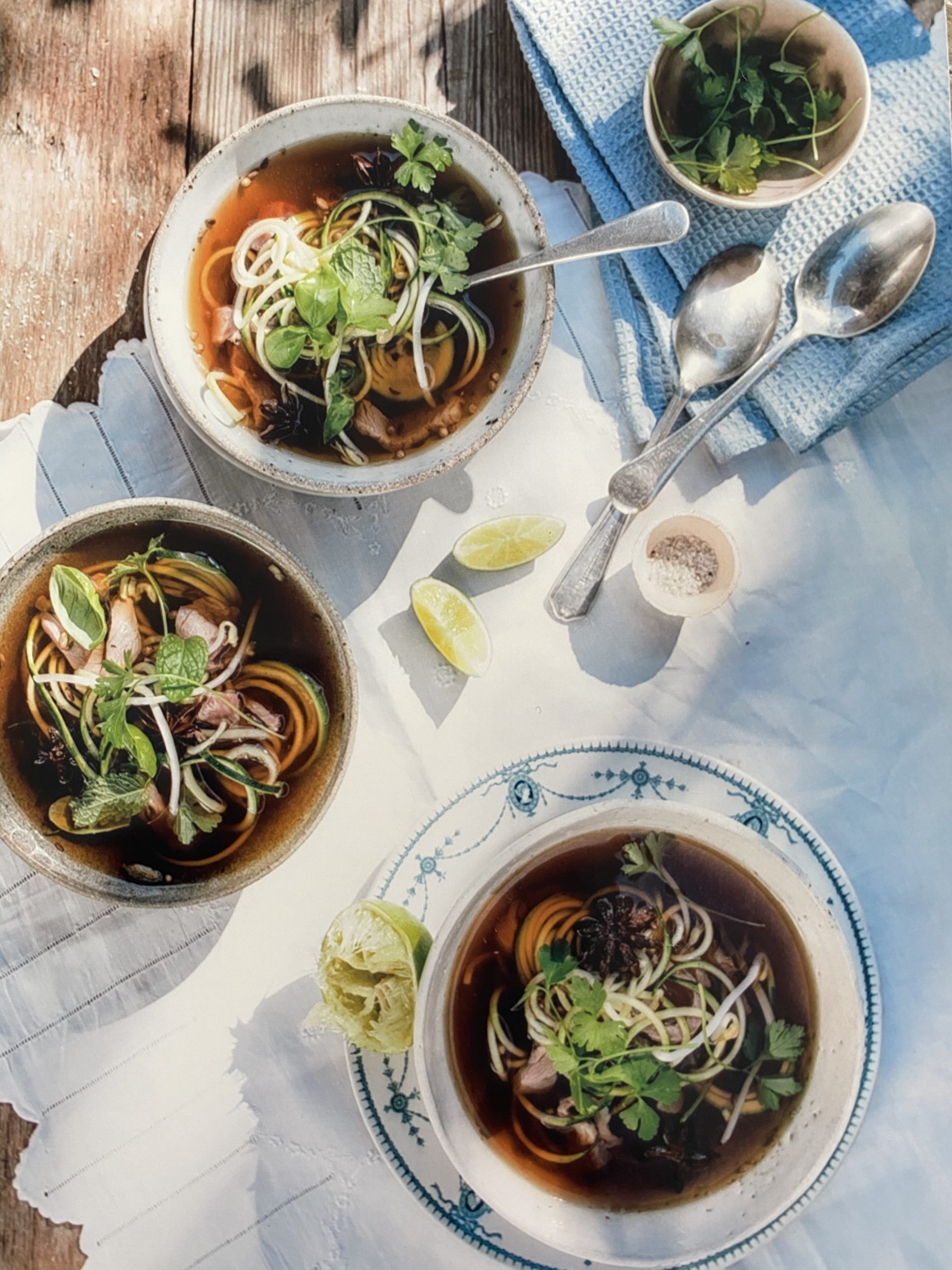
Beef Pho Bone Broth

S E R V E S 4 

Bone broth is all the rage at the moment, but you can enjoy the gelatinous benefits of this age-old tonic in a variety of delicious ways. This particular twist will whisk you away to the streets of northern Vietnam, where pho originated in the early 20th century. It was initially sold at dawn and dusk by roaming street vendors shouldering mobile kitchens. The garnish of lime and bean sprouts is a modern variation on this traditional healing broth. 

Ingredients

  • 1 tablespoon coconut oil
  • 1 kg (2 lb 4 oz) beef bones (shin, knuckles, marrow and gelatinous cuts are good)
  • 2 litres (68 fl oz/8 cups) filtered water, plus extra as needed
  • 2 tablespoons apple cider vinegar
  • pinch of sea salt
  • 6 star anise
  • 2 cinnamon sticks
  • 3 cardamom pods
  • 2 teaspoons coriander seeds
  • 2 teaspoons fennel seeds
  • 3 cloves
  • 1 brown onion, halved and sliced
  • 1 × 7.5 cm (3 inches) piece fresh ginger, grated
  • 1 tablespoon wheat-free tamari
  • 500 g (1 lb 2 oz) beef (e.g. sirloin), thinly sliced
  • 3 zucchini (courgettes), spiralised 

To serve

  • handful bean sprouts, trimmed
  • handful mixed basil, mint and coriander (cilantro) leaves
  • 2 limes, cut into wedges

Method:

  1. Preheat the oven to 200°C (400°F).
  1. Heat a large flameproof casserole dish over medium heat and melt the coconut oil. Add the bones and stir to coat. Cover and transfer the casserole dish to the oven for 30 minutes or until the bones are browned. 
  1. Return the dish to the stovetop and add the water, vinegar and salt. Bring to the boil, reduce the heat to as low as possible and simmer, covered, for 11/2 hours, adding a little more water from time to time if necessary. 
  1. Carefully remove the bones using tongs and discard. Allow the broth to cool, then skim any unwanted fat off the top, setting it aside. 
  1. Heat a heavy-based frying pan over medium heat and toast the spices for 2 minutes or until fragrant. Move the spices to the side of the pan, add some of the reserved broth fat, then sauté the onion and ginger until the onion is translucent. Transfer to the casserole dish with the stock, then add the tamari and beef.
  1. Return to a gentle boil over medium heat on the stovetop, then reduce the heat to low, add the zucchini noodles and simmer for 5 minutes, or until the noodles are al dente. 
  1. Ladle into bowls, top with the bean sprouts, garnish with the herbs and serve with the lime wedges. 

SUPERCHARGED TIP

If you have a slow cooker, it’s perfect for this pho. If you prefer your noodles crunchier and your beef rare, you can put the noodles and beef into the bowls then pour over the hot broth.

Free supercharged recipes delivered to your inbox!

When you register for our newsletter you'll also receive a FREE gut health recipe ebook.