What Are the Best NSF-Certified Water Filters? A Buyer’s Guide

Household water filters can become excellent investments, especially if you struggle to stay hydrated due to taste or health-related issues with your supply. Many families cannot feasibly purchase bottled water all the time, so filtration systems become the most accessible way to meet a common need. While looking for a water filter, you’ve probably encountered several options described as having NSF certification. Why does that destination matter, and under what context should you consider it when browsing?
What Does NSF Certification Mean for Water Filters?
The National Sanitation Foundation is a global organization founded in 1944 that creates standards for numerous consumer products. Items certified after passing the entity’s tests bear the NSF mark. The NSF maintains many relevant standards. Some of the most pertinent offerings reduce aesthetic impurities or contaminants that cause health effects, kill or inactivate bacteria with ultraviolet light, or achieve purification through distillation or reverse-osmosis systems.
Although NSF-certified water filters do not remove all contaminants, they give consumers confidence that products meet the parameters set by a well-established organization. You should familiarize yourself with the standards most pertinent to your household’s needs before purchasing these items.
The NSF 401 certification applies to point-of-use and point-of-entry systems verified to lower at least one of 14 stated emerging contaminants. NSF 55 relates to filters with ultraviolet technology to lower levels of bacteria, viruses and cysts. These specifics illustrate why you should look for the NSF mark first, and then check what a product’s designation means for its performance and capabilities.
Many water filters have certifications from the American National Standards Institute and NSF. Manufacturers frequently display both in product descriptions. It’s common to see items that meet NSF and ANSI standards because NSF is an ANSI-accredited body, and the organizations often collaborate when developing new requirements.

What Other Factors Should You Consider?
After deciding to purchase one of the best NSF-certified water filters, think of other factors that may affect how much you enjoy your product or how easily the household can begin using it. The ease of installation, available warranties, customer support accessibility and whether a brand offers a convenient filter subscription service may all impact which items you buy.
As you evaluate how much you can afford to spend, contextualize it by assessing the costs or other downsides associated with lacking access to filtered water at home. Maybe you only have a small car, making it difficult or impossible to purchase bottled products in bulk to meet the family’s needs.
Perhaps you have recently learned your area’s public water supply has elevated levels of a particular contaminant, although authorities still deem it safe to drink. That may encourage you to research filters, especially if you worry about the problem worsening. Those products could reduce your anxiety and help you feel you’re doing your best for loved ones.
Calculate the expected costs for your water filter by combining the price of the main unit with the amount of replacement accessories needed per year. That simple method shows that the product will easily pay for itself over time, both from a financial aspect and through other supporting benefits, such as convenience and better health.
Methodology
Companies selling the best NSF-certified water filters clearly state which standards they meet. They also publish supplementary data, such as lab results showing the removal efficacy for specified contaminants.
These leading brands offer excellent customer service, providing thorough support for people with questions about installation, warranty claims or maintenance. Many create product comparison charts or videos for consumers trying to choose between multiple options.
The outstanding businesses in this category also frame products within the context of customers’ biggest needs and pain points, whether they want great-tasting water or to target specific contaminants. The approach makes it easier for interested consumers to find filters that provide satisfying results while meeting their budgets and other requirements.
Because businesses often sell multiple types, people can select options ranging from pitchers to faucet-mounted styles. This variety caters to consumers who cannot necessarily make significant plumbing changes, such as renters. Where can you find the best NSF-certified water filters?
1. Multipure
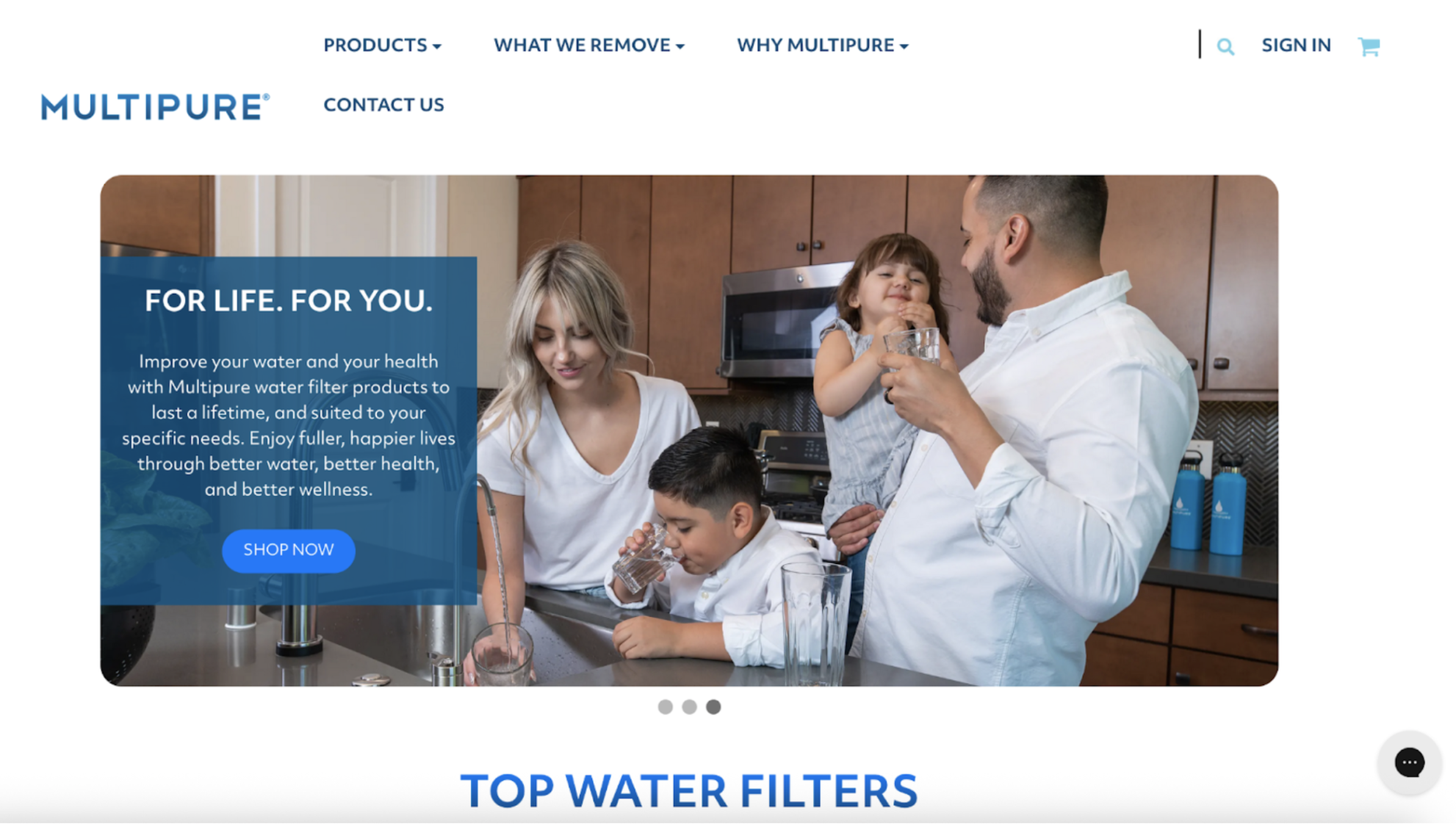
Multipure has helped customers meet their water filtration needs for over 50 years. The brand’s filtration systems and replacement filters have achieved certification under NSF/ANSI Standard 42 for the reduction of aesthetic contaminants and Standard 53, which relates to contaminants of health concern.
The company’s long history of innovation and continuous improvement has positioned it as a water filter leader catering to consumers' needs. Although the products remove unwanted contaminants, the water retains its minerals and associated health benefits without requiring households to use remineralization solutions.
If you love the idea of easily accessible, refreshing water at home but don’t want to remember to buy replacement filters, sign up for Multipure’s subscription program. It gives you a discount and allows you to specify that the accessories arrive at requested intervals ranging from six to 18 months. Customers can also manage their subscriptions through an online portal that allows skipping the next shipment, requesting a filter immediately or altering various details, such as mailing and billing addresses and replenishment frequency.
Key Features
|
Lifetime warranties on the water filtration system housing assure customers that they have purchased options that will last through the years. |
A 90-day money-back guarantee appeals to people who want to experience these filters’ benefits while enjoying support when needed. |
|
All the company’s filters reduce microplastics, helping you take a practical step to reduce this emerging threat. |
Multipure filters are more robust than pitcher-style options but far less bulky and complicated to install than reverse-osmosis versions, while providing real-time filtration at the tap. |
2. Express Water
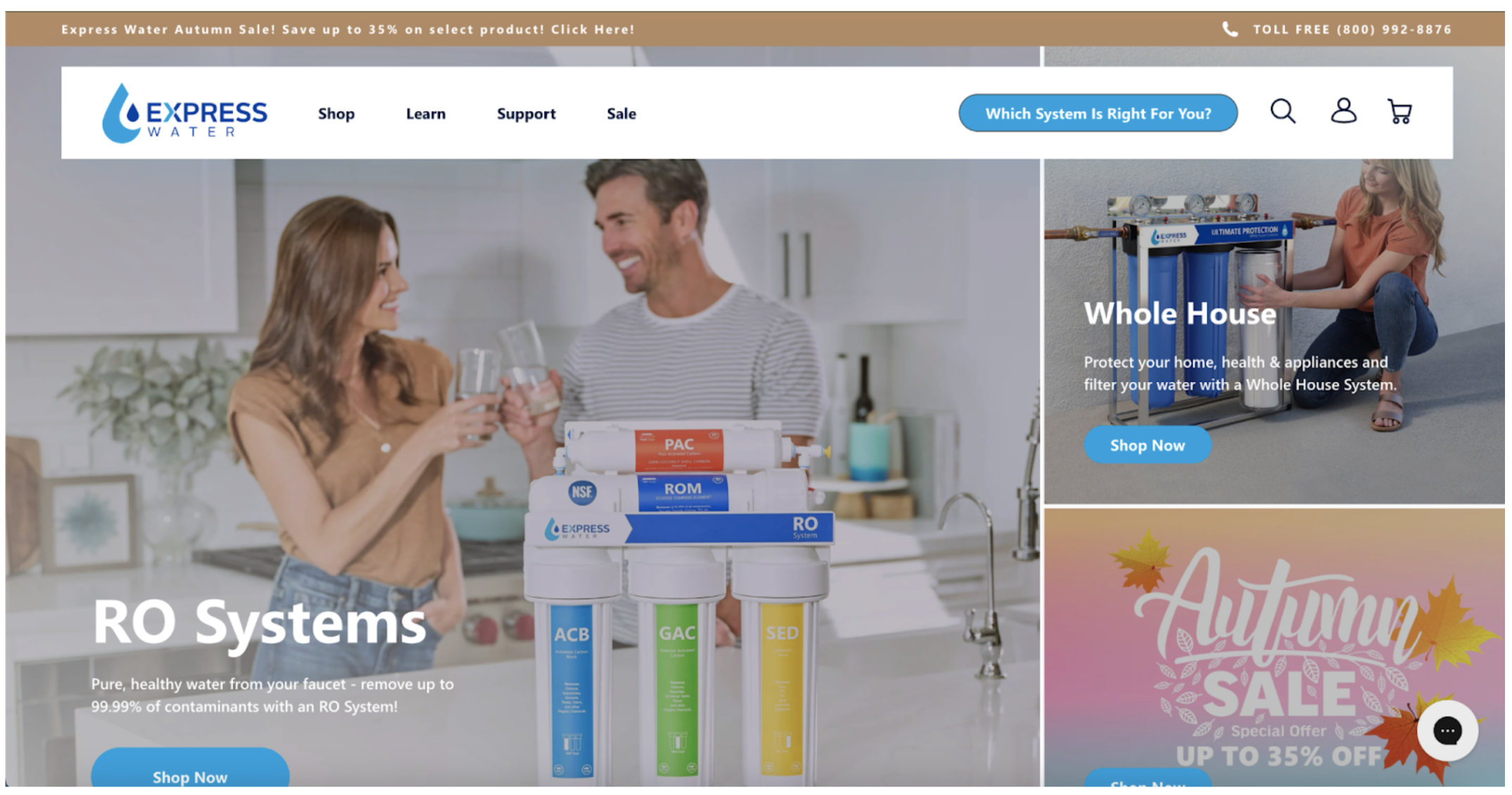
Express Water upholds the belief that everyone deserves access to clean, fresh water. It offers two NSF-certified, reverse-osmosis systems. The brand began when three friends used nearly 30 years of combined water industry experience to develop an effective and easy-to-install system for everyday consumers.
The system’s flexible mounting design means you can place the filter under or to either side of the kitchen sink, or in other locations, such as a basement or garage. Because more-distant sites require higher water pressure, your system may need a special pump to accommodate them. This brand’s representatives will advise you on the most suitable options based on your installation plans and other factors.
Convenient website categories help you browse and filter the options according to your most pressing needs. You can also read customer reviews to understand the ownership experience associated with the models on your shortlist. A comprehensive support section also gives you access to video guides, user manuals and other resources that answer many of the top questions and help you become a more informed consumer.
Key Features
|
This brand’s NSF-certified water filters reduce 99.99% of 158 impurities and total dissolved solids, making them dependable choices. |
The company ships all orders within 48 hours, and products usually reach customers within two to five business days, meaning they can look forward to cleaner water without delays. |
|
All systems include 30-day money-back guarantees, plus a one-year warranty with free support. |
The self-cleaning nature of the reverse-osmosis membrane means it’s effective for approximately one year, making it a low-maintenance investment. |
3. iSpring
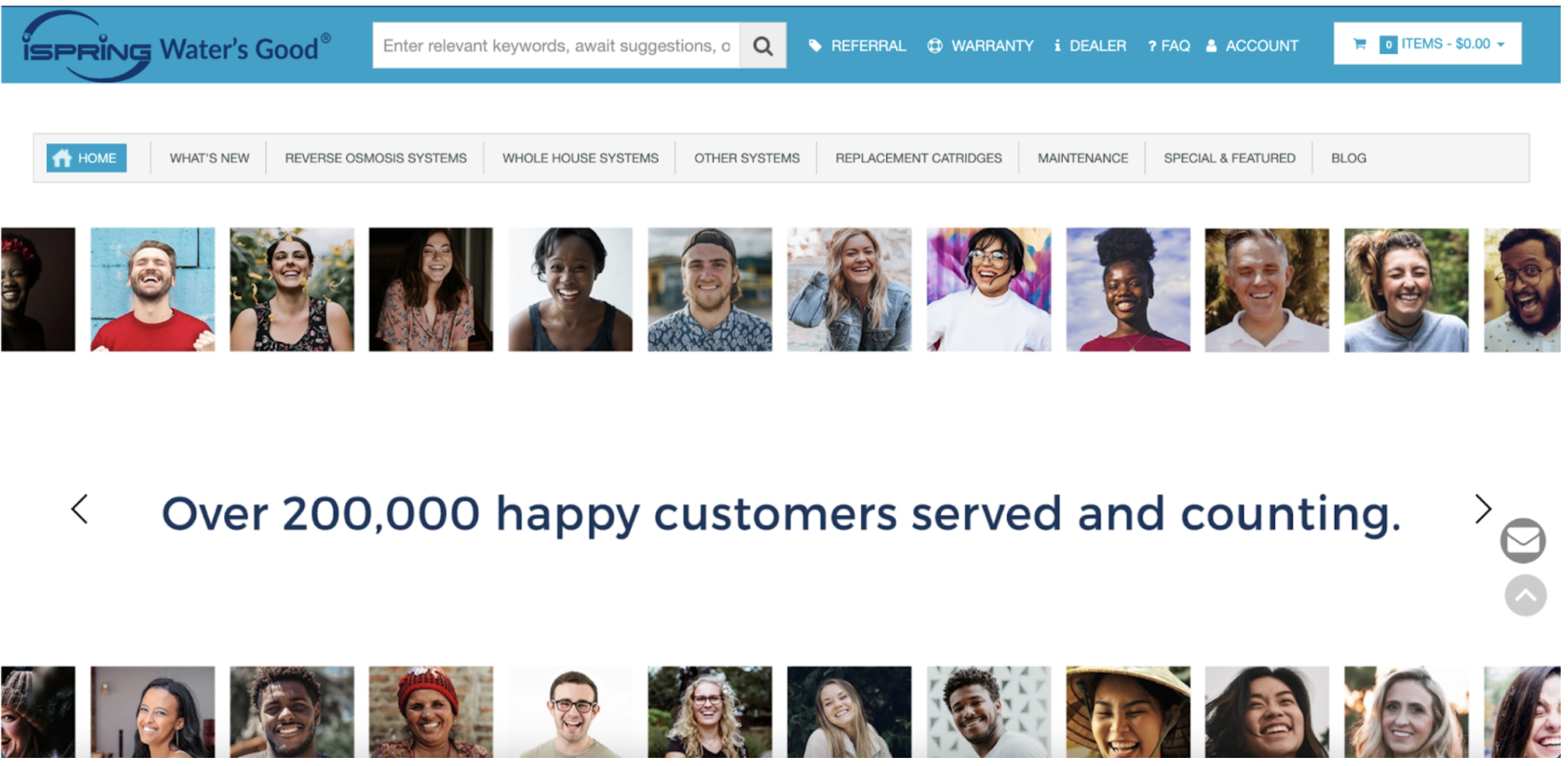
iSpring is a Georgia-based water purification specialist with nearly two decades of experience in the industry. It provides numerous NSF-certified filters, including accessories for reverse-osmosis systems. Representatives focus on developing and selling solutions that meet strict quality control minimums and satisfy residential and commercial customers. This company offers whole-house systems, undersink filters, countertop options and much more.
Because iSpring also stocks a complete range of parts and accessories, it’s a one-stop shop for everything you may need for your water filtration system through the years. Available extended warranties also give you additional protection for three to 10 years, depending on the chosen coverage.
As you browse through the brand’s bestselling products or focus on a specific type, the user-friendly website design allows you to compare features and specifications quickly. Customer reviews also give you realistic ownership expectations and help you anticipate a future filled with cleaner water available on demand. Try the company’s water filter quiz to find matches based on the answers provided.
Key Features
|
The brand’s reach encompasses three continents and 21 countries, making it easy to enjoy the options regardless of location. |
The completion of more than 10 million express deliveries and counting illustrates how successfully the business has attracted consumers’ attention. |
|
The company provides free shipping on all orders over $35 to locations in the 48 contiguous states, making it a budget-friendly provider. |
Customers get convenient access to an expert support team via chat, email, phone or text, helping them receive assistance smoothly. |
4. ProOne Water Filters
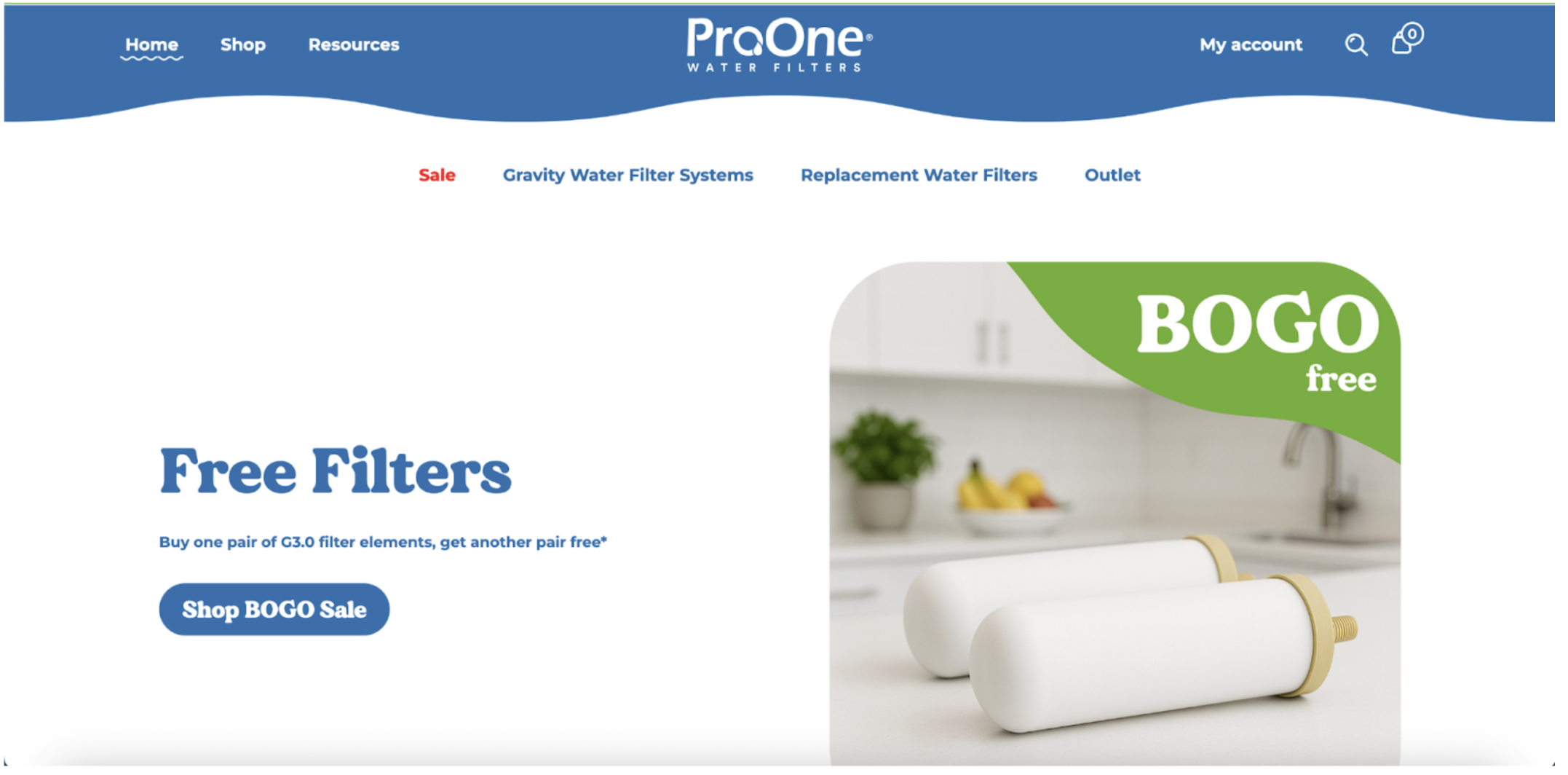
ProOne Water Filters specializes in gravity-based systems that are ideal if simplicity and reliability are some of your main selling points. These self-contained options work without plumbing alterations or electricity, and the company’s stainless-steel version received NSF certification for its housing and filters. An innovation commitment, in-depth testing and exceptional customer service are some of the defining characteristics of this business.
Because all systems come with a stand and one filter, you have everything necessary to start enjoying refreshing water. An attached spout dispenses the contents into cups or other vessels, providing handy accessibility. They’re also easy to set up, requiring you to merely clean the filter and run three batches through before starting to drink. Customer reviews at the bottom of product pages simplify comparison shopping and highlight people’s overall experiences.
This brand publishes PDF versions of product manuals on its website for easy reference. The accompanying installation videos also walk you through each step of the setup process or filter changes, increasing your confidence, even as someone new to these systems.
Key Features
|
Because the company offers five water filtration system sizes, it’s easy to select one that matches your anticipated daily usage. |
Besides filtering what comes from your tap, these systems purify water from rain, rivers, lakes and streams, making them ideal for off-grid living or camping. |
|
This brand publishes its lab reports, letting you verify its NSF certification and other particulars before purchasing. |
Orders of $69 or over ship free within the United States, and all products come with a 30-day money-back guarantee. |
5. Epic Water Filters

Epic Water Filters sells NSF-certified products to address undesirable aesthetic effects and lead in water, depending on the type purchased. The company’s history started when its founders developed a bottle for people living in countries with poor-quality water who were at risk of illness from it. Those leaders quickly realized the matter extended to many other places, motivating them to make water filtration more accessible.
Epic Water Filters has embraced that mission by having its products independently tested and certified. Verifying that performance in laboratories and in the field encourages consumer confidence. The company also upholds a broader environmental stewardship goal for representatives to leave the planet better than they found it and improve access to clean water. Each filter you buy replaces 550 plastic bottles, helping you take measurable action.
Because this brand offers a wide range of filtration systems, you can select options such as pitchers or undersink models. Consider your kitchen layout, overall water usage and household size when ordering.
Key Features
|
This company’s proprietary, multipatented blend of filter media eliminates up to 99.99% of contaminants, giving dependable results. |
Customers can expect fast shipping, and items are sent free with a subscription to the brand’s water filter club, which simplifies getting replacement accessories. |
|
The website’s filter testing and certifications page gives you an easy reference for lab reports, lists of contaminants removed and other valuable information to shape your buying experience. |
An internal recycling program rewards you for returning the old filters by providing new ones and helping you meet personal sustainability goals. |
Enjoying the Best NSF-Certified Water Filters
Drinking cleaner water at home can bring economic, health and convenience benefits. These brands sell products that have met standards set by a globally recognized organization, making it easier to choose trustworthy options for yourself and those you love.
Contacting these brands or browsing their websites is an excellent way to become more informed about the possibilities. You can then anticipate the advantages of purposeful systems that keep filtered water readily available and meet your family’s needs.