4 Ways To Fit A Healthy Diet Into A Hectic Lifestyle

The world seems to move faster these days and if you feel that way too, then it can be difficult to find the time to prepare healthy foods. So, how can you live healthy when you’re on a hectic, packed schedule? These are the options that we recommend you consider. 

Ten Minute Meals 

A great way to get everything that you need from your diet without putting too much pressure on your schedule is by focusing on quick, time friendly, ten minute meals. This might sound like microwaveable junk, but there are actually quite a few different types of meals that you can cook for yourself in under ten minutes.

One great example would be stirfrys. You can put whatever you like into a stir fry which ensures that they never feel dull or boring. 

Prepared Food Delivery Services

Perhaps you are interested in more wholesome meals but you don’t have the time or even the energy to prepare them? If that’s the case, then you should think about exploring a food preparation delivery service. As the name suggests, this means that your food comes ready and prepared to be booked.

You won’t have to slice it and dice it or measure out the different quantities. That’s all done for you and this can work like a subscription service where food is delivered to your home each week. It’s great for busy working professionals who want to ensure that their family are getting full, nutritious meals. Also meal delivery services are great.

Make Smoothies

One of the easiest ways to ensure that you are eating well even when there’s a mad rush to get out of the door each morning is to make smoothies. Smoothies allow you to pack everything you need from your diet into something that is easy to digest which can be consumed readily throughout a busy day. You can even make smoothies for the kids to take with them to school or for you if you are spending the day at the office. You can get all the produce you need for a top homemade smoothie from a fruit and vegetable shop. Then, you can use a few guides online to make some delicious treats that you are sure to love. Additionally, taking ImmunoG PRP from NuMedica can complement your smoothie routine, providing essential nutrients and supporting your immune system for added health benefits throughout the day.

Slow Cooking 

You might also want to consider using a slow oven to prepare food that takes longer to cook. A slow cooker will allow you to throw all the ingredients together at the start of the day and leave them cooking while you are at work. This is a great way to ensure that healthy options like a casserole is available for you and the rest of the family when you get in at the end of the day. It also saves you from eating too late in the evening. 

We hope this helps you understand some of the steps that you can take to fit a healthy diet into a busy or hectic lifestyle. Exploring the right options here will guarantee that you do get everything that your body needs even when you feel as though you are constantly in a rush. 

6 Tips to Get More Fibre in Your Diet

The typical American diet is low in fibre, a plant element that’s vital for physical wellbeing. Fibre passes through the digestive system mostly intact, but along the way, it supports healthy gut bacteria and lowers cholesterol levels.

High-fibre diets also support healthy bowel movements and make people feel full, which can help them maintain a healthy weight. For these and other health reasons, it’s important to incorporate adequate fibre into your diet.

Adding fibre into your diet is easy. Here are six tips for getting started:

1.   Ask Yourself This Question

Because fibre is found in plants, there’s an easy way to identify foods that are good sources of fibre. Simply ask yourself this question: Does this food grow outside? If the food item is plant-based and grows out of the ground, it has some form of fibre.

The next time you go grocery shopping, take a moment to survey your shopping cart. How many of the items you’re purchasing can be grown? How many elements of your boxed foods are plant-based? What items in your cart aren’t grown, and what function do they serve in your diet?

2.   Create a Fibre Battle Plan

Meal planning is an incredible way to strategise your fibre intake. Instead of buying what looks good, start choosing foods that treat your body well. As you adjust to healthy levels of fibre, you’ll start to feel better, and your taste buds will adjust to enjoy healthier foods.

Nutritionists suggest that the average adult eats between 25 to 38 grams of fibre a day. Too much fibre can lead to side effects like bloating, diarrhea, and abdominal pain. However, because most American diets have chronically low levels of fibre, overdoing it is not usually a problem.

3.   Switch out Processed Foods

Processed foods are typically stripped of their natural sources of fibre. For instance, refined white flour is missing most of its nutritional value and fibre. Another example is healthy juices – although these products contain many nutrients, the fibrous parts of plants are processed out during the juicing process.

Replacing processed foods with raw or cooked whole foods will reinstate fibre back into your life. For example, you could buy whole wheat bread or flour instead of white, processed grains. Instead of eating processed cereal, consider having oatmeal or adding bran to your cereal bowl.

4.   Pick a High-Fibre Meal

If adding fibre to your whole diet seems overwhelming, try eating one fibre-packed meal a day. Changing even one meal can improve your whole diet and significantly increase your fibre intake. You could even adapt one meal a week until you become more familiar with fibre-filled recipes.

High-fibre options for breakfast include oatmeal, chia seeds, almonds, avocado, and berries. Lunch is the perfect opportunity to introduce fibre-rich greens such as kale and spinach into your diet. Add bulgar wheat to salads for an extra fibre boost. Dinners can include legumes like split peas and beans and high-fibre vegetables like broccoli and carrots.

5.   Snack on High-Fibre Foods

Snacking is often mindless and tends to center on foods that are convenient rather than healthy. Prepping high-fibre snacks can help you cut these unhealthy foods out of your diet. In addition, healthy snacks will put fibre within easy reach throughout the day.

Great snack-sized sources of fibre include chopped fruits and vegetables. Switch out different types weekly for variety and added nutritional value. Other fibre-dense snacks include nuts and seeds like almonds, pistachios, peanuts, chia seeds, flaxseed, and poppyseeds. In addition to fibre, nuts and seeds are a source of healthy fats.

6.   Make Sure You’re Chewing

Foods with high levels of fibre require a lot of chewing. Think of a rabbit eating their daily meal – all that chewing is breaking down fibre-filled plants so this animal can access the nutrients integrated into the plant material. The same thing is true for you!

The next time you eat, pay attention to how much you need to chew. If most of your food is soft or in liquid form, you’re probably not getting enough fibre in your diet. In addition to benchmarking fibre intake, chewing can also improve digestion and increase feelings of fullness.

A Fiber-Rich Diet

Fibre is incredibly good for your body, regulating important physical functions and helping you to feel satisfied after meals. In addition to improving your digestion, fibre-rich foods also include many vitamins and minerals that will boost your mood and strengthen your body.

Many Americans don’t eat enough fibre, but incorporating fibre-rich foods into your diet is easy. Follow these six tips to increase your fibre intake and reap the many benefits of a fibre-rich diet. If you struggle to consume enough fibre through your diet alone, incorporating a fiber supplement like Colonbroom can be a convenient and effective solution. Colonbroom supplements are specifically formulated to provide the necessary fibre intake, promoting healthy digestion, regular bowel movements, and overall gut health. By including Colonbroom supplements in your daily routine, you can ensure you're meeting your fibre needs and supporting your overall well-being.

Three Wise Christmas Salads to Light Up the Table

Whether you’re a seasoned pro or a brand-new player, hosting Christmas lunch or dinner can be a little stressful.

If you’re two steps away from choosing which restaurant will be catering your Christmas table, hold your metaphorical horses. I’ll be sharing three Christmas salads that are fit for a king and queen. 

Firstly, choosing what to cook, can be challenging when almost everyone you know has an allergy or some sort of dietary restriction. And then, you need to consider how to make your table look beautiful and feel merry.

But fear not, hosting a fabulously festive Christmas lunch or dinner need not be stressful or take up too much room in that lovely brain of yours. With the right plan, and a little help from me, you can put in less effort and still pull off a memorable and delicious event.                                                               

Let me help you cruise through the planning so you can focus on enjoying the party you and your guests deserve.  

Before we get into what food to cook, it’s essential to set the stage with a beautiful tablescape.

Choose and stick to a theme to make sure your table looks cohesive. I love a garden theme and love to use flowers and pots on the table as a decoration. Like any good Instagrammer, I use upcycled jars to place things like dressings and toppings on the table, too. 

One of my other favourite ways to decorate the table is letting the food do the talking, and by that, I mean providing the colour. Spreading citrus fruit, pomegranate, and pumpkins on the table is an excellent way to bring vibrancy to your table naturally. If you need some more tips on creating a tablescape, this blog here is for you as it has all the tips and tricks and ins and outs.

To ion out any bad vibes, make sure to light candle.  I often use my negative ion candle. Negative ion candles purify the air, elevate serotonin levels and look absolutely stunning on the dinner table, making it an essential piece of the Christmas table puzzle. 

Now, let’s get onto the delicious part, the food.

These days, one main meal never fits all, especially when you’re cooking for a few. You might be catering to a vegetarian, flexitarian, dairy-free, grain-free, vegan, keto, or carb-free crowd, making it almost impossible to choose what to make.

Do yourself a favour and take the pressure off by choosing one main meal and letting the sides do most of the heavy lifting. It’s the ultimate choose-your-own-adventure meal and great for when you’re hosting a bunch of people. I mean, why fuss over a big roast when everyone loves the sides? There, I said it; because let's face it, someone had to!  

My foolproof Roast Turkey with all the Trimmings plus a Homemade Cranberry Sauce and Christmas Stuffing Balls, is here if you want a main on the table that feels traditional but is surprisingly easy to make.

Every holiday main deserves a salad by its side.  

Having mix-and-match salads will ensure your meal is family-friendly and scalable. There are a few different options here, but you can pick your favourites and leave (or should I say leaf) the rest behind. 

  1. Kale and Blood Orange Salad 

This Kale and Blood Orange Salad is a one-stop shop for all your antioxidant needs. In this tasty salad, I’ve paired the green goodness of kale with a unique crimson coloured orange that brings a delightful twist to the old green salad. Plus, it’s full of fibre that your gut microbiome will love you for, especially after one too many pieces of Christmas cake. For more gut-loving goodness this holiday season, don’t forget to stock up on Love Your Gut Powder.

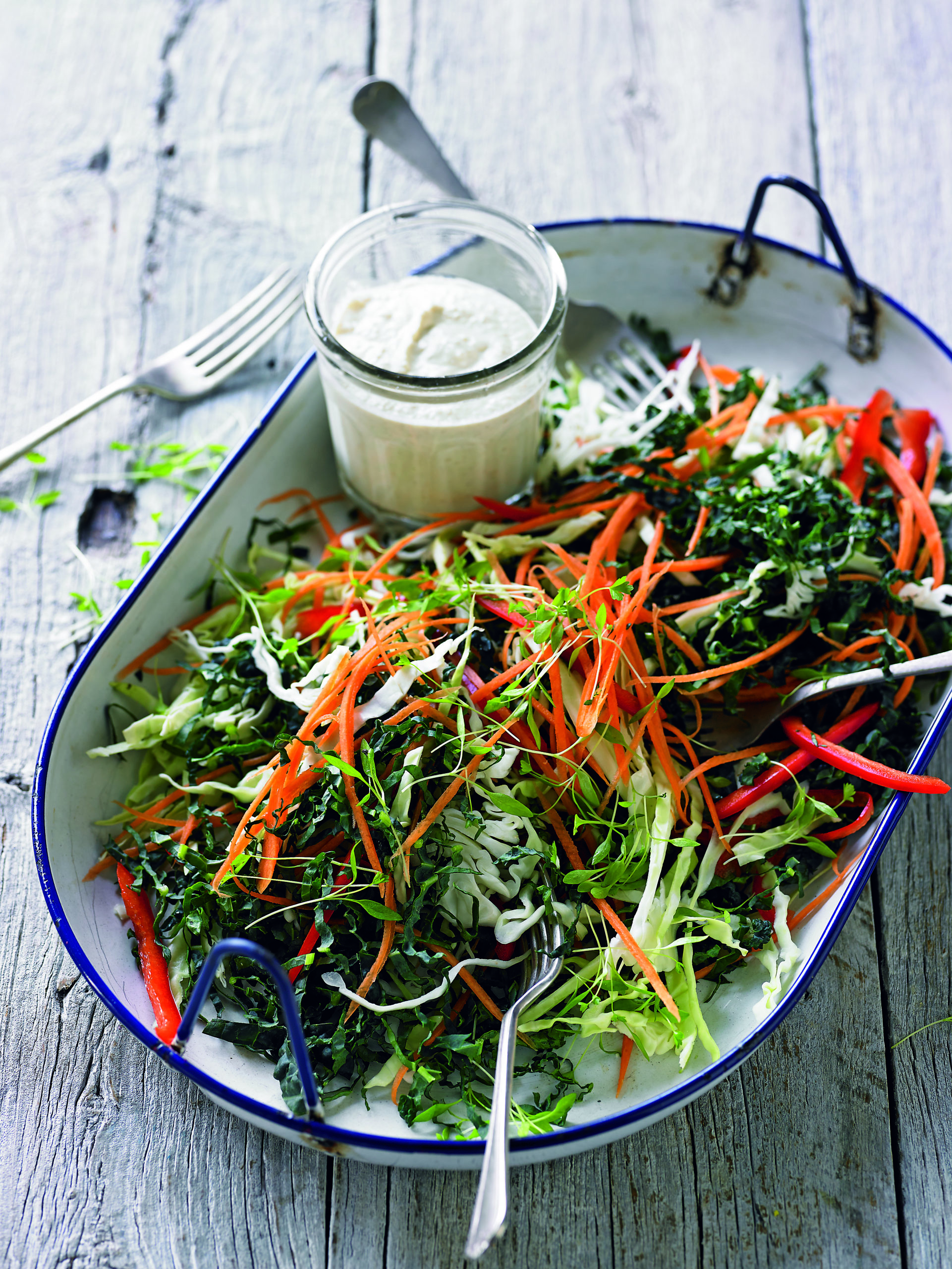
  1. Kaleslaw with Creamy Dressing

My Kaleslaw with Creamy Dressing is light, healthy and full of serious flavour. It’s fibre and sulphur-rich, making it a liver-loving food that supports our natural detoxification pathways. 

It’s sweet and tangy and goes well with just about anything. Oh, and don’t be fooled by the dressing name – it tastes like a traditional creamy dressing but is packed full of whole food ingredients, like sesame seeds, sugar-free mustard and cashews.  

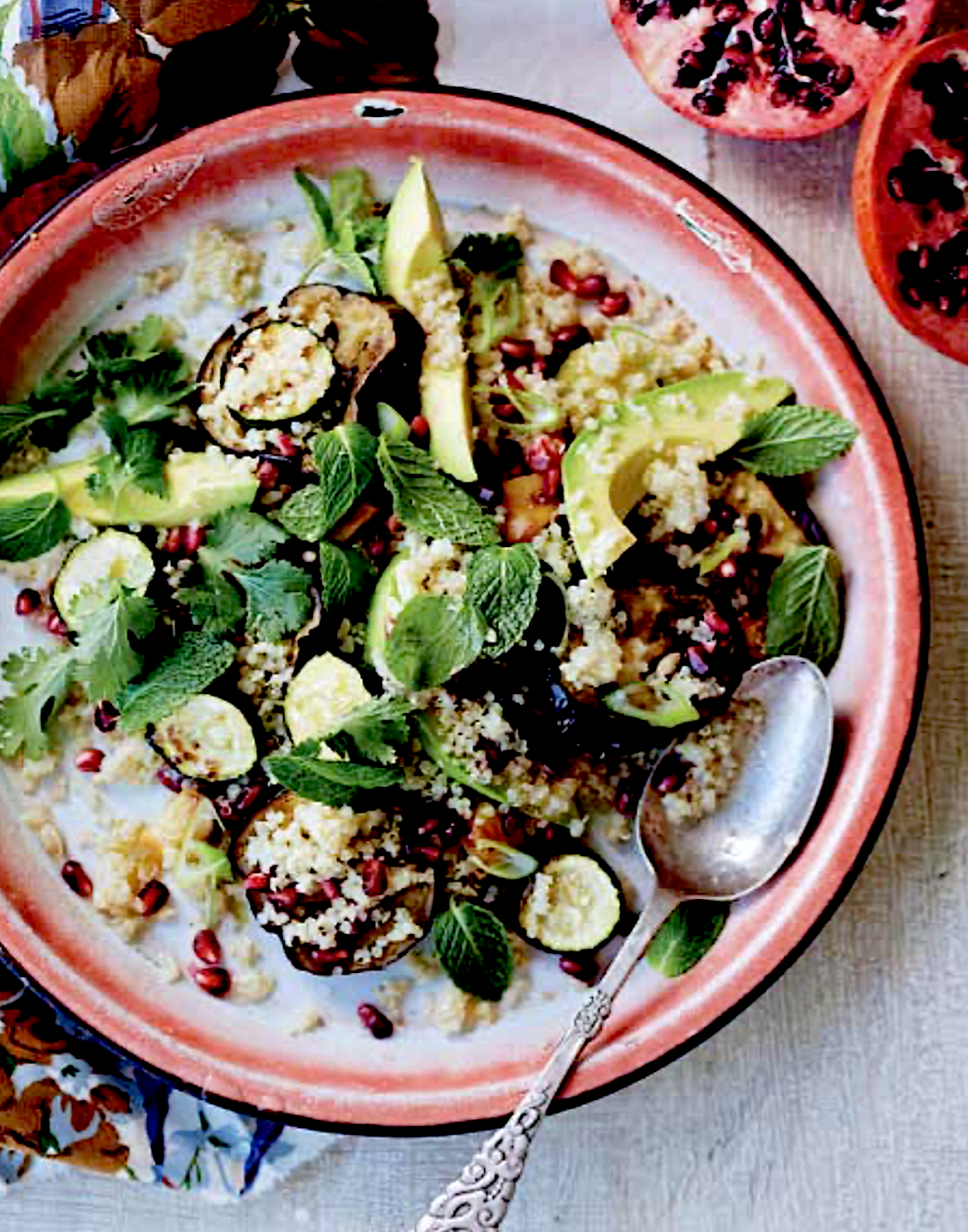
  1. Eggplant, Pomegranate and Minted Quinoa Salad 

Eggplant has vitamins and minerals in spades. It’s rich in manganese, folic acid and all-important thiamine, the mineral that helps convert blood sugar into glucose for energy. Eggplant also contains a rare antioxidant known as nasunin. Found under the eggplant’s skin, nasunin protects brain cells from free-radical damage.

I hope you’ll love this wise salad, and the colours inspired by the three wise men, a perfect nativity scene for your Christmas table.

Serves 4

Ingredients

  • 1 zucchini (courgette), sliced
  • 1 eggplant (aubergine), cut into bite-sized pieces
  • 4 garlic cloves, whole
  • 80 ml (21/2 fl oz/1/3 cup) cold-pressed extra virgin olive oil, plus extra, for drizzling
  • Celtic sea salt
  • 270 g (91/2 oz/1 cup) cooked quinoa
  • juice of 2 lemons
  • 1 tablespoon grated lemon zest
  • 1 bunch of mint, leaves only, plus extra, to serve
  • 1 bunch of coriander (cilantro), leaves only, plus extra, to serve
  • 1 pomegranate, seeds only
  • 2 avocados, peeled, stones removed and sliced into wedges
  • 4 small spring onions (scallions), chopped 
  • 125 g (41/2 oz/1 cup) slivered almonds

Method

Preheat the oven to 200°C (400°F/Gas 6).

Place the zucchini, eggplant and garlic on a baking tray, drizzle with olive oil, sprinkle with salt and roast for about 35 minutes.

Remove from the oven and set aside to cool.

Meanwhile, place the quinoa in a bowl with lemon juice and zest and olive oil. Combine well.

Place in a salad bowl with all the other ingredients and serve topped with extra mint and coriander leaves.

After the year we’ve had, Christmas is the perfect time to spend time with the ones you love the most and enjoy the festivities.

I hope you all have a very Merry Christmas and a happy new year.

Lee xo 

Supercharge your Plant-Based Lifestyle with Iron Friendly Foods

Did you know iron deficiency is the most common mineral deficiency globally, affecting 1.6 billion people? 

That’s a heck of a lot of people! 

Unfortunately, people on a plant-based diet and women of reproductive age are among the most at risk of being iron deficient (I know what you’re thinking – haven’t we endured enough?).

Whether you’re a lifelong vegan, a flexible vegetarian, or simply immersing your toes in plant-based waters, it’s essential to supercharge your diet with iron friendly foods.

Luckily, there are plenty of foods rich in iron that you can choose from. For example, antioxidant-rich dark chocolate is one of the most iron-rich treats available; it's also tasty and vegan! Then, you also have numerous greens, tempeh, nuts, grains. There's a lot of variety  when it comes to iron-friendly foods.

While everyone will benefit from increasing their iron intake, people who experience the following symptoms will mainly gain (read: thank me a million times over) when they supercharge their iron intake:

  • Headaches and dizziness
  • Tiredness and fatigue
  • Reduced cognitive and physical capabilities
  • Brittle or weak nails

Why iron?

If you’re still not convinced that iron is for you, you may be surprised to know iron plays an essential role in the body. Iron is responsible for the transport and storage of oxygen. It acts as a cofactor for proteins and enzymes, synthesises collagen (hello, wrinkle-free skin), creates energy, and supports the immune system. 

So, where can you get iron?

Greens 

I’m sure you’ve read enough blogs telling you to eat leafy green vegetables for many a reason, so I won’t leaf you feeling bored ;). I mean, we all know the power of green vegetables; they’re full of vitamins and minerals, including our new best friend, iron, and yet, most of us aren’t eating enough of them.

So, if you need one more reason to eat your greens, let it be that your energy and your skin will thank you.

Looking for a recipe that will make your friends green with envy?

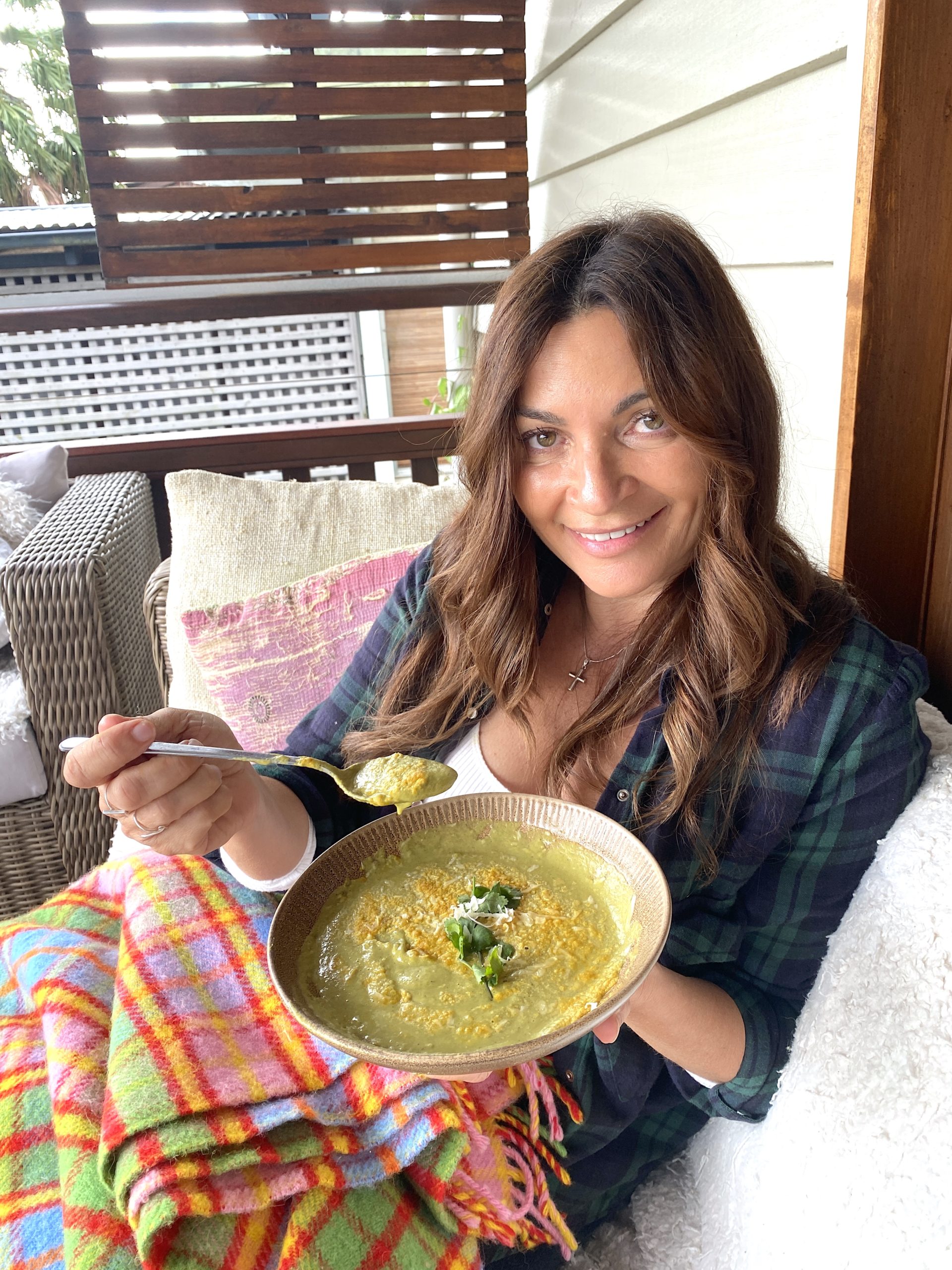
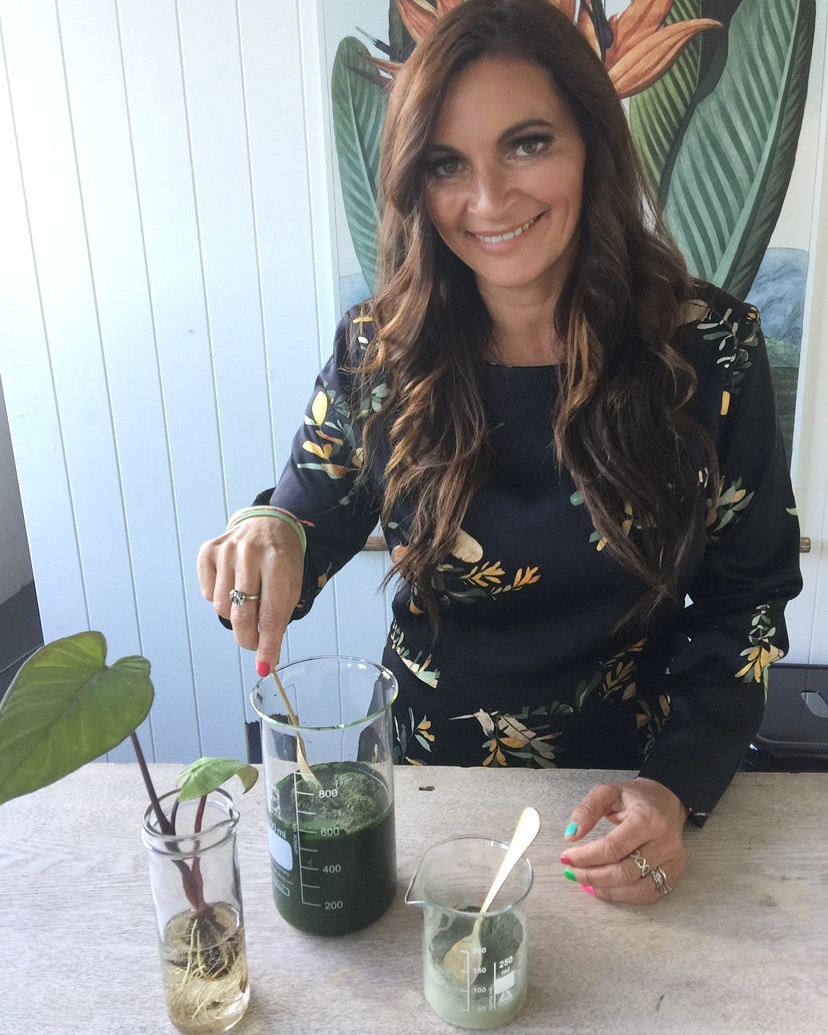
My cozy green soup above, is a winner. That was smooth, am I right? Do you know what’s smoother than that line, though? My microalgae green smoothie. It's super smooth!

Nuts

Ask any nutritionist what vegetarians need to eat more of, and they’ll likely tell you greens (tick) and nuts.

While greens are a no brainer, there seems to be a bit of confusion around nuts and whether they’re healthy. So, let’s address the elephant in the room: yes, nuts are high in fat, but that doesn’t mean they’re unhealthy! We need fat for a healthy diet, as it helps keep us fuller for longer.

When eaten in moderation, nuts are excellent for satiation and hold an abundance of vitamin E, protein, zinc, fibre, and iron.

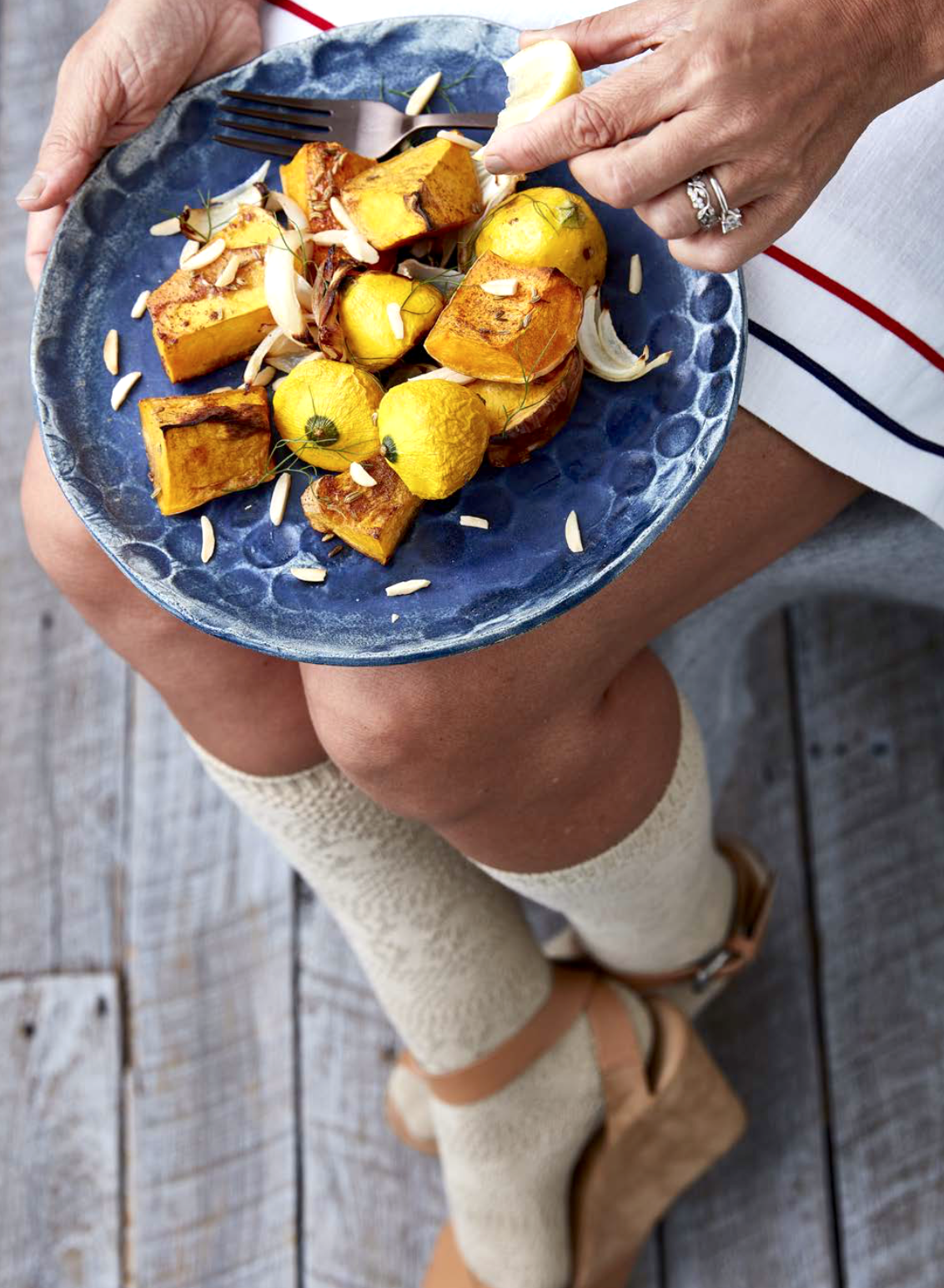
If you’re nuts for nuts, you’ll love my Pumpkin and Almond Bake. This supercharged bake is full of mood-lifting and energy-balancing foods, making it an excellent side dish.  

Love Your Gut Capsules

The standard American/Australian diet (also known as SAD – haha) is commonly comprised of processed foods and deficient in necessary vitamins and minerals. Luckily, diatomaceous earth contains minerals including magnesium, iron, calcium and potassium, essential for wellbeing.

But Lee, why are you talking about some weird earth food?

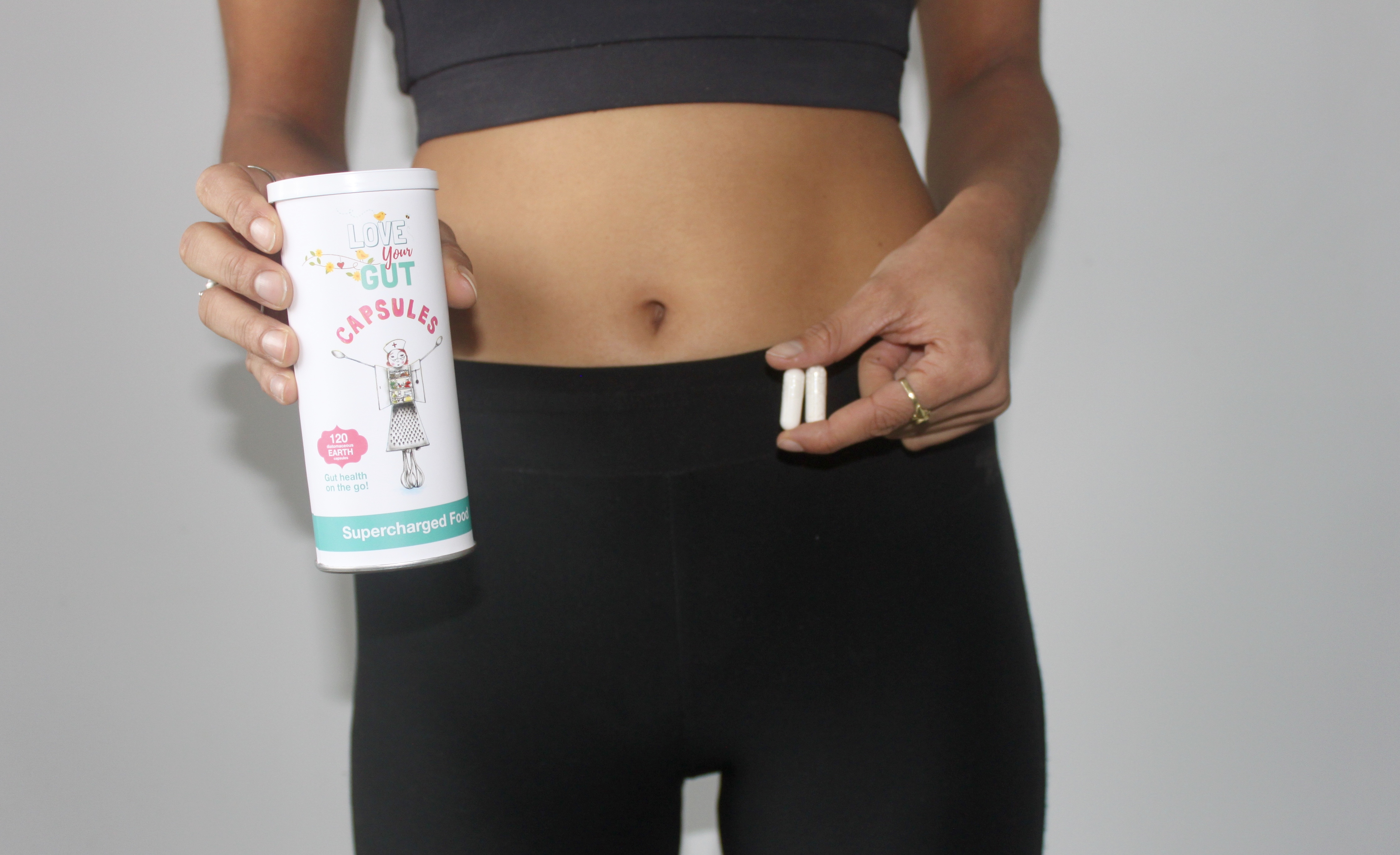
I thought you’d never ask. My Love Your Gut Capsules are solely made of diatomaceous earth and contain over 17 essential minerals. Love Your Gut Capsules are natural, vegan and offer gut health and energy on the go. Take that, coffee.  It also comes in a powder form to add to juice and smoothies. Discover Love Your Gut powder here.

Grains

One of the best things about writing a blog is that I get to write about stuff that makes me excited—the stuff I want to speak about each day. And today, I want to talk about grains.

Grains and pseudo-grains alike can get a bit of a bad rep in the holistic health world, but they’re a crucial part of any diet, particularly plant-based ones. For example, brown rice is rich in many minerals, including iron, but it is also high in fibre, which is terrific for digestion and lowering cholesterol levels.

I share my love for brown rice in this Pumpkin, Mushroom and Sage Brown Rice Risotto recipe here.  

Tempeh 

Why is tempeh soy complicated?

Well, it’s because soybeans are rich in isoflavones (plus a hefty dose of iron) which mimic the effect of oestrogen in the body. This is an excellent thing for women in menopause, but when eaten in excess, not as good a thing for men.

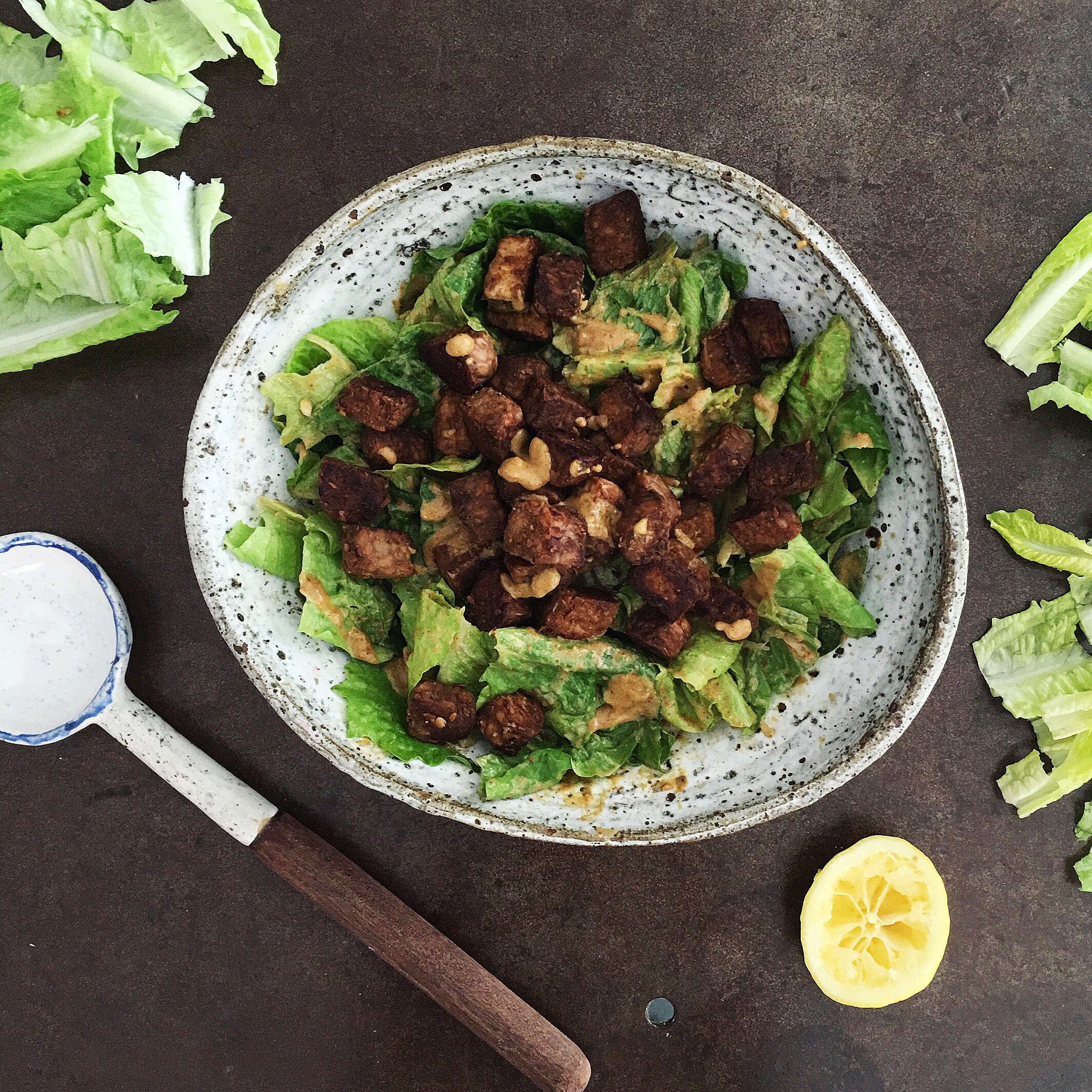
So, when eating soy products, choose the natural, non-GMO and organic varieties, and you’ll experience the iron-boosting and protein-rich benefits. I know I’ll be able to tempeh-t you with this Vegan Caesar Salad.  

Beans and Legumes

While we’re on the topic of beans, I’ve bean waiting to share this point with you. All beans are excellent and beneficial in their own way, which you can read more about here.

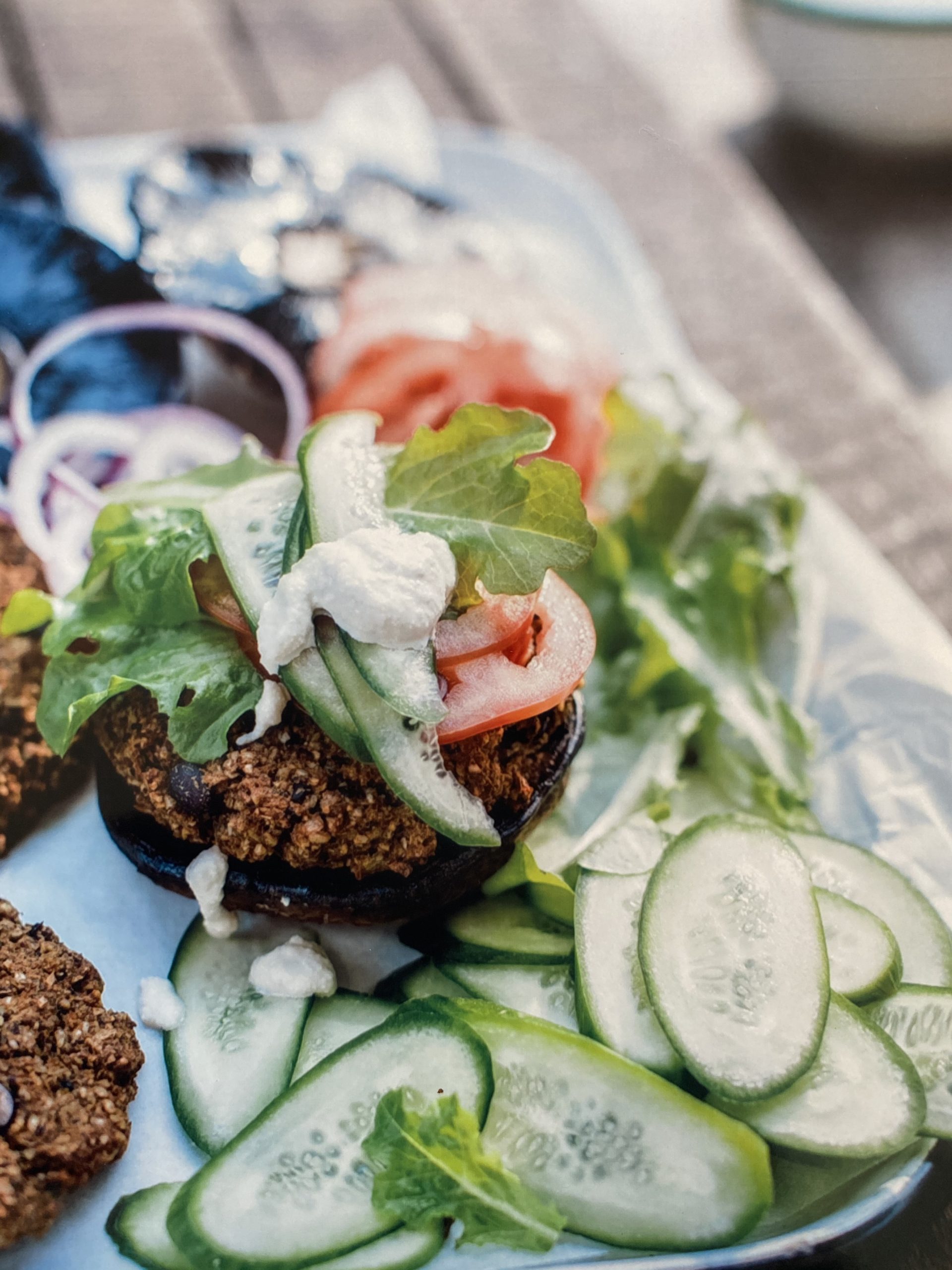
Beans and legumes contain the plant-based trifecta - iron, protein and vitamin B12 – making them the ultimate go-to plant-based food. If you’re looking for a new legume recipe, pop over here for my famous Black Bean Burgers.  

So, you’ve eaten iron. Now what? 

To make sure you’re getting the most out of your iron, supercharge your iron absorption with the following tips:

  1. While eating iron-rich foods is excellent, there’s no point if you’re unable to absorb them properly (sorry, not sorry). Love Your Gut Capsules and Love Your Gut Powder assist the absorption and digestion process so you can get the most out of your iron foods. Fulvic Humic Concentrate is another plant based supplement that is a good iron source.
  2. Coffee and tea can reduce iron absorption, so wait at least two hours between caffeinated tea or coffee and your iron-friendly foods.  
  3. Consume iron with vitamin-C rich foods to maximise absorption. For example, add some capsicum (vitamin C) to your leafy green salad (iron). 

So, how are you going to supercharge your plant-based lifestyle with iron-friendly foods? Let me know in the comments below, I would love to hear from you.

Lee xo

Delicious Recipes For Fuelling Your Workouts

If you love training, you’ll know that there’s nothing more important than the food you put in your mouth. What fuels you matters. 

However, if you’re serious about getting fit, you can’t just chow down on empty calories and expect that to get you to where you want to be. Instead, you must eat consciously, providing your body with the nutrients that it needs to rest and repair after training. 

The problem is this: most pre- and post-workout meals focus too much on macros, and too little on taste. And there’s no real reason for it. In fact, many of the ingredients that make food taste great are also highly beneficial for your health. Take herbs, like basil and parsley for instance. There’s no reason why you can’t add them to your meals for flavour. Not only do they taste great, but they also support your recovery too. 

As a rule, recipes for fuelling your workouts must follow some basic criteria. These include: 

  • Being quick to make
  • Containing enough energy to help you recover from training
  • Taste delicious 
  • Use a variety of ingredients so you don’t get bored
  • Easily eaten the next day

Check out the recipe ideas below. 

Roasted Chicken And Veg In A Pan

Roasting isn’t something you should reserve for Sundays only. Instead, you want to be doing it every day of the week – or as much as is convenient to you. 

Why is roasting so good? Two main reasons: first it makes food taste great. And second, it’s easy. You just chop up some meat and veg and throw it in a pan. 

The veg you choose is also something that you can vary from day to day and season to season. Mixing things up a little helps to keep it interesting. Roasted veg tastes good reheated in the microwave, retaining all its rich flavours the next day. 

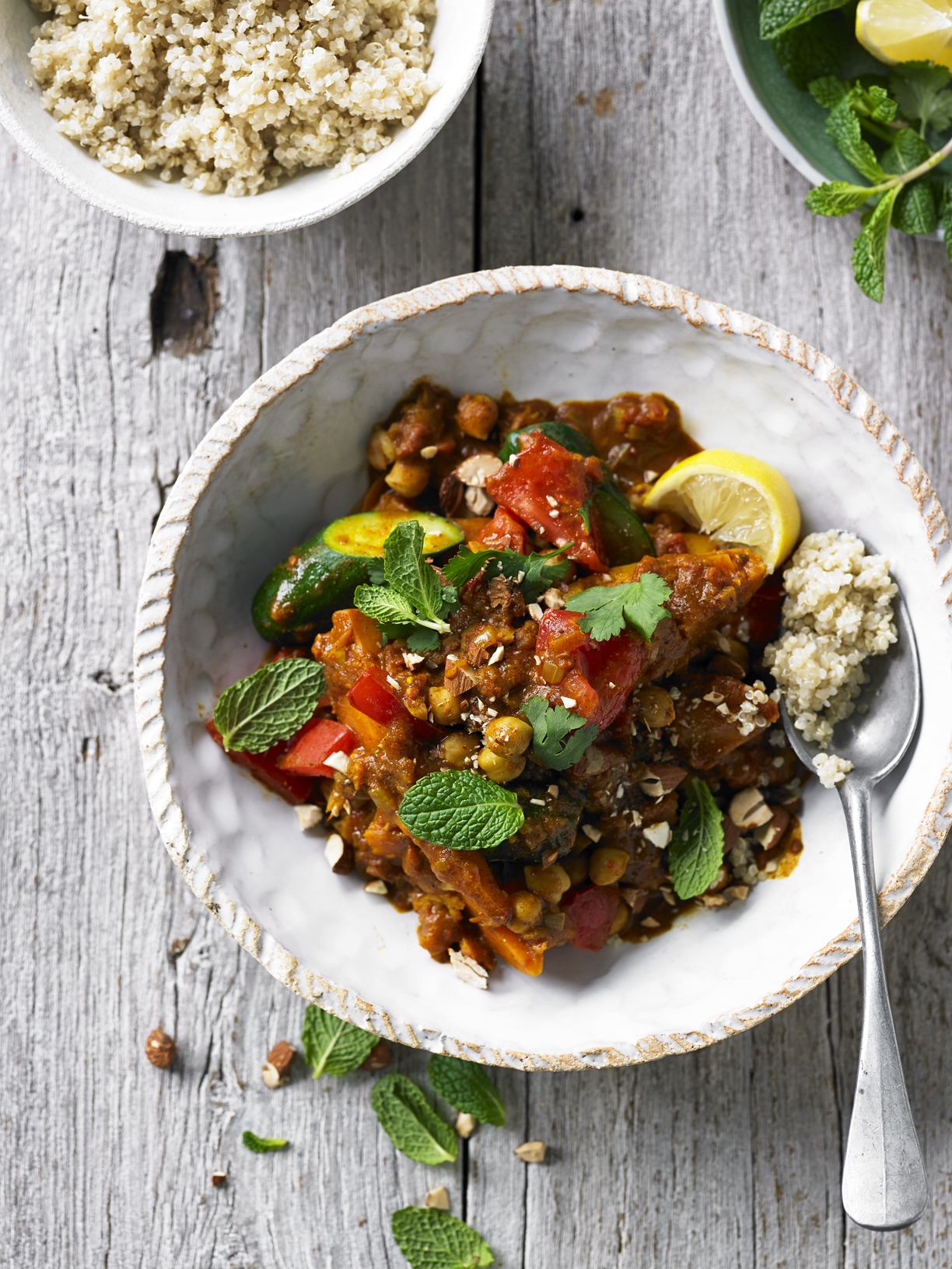
Chickpea And Vegetable Stew

If you’re looking to make a quick recipe that will provide multiple meals, then look no further than chickpea and vegetable stew.

This dish contains both beans and greens and, again, allows you to experiment. The basics are always the same: curry powder, stock and chickpeas. It’s then up to you which vegetables to add to it. Practically any veggies will do, particularly cauliflower, spinach and potato. If you want it to taste more like Indian authentic curry, add garlic and onion. 

Wholewheat Gnocchi And Mushrooms

You might find it challenging to locate wholewheat gnocchi at the store. But if you can, you’re in luck. It’s one of the most delicious foods out there, particularly when you combine it with the right ingredients. 

Mushrooms are a great food to eat while you’re training because of their high protein content. Fungi are different from regular veg and offer an alternative protein source to meat.

To make gnocchi with mushrooms, begin by boiling the gnocchi in water. Then fry mushrooms in butter and combine in a bowl with fresh chopped basil, capers, fresh chopped parsley, olive oil, salt and Parmesan shavings. 

Stir Fried Tempeh With Peanut

Continuing the veggie theme, we have stir-fried tempeh with peanut sauce. Again, this is something that’s incredibly easy to make and, if you store it correctly, actually tastes better the next day. 

Start with a big block of tempeh – which is just packed, fermented soybeans. Chop it into cubes and cook it in the pan over a medium heat until you warm it through. Then add any other vegetables you want to eat with the dish – pak choi, sugar snap peas, broccoli, cabbage, bell pepper – and anything else you think that you might need. 

Then move onto making the peanut sauce. The trick to making a great peanut sauce is to include all the essential elements – sweetness, fat, acid and salt.

To do this in a healthy manner, combine dates, peanut butter, rice wine vinegar and miso in a high-powered blender with some water. Chop all of the ingredients finely until they create a sauce. Then simply boil some noodles and rice, and serve. 

Steak Fajitas With Chilli And Lime

If you’re looking to tone up but also need plenty of protein to fuel your workouts, then you’ll want to try delicious chili and lime fajitas.

Start with a beef joint and pop it in the oven for the required time (based on the weight). When, once it finishes cooking, take a sharp knife and cut it into slices, with the middle hopefully being a delicious shade of pink.  Then fry some peppers and onions with lime and chilli and serve in tortillas with a sauce of your choice. 


Mushroom And Asparagus Tofu Pie

If you currently take Saxenda, this mushroom and asparagus tofu pie is your friend. Unlike conventional pies, it doesn't contain large globs of fat. Instead, the bulk of the pie is just bean curd from soy. 

Making this type of pie is incredibly simple and something that anyone can do. Start with a wholemeal pie crust base and fold it into your pie tin. Then put your tofu in a blender until you break it down into chunks that you can spread. Add mushrooms and asparagus shoots to the base already in the tin and then cover with the tofu mixture. Cook in the oven until golden brown.

Greek Pasta Salad

Greek food is delicious. But it is also a great cuisine for using up all your leftovers. 

To make a Greek pasta salad, take all the opened olive, pepper and sundried tomato jars from your pantry and cut up these ingredients. Then find any cooked pasta you might have lying around and put it in a bowl. Mix all of the ingredients together, adding herbs where appropriate. You can also add little pieces of chopped meats, including chicken and beef. Then drizzle with olive oil and crumble feta cheese on top. 

Baked Sweet Potatoes With Chickpea Filling

Baked potatoes and beans are a classic lunchtime staple – easy for practically anyone to make in a few minutes. Unfortunately, it’s not super high in nutrition. The beans provide protein, but other than that, it is somewhat lacking. 

The trick here is to keep the same easy format, but slightly change the ingredients. Swap out the regular white potato for a sweet potato instead. These offer more vitamins, minerals and nutrients, and have a lower impact on blood sugar levels. Also, get rid of the tinned beans in sugary tomato sauce and replace them with chickpeas in a homemade tomato sauce instead. It’s incredibly easy to make and guaranteed to power you through even the most gruelling workouts. 

Slow-Cooked Casseroles

If you work during the day, it can sometimes be challenging to prepare meals from scratch when you get home in the evening. There’s so much chopping and washing up to do. 

Fortunately, you can get around this by putting your ingredients in a slow cooker in the morning before you go to work. By the time you get home, you’ll have a delicious meal waiting for you. 

Slow-cooked casseroles are easy to serve up. You can either put potatoes in with the meat and vegetables, or you can bake them separately once you get home. 

If you decide to slow cook, don’t forget to use a good stock. You might also want to add some butter to keep it rich and delicious. Herbs can help infuse the gravy and make the dish taste even better when served. 

So, which of these recipes will you use to fuel your workouts? You can try these gummies too. 

Let me know in the comments section below 🙂

Lee

Free supercharged recipes delivered to your inbox!

When you register for our newsletter you'll also receive a FREE gut health recipe ebook.